Gutscheinbedingungen

**Gültig nur für Bestellungen an die Wunsch-Poststation bis 10.06.2026 auf Spielzeug, Schreibwaren, Filme, Geschenke & Trends, Musik, tolino eReader & Zubehör, Hörbücher und Hörbuch-Downloads (außer Abo), nicht preisgebundene Bücher und Kalender online auf thalia.at und in der Thalia App. Einzelne Artikel können ausgeschlossen sein. Aufgrund der Buchpreisbindung sind deutschsprachige Bücher und eBooks ausgenommen. Zusätzlich ausgenommen sind preisgebundene Artikel, Abos & Flatrates, eBooks, Games, Geschenkkarten/-boxen, Shelfies, Software, Zeitschriften sowie einzelne Artikel von tonies®. Pro Einkauf einmal einlösbar. Kein Click & Collect möglich. Keine Barauszahlung. Nicht kombinierbar mit anderen Aktionen und Gutscheinen. Gutschein wird auf max. 500€ Bestellwert angerechnet. Nicht gültig für Versandkosten und Services.

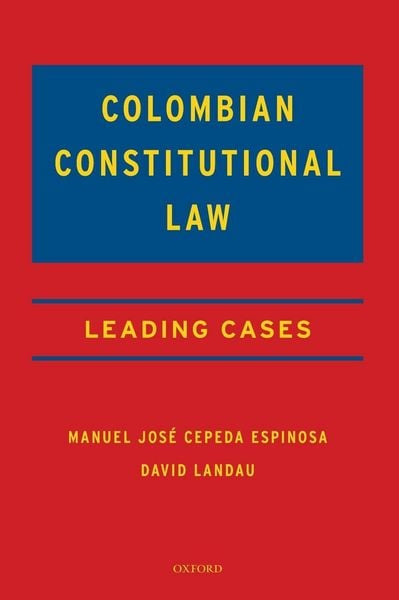
Produktbild: Colombian Constitutional Law

Colombian Constitutional Law Leading Cases

208,99 €

inkl. gesetzl. MwSt., Versandkostenfrei


Beschreibung

Produktdetails

Einband

Gebundene Ausgabe

Erscheinungsdatum

27.03.2017

Verlag

Oxford Academic

Seitenzahl

448

Maße (L/B/H)

26/18,3/2,9 cm

Gewicht

953 g

Sprache

Englisch

ISBN

978-0-19-064036-1

Beschreibung

Produktdetails

Einband

Gebundene Ausgabe

Erscheinungsdatum

27.03.2017

Verlag

Oxford Academic

Seitenzahl

448

Maße (L/B/H)

26/18,3/2,9 cm

Gewicht

953 g

Sprache

Englisch

ISBN

978-0-19-064036-1

Kundinnen und Kunden meinen

0 Bewertungen

Informationen zu Bewertungen

Zur Abgabe einer Bewertung ist eine Anmeldung im Konto notwendig. Die Authentizität der Bewertungen wird von uns nicht überprüft. Wir behalten uns vor, Bewertungstexte, die unseren Richtlinien widersprechen, entsprechend zu kürzen oder zu löschen.

Die Bewertungen sind nach Format, Anzahl Sterne und Datum sortiert.

Verfassen Sie die erste Bewertung zu diesem Artikel

Helfen Sie anderen Kund*innen durch Ihre Meinung

Kundinnen und Kunden meinen

0 Bewertungen filtern

Die Leseprobe wird geladen.
  • Produktbild: Colombian Constitutional Law
    • Table of Contents

    • Preface

    • Chapter 1: Introduction to the Colombian Constitution of 1991 and the Constitutional Court

    • A. The Prelude to the 1991 Constitution: Institutional Decay and a Crisis of Public Order

    • B. The Making of the 1991 Constitution

    • C. The Structure and Powers of the Colombian Constitutional Court

    • D. The Constitutional Court's Decision-making Process and Interpretive Style

    • E. The Constitutional Court in the Post-1991 Political Context

    • F. Methodology and Plan of this Volume

    • Part I: The Constitutional Court

    • Chapter 2: The Role of the Constitutional Court

    • A. The Role Conception of the Constitutional Court

    • B. Precedent and the Effects of Constitutional Court Decisions

    • 1. The Power of the Constitutional Court to Determine the Effects of its Own Decisions

    • 2. The Construction of a System of Precedent

    • C. The Constitutional Block: Incorporation of International Law

    • Part II: Rights

    • Chapter 3: Dignity and Autonomy

    • A. Decriminalization of Narcotics for Personal Use

    • B. Euthanasia and Dignified Death

    • C. Personal appearance

    • D. Intersex Rights

    • E. Abortion

    • Chapter 4: Equality

    • A. The Equality and Dignity Rights of Same-Sex Couples

    • B. Equality, Affirmative Action, and Gender Quotas

    • C. Discrimination Against the Disabled and the Positive Dimension of Equality

    • Chapter 5: Freedom of Speech and Freedom of Religion

    • A. Limitations on Speech for Security and Decency

    • B. Limitations on Speech for Privacy and Reputation

    • C. The Freedom of Expression and Political Campaigns

    • 1. Financing Political Parties and Campaigns

    • 2. Access to Televised Debates

    • D. Religious Establishment

    • E. The Accommodation of Religion and Conscientious Objection

    • Chapter 6: Social Rights

    • A. Foundations of Justiciability: The Right to a Minimum Level of Subsistence

    • B. The Court and Economic Crisis

    • 1. The Housing Finance Crisis

    • 2. The Budgetary Crisis and Public Sector Salaries

    • C. The Right to Health: From Individual to Structural Remedies

    • 1. Individualized enforcement

    • 2. Structural Enforcement

    • D. A Structural Remedy for Internal Forced Displacement

    • E. Informal and Marginalized Work

    • 1. Street vendors

    • 2. Informal recyclers

    • 3. Sex Workers

    • F. The Right to Water

    • Chapter 7: The Rights of Victims and Transitional Justice

    • A. The Rights of Victims During Criminal Processes

    • B. The Rights of Victims During Internal Armed Conflict

    • C. The Peace Process with Guerrilla Groups

    • Chapter 8: The Rights of Indigenous Peoples

    • A. Conflicts between the Rights of Indigenous Communities and their Members

    • 1. Non-Traditional Criminal Punishment

    • 2. Religious Conflict and Diversity

    • 3. Cultural Practices and the Rights of Children

    • B. Diversity and Political Representation

    • C. The Right to Prior Consultation

    • 1. Consultation on Projects Exploiting Natural Resources

    • 2. Consultation on Government Programs

    • 3. Consultation on Congressional Laws

    • Part III: The Separation of Powers

    • Chapter 9: The President: Problems of Executive Overreach

    • A. Limiting Executive Discretion

    • B. The Separation of Powers and National Security

    • C. States of Exception

    • 1. Review of the Declaration of State of Internal Commotion

    • 2. Review of Decrees issued during a State of Internal Commotion

    • Chapter 10: The Congress: Problems of Abdication and Deliberation

    • A. The Scope of Parliamentary Inviolability

    • B. Legislative Delegation to the Executive

    • C. Legislative Deliberation and Procedure

    • Part IV: Constitutional Change

    • Chapter 11: Constitutional Amendment and the Substitution of the Constitution Doctrine

    • A. Procedural Review of Constitutional Amendments

    • B. Control of Constitutional Reform via Referendum

    • C. The Substitution of the Constitution Doctrine

    • 1. The First Reelection Decision

    • 2. The Second Reelection Decision

    • 3. The Fiscal Sustainability Amendment

    • Appendix 1: The Orders of the Constitutional Court

    • 1. The Conditional Decision

    • 2. The Deferred Decision

    • 3. The Integrative Decision

    • B. The Tutela

    • 1. Structural Orders

    • 2. Inter comunis or inter pares effects

    • 3. The State of Unconstitutional Affairs Doctrine

    • Appendix 2: The Constitution of Colombia (1991) (selected provisions)

    • Index