Gutscheinbedingungen

**Gültig nur für Bestellungen an die Wunsch-Poststation bis 10.06.2026 auf Spielzeug, Schreibwaren, Filme, Geschenke & Trends, Musik, tolino eReader & Zubehör, Hörbücher und Hörbuch-Downloads (außer Abo), nicht preisgebundene Bücher und Kalender online auf thalia.at und in der Thalia App. Einzelne Artikel können ausgeschlossen sein. Aufgrund der Buchpreisbindung sind deutschsprachige Bücher und eBooks ausgenommen. Zusätzlich ausgenommen sind preisgebundene Artikel, Abos & Flatrates, eBooks, Games, Geschenkkarten/-boxen, Shelfies, Software, Zeitschriften sowie einzelne Artikel von tonies®. Pro Einkauf einmal einlösbar. Kein Click & Collect möglich. Keine Barauszahlung. Nicht kombinierbar mit anderen Aktionen und Gutscheinen. Gutschein wird auf max. 500€ Bestellwert angerechnet. Nicht gültig für Versandkosten und Services.

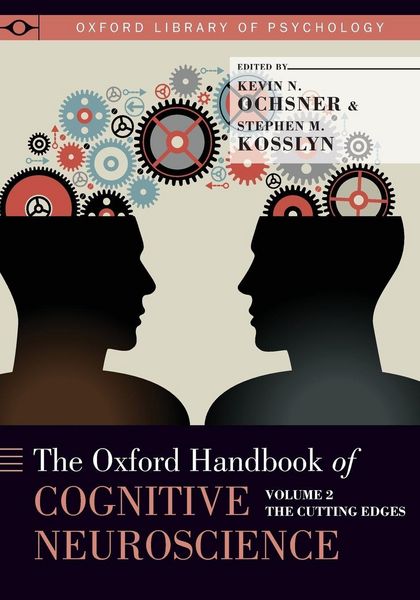
Produktbild: The Oxford Handbook of Cognitive Neuroscience

The Oxford Handbook of Cognitive Neuroscience Volume 2: The Cutting Edges

212,99 €

inkl. gesetzl. MwSt., Versandkostenfrei


Beschreibung

Produktdetails

Einband

Taschenbuch

Erscheinungsdatum

15.11.2016

Herausgeber

Kevin N. Ochsner + weitere

Verlag

Oxford Academic

Seitenzahl

514

Maße (L/B/H)

25,4/17,8/3,3 cm

Gewicht

1247 g

Sprache

Englisch

ISBN

978-0-19-062987-8

Beschreibung

Produktdetails

Einband

Taschenbuch

Erscheinungsdatum

15.11.2016

Herausgeber

Verlag

Oxford Academic

Seitenzahl

514

Maße (L/B/H)

25,4/17,8/3,3 cm

Gewicht

1247 g

Sprache

Englisch

ISBN

978-0-19-062987-8

Herstelleradresse

Libri GmbH
Europaallee 1
36244 Bad Hersfeld
DE

Email: gpsr@libri.de

Kundinnen und Kunden meinen

0 Bewertungen

Informationen zu Bewertungen

Zur Abgabe einer Bewertung ist eine Anmeldung im Konto notwendig. Die Authentizität der Bewertungen wird von uns nicht überprüft. Wir behalten uns vor, Bewertungstexte, die unseren Richtlinien widersprechen, entsprechend zu kürzen oder zu löschen.

Die Bewertungen sind nach Format, Anzahl Sterne und Datum sortiert.

Verfassen Sie die erste Bewertung zu diesem Artikel

Helfen Sie anderen Kund*innen durch Ihre Meinung

Kundinnen und Kunden meinen

0 Bewertungen filtern

  • Produktbild: The Oxford Handbook of Cognitive Neuroscience
    • VOLUME 1

    • 1. Introduction to The Oxford Handbook of Cognitive Neuroscience: Cognitive Neuroscience: Where are we now?

    • Kevin N. Ochsner and Stephen M. Kosslyn

    • Part One: Perception

    • 2. Representation of Objects

    • Kalanit Grill-Spector

    • 3. Representation of Spatial Relations

    • Bruno Laeng

    • 4. Top-down Effects in Visual Perception

    • Moshe Bar and Andreja Bubic

    • 5. Neural Underpinning of Object Mental Imagery, Spatial Imagery, and Motor Imagery

    • Gregoire Borst

    • 6. Looking at the Nose Through Human Behavior, and at Human Behavior Through the Nose

    • Roni Kahana and Noam Sobel

    • 7. The Cognitive Neuroscience of Music

    • Petr Janata

    • 8. Audition

    • Josh H. McDermott

    • 9. Neural Correlates of the Development of Speech Perception and Comprehension

    • Angela D. Friederici and Claudia Mannel

    • 10. Perceptual Disorders

    • Josef Zihl

    • Part Two: Attention

    • 11. Varieties of Auditory Attention

    • Claude Alain, Stephen R. Arnott, and Benjamin J. Dyson

    • 12. Spatial Attention

    • Jeffrey Nicol

    • 13. Attention and Action

    • 14. The Visual Control of Action

    • Melvyn A. Goodale

    • 15. Development of Attention

    • M. Rosario Rueda

    • 16. Attentional Disorders

    • Laure Pisella, A. Blangero, C. Tilikete, D. Biotti, G. Rode, A. Vighetto, J.B. Mattingley, and Y. Rossetti

    • Part Three: Memory

    • 17. The Cognitive Neuroscience of Semantic Memory

    • Eiling Yee, Evangelia G. Chrysikou, and Sharon L. Thompson-Schill

    • 18. Cognitive Neuroscience of Episodic Memory

    • Lila Davachi and Jared Danker

    • 19. Working Memory

    • Bradley R. Buchsbaum and Mark D'Esposito

    • 20. Motor Skill Learning

    • Rachael D. Seidler, Bryan L. Benson, Nathaniel B. Boyden, and Youngbin Kwak

    • 21. Memory Consolidation

    • John T. Wixted and Denise J. Cai

    • 22. Age-related Decline in Working Memory and Episodic Memory: Contributions of the Prefrontal Cortex and Medial Temporal Lobes

    • Sander Daselaar and Roberto Cabeza

    • 23. Memory Disorders

    • Barbara A Wilson and Jessica Fish

    • Part Four: Language

    • 24. The Cognitive Neuroscience of Written Language: The Neural Substrates of Reading and Writing

    • Kyrana Tsapkini and Argye E. Hillis

    • 25. Neural Systems Underlying Speech Perception

    • Sheila E. Blumstein and Emily B. Myers

    • 26. Multi-modal Speech Perception

    • Agnes Alsius, Ewen MacDonald, and Kevin Munhall

    • 27. The Organization of Conceptual Knowledge of Objects in the Human Brain

    • Bradford Z. Mahon and Alfonso Caramazza

    • 28. A Parallel Architecture Model of Language Processing

    • Ray Jackendoff

    • Part Five: Conclusion

    • 29. Epilogue to The Oxford Handbook of Cognitive Neuroscience: Cognitive Neuroscience: Where are we going?

    • Kevin N. Ochsner and Stephen M. Kosslyn

    • VOLUME 2

    • 1. Introduction to The Oxford Handbook of Cognitive Neuroscience: Cognitive Neuroscience: Where are we now?

    • Kevin N. Ochsner and Stephen M. Kosslyn

    • Part One: Emotion

    • 2. Salience, State, and Expression: The Influence of Specific Aspects of Emotion on Attention and Perception

    • Rebecca M. Todd and Adam K. Anderson

    • 3. Emotion: Generation or Construction?

    • Jennifer M.B. Fugate, Kristen A. Lindquist, and Lisa Feldman Barrett

    • 4. The Neuroscience of Emotion Regulation: Basic Mechanisms and Their Role in Development, Aging, and Psychopathology

    • Jennifer A. Silvers, Jason T. Buhle, and Kevin N. Ochsner

    • 5. Impact of Emotion on Cognition

    • Luiz Pessoa

    • 6. Genetics and Emotion

    • Andreia Santos, Lukas Pezawas, and Andreas Meyer-Lindenberg

    • 7. Visceromotor Sensation and Control

    • Fred W. Mast

    • 8. Development of Emotion and Social Reasoning in Adolescence

    • Eveline A. Crone and Berna Guroglu

    • Part Two: Self and Social Cognition

    • 9. Self-knowledge

    • Joseph M. Moran, William M. Kelley, and Todd F. Heatherton

    • 10. Perception of Nonverbal Cues

    • Aina Puce

    • 11. Face Recognition

    • Rankin W. McGugin and Isabel Gauthier

    • 12. The Cognitive and Neural Basis of Impression Formation

    • Alexander Todorov and Peter Mende-Siedlecki

    • 13. Theory of Mind: How Brains Think about Thoughts

    • Rebecca Saxe

    • 14. The Pleasures and Pains of Social Interactions: A Social Cognitive Neuroscience Perspective

    • Naomi I. Eisenberger and Keely A. Muscatell

    • 15. The Neural Underpinnings of the Experience of Empathy: Lessons for Psychopathy

    • Jean Decety

    • 16. Mirror Neurons and the Perception-Action Link

    • Vittorio Gallese

    • 17. The Early Development of the Brain Bases for Social Cognition

    • Tobias Grossmann and Mark H. Johnson

    • Part Three: Higher Cognitive Functions

    • 18. Conflict Monitoring and Cognitive Control

    • Nick Yeung

    • 19. Hierarchical Cognitive Control and the Functional Organization of the Frontal Cortex

    • David Badre

    • 20. Thinking

    • Kalina Christoff

    • 21. Decision Neuroscience

    • Maya U. Shankar and Samuel M. McClure

    • 22. Categorization

    • Bradley C. Love

    • 23. Expectancies and Beliefs: Insights from Cognitive Neuroscience

    • Lauren Y. Atlas and Tor D. Wager

    • 24. Cognitive Neuroscience of Numerical Cognition

    • Daniel Ansari and Stephan E. Vogel

    • 25. Psychopharmacology of Cognition

    • TW Robbins

    • Part Four: Clinical Applications

    • 26. Attention Deficit Hyperactivity Disorder (ADHD)

    • Chandan J. Vaidya

    • 27. PTSD

    • J. Douglas Bremner

    • 28. Generalized Anxiety Disorder and Social Phobia considered from a cognitive neuroscience perspective

    • Karina S. Blair and R.J.R. Blair

    • 29. The Neurobiology of Obsessive-Compulsive Disorder

    • Samuel R. Chamberlain and Naomi A. Fineberg

    • Part Five: Conclusion

    • 30. Epilogue to The Oxford Handbook of Cognitive Neuroscience: Cognitive Neuroscience: Where are we going?

    • Kevin N. Ochsner and Stephen M. Kosslyn