KI-Beratung Beta

Gutscheinbedingungen

**Gültig am 20.11.2026 ab einem Mindestbestellwert von 30€ auf Spielzeug, Schreibwaren, Filme, Geschenke & Trends, Musik, tolino eReader & Zubehör, Hörbücher und Hörbuch-Downloads, nicht preisgebundene Bücher und Kalender online auf thalia.at und in der Thalia App. Einzelne Artikel können ausgeschlossen sein. Aufgrund der Buchpreisbindung sind deutschsprachige Bücher und eBooks ausgenommen. Zusätzlich ausgenommen sind Abos & Flatrates, Games, Geschenkkarten/-boxen, Shelfies, Software, Zeitschriften sowie einzelne Artikel von tonies®. Pro Einkauf einmal einlösbar. Click & Collect nur bei Onlinevorabzahlung möglich. Keine Barauszahlung. Nicht kombinierbar mit anderen Aktionen und Gutscheinen. Gutschein wird auf max. 500€ Bestellwert angerechnet. Nicht gültig für Versandkosten und Services. Preisgebundene Artikel sind vom Mindestbestellwert ausgeschlossen.

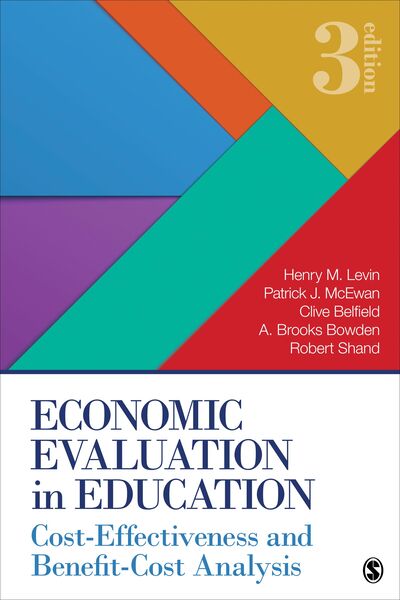
Produktbild: Economic Evaluation in Education
- 10%

Economic Evaluation in Education Cost-Effectiveness and Benefit-Cost Analysis

10% sparen

106,99 € UVP 119,00 €

inkl. gesetzl. MwSt., Versandkostenfrei


Beschreibung

The past decade has seen increased attention to cost-effectiveness and benefit-cost analysis in education as administrators are being asked to accomplish more with the same or even fewer resources, philanthropists are keen to calculate their return on investment in social programs, and the general public...

Beschreibung

The past decade has seen increased attention to cost-effectiveness and benefit-cost analysis in education as administrators are being asked to accomplish more with the same or even fewer resources, philanthropists are keen to calculate their return on investment in social programs, and the general public is increasingly scrutinizing how resources are allocated to schools and colleges.


This text (titled Cost-Effectiveness Analysis in its previous editions) is the only full-length book to provide readers with the step-by-step methods they need to plan and implement a benefit-cost analysis in education. The authors examine a range of issues, including how to identify, measure, and distribute costs; how to measure effectiveness, utility, and benefits; and how to incorporate cost evaluations into the decision-making process. The updates to the Third Edition reflect the considerable methodological development in the evaluation literature, and the greater empiricism practiced by education researchers, to help readers learn to apply more advanced methods to their own analyses.


SAGE congratulates author Henry M. Levin, winner of the 2017 AERA Distinguished Contributions to Research in Education Award.

Rezension

In order to improve our educational systems, we need to increase our understanding of economic evaluation. This text provides the tools for both practitioners and researchers to achieve this end. This is unequivocally the best text in the field.

Dan Jorgensen

Produktdetails

Einband

Taschenbuch

Erscheinungsdatum

26.09.2017

Verlag SAGE Publications
Seitenzahl

376

Produktdetails

Einband

Taschenbuch

Erscheinungsdatum

26.09.2017

Verlag SAGE Publications
Seitenzahl

376

Maße (L/B/H)

22,9/15,2/2 cm

Gewicht

546 g

Auflage

3. Auflage

Sprache

Englisch

ISBN

978-1-4833-8180-0

EU-Ansprechpartner

Kolibri 360 GmbH
Ettore-Bugatti-Straße 6-14
51149 Köln
DE
produktsicherheit@kolibri360.de

Herstelleradresse

SAGE Publications
1 Oliver's Yard 55 City Road
EC1Y 1SP London
GB
orders@sagepub.co.uk

Noch keine Bewertungen vorhanden

Verfassen Sie die erste Bewertung zu diesem Artikel

Helfen Sie anderen Kundinnen und Kunden durch Ihre Meinung.

Kundinnen und Kunden meinen

Bewertungen (0)

  • Produktbild: Economic Evaluation in Education
  • List of Tables, Figures, and Examples
    Preface
    Acknowledgments to the Second Edition
    Acknowledgments to the Third Edition
    About the Authors
    Chapter 1. Introduction to Economic Evaluation
    1.1. Purpose and Goals of the Book
    1.2. The Importance of Economic Evaluations
    1.3. Economic Evaluation for Decisionmaking in Education
    1.4. Summary of Approaches to Economic Evaluation
    1.5. Economic Evaluations and Policymaking
    1.6. Outline of the Book
    Discussion Questions
    Chapter 2. Establishing an Analytic Framework
    2.1. Identifying the Problem
    2.2. Taking Account of the Audience and Perspective
    2.3. Relating Economic Evaluation to the Theory of Change
    2.4. Determining If Economic Evaluation Is Necessary
    2.5. Conclusions
    Discussion Questions
    Exercises
    Chapter 3. Cost Concepts
    3.1. The Concept of Costs
    3.2. Cost per Unit
    3.3. Costs and the Theory of Change
    3.4. Costs Data and Budgetary Information
    3.5. Motivation for Cost Analysis
    3.6. Conclusions
    Discussion Questions
    Exercises
    Chapter 4. The Ingredients Method
    4.1. Identifying Ingredients
    4.2. Specifying Ingredients
    4.3. Sources of Ingredients Information
    4.4. Conclusions
    Discussion Questions
    Exercises
    Chapter 5. Placing Values on Ingredients
    5.1. Methods for Valuing Ingredients
    5.2. Placing Dollar Values on Ingredients
    5.3. Costs Over Multiple Years
    5.4. Conclusions
    Discussion Questions
    Exercises
    Chapter 6. Analyzing and Reporting Costs
    6.1. Tabulating Total Cost Using a Cost Worksheet
    6.2. Reporting Costs
    6.3. Allocating Costs Among Constituencies
    6.4. Analyzing Cost Determinants and Generalizing Costs
    6.5. Conclusions
    Discussion Questions
    Exercises
    Chapter 7. Effectiveness
    7.1. Specifying Effectiveness
    7.2. Methods for Identifying Effectiveness
    7.3. Utility Analysis
    7.4. Conclusions
    Discussion Questions
    Exercises
    Chapter 8. Cost-Effectiveness Analysis
    8.1. Cost-Effectiveness Ratios
    8.2. Alternative Cost-Effectiveness Metrics
    8.3. Interpreting Cost-Effectiveness Ratios
    8.4. Explaining Cost-Effectiveness Ratios
    8.5. Evidence on Cost-Effective Interventions
    8.6. Conclusions
    Discussion Questions
    Exercises
    Chapter 9. Estimating Benefits
    9.1. The Concept of Benefits
    9.2. Specifying Benefits
    9.3. Valuing Educational Benefits Through Earnings
    9.4. Valuing Educational Benefits Through Shadow Pricing
    9.5. Applying Benefits in Benefit-Cost Analysis
    9.6. Conclusions
    Discussion Questions
    Exercises
    Chapter 10. Benefit-Cost Analysis
    10.1. Combining Benefits and Costs Into Economic Metrics
    10.2. Performing Benefit-Cost Analysis
    10.3. Examples of Benefit-Cost Analysis
    10.4. Conclusions
    Discussion Questions
    Exercises
    Chapter 11. Accounting for Uncertainty
    11.1. Type of Uncertainty and Sensitivity
    11.2. General Sensitivity Testing
    11.3. Sensitivity Testing of Cost Estimates
    11.4. Sensitivity Testing of Cost-Effectiveness
    11.5. Sensitivity Testing of Benefit-Cost Analysis
    11.6. Distributional Issues
    11.7. Conclusions
    Discussion Questions
    Exercises
    Chapter 12. Checklist for Economic Evaluations
    12.1. A Checklist for Appraising Economic Evaluations
    12.2. Appraising Economic Evaluations
    12.3. Conclusions
    Discussion Questions
    Exercises
    Chapter 13. Economic Evaluations for Education Policy
    13.1. Applying Economic Analysis
    13.2. Expanding the Use of Economic Evaluation
    13.3. Decisionmaking and Economic Evaluation
    13.4. Prioritizing Educational Investments
    13.5. Using Economic Evaluations to Improve Education Research
    13.6. The Future of Economic Evaluation of Education
    13.7. A Final Word
    Discussion Questions
    Appendix A. Answers to Even-Numbered Exercises
    Appendix B. CostOut Tool
    References
    Index