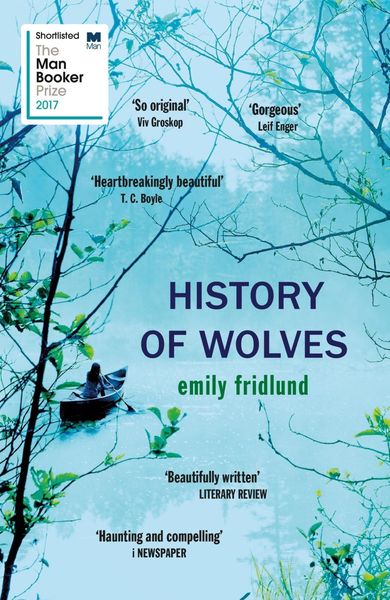
'A writer with a great future ahead of her...her prose is exquisite' LOUISE DOUGHTY, author of APPLE TREE YARD
How far would you go to belong? Fourteen-year-old Linda lives with her parents in an ex-commune beside a lake in the beautiful, austere backwoods of northern Minnesota. The other girls at school call Linda 'Freak', or 'Commie'. Her parents mostly leave her to her own devices, whilst the other inhabitants have grown up and moved on.
So when the perfect family - mother, father and their little boy, Paul - move into the cabin across the lake, Linda insinuates her way into their orbit. She begins to babysit Paul and feels welcome, that she finally has a place to belong.
Yet something isn't right. Drawn into secrets she doesn't understand, Linda must make a choice. But how can a girl with no real knowledge of the world understand what the consequences will be?
'One of the most intelligent and poetic novels of the year' New Statesman
Kundinnen und Kunden meinen
4.0/5.0
2 Bewertungen
5 Sterne
(0)
4 Sterne
(2)
3 Sterne
(0)
2 Sterne
(0)
1 Sterne
(0)
A gripping, demanding story
Circlestones Books Blog am 11.07.2021
Bewertungsnummer: 1525930
Bewertet: Buch (Taschenbuch)
“Maybe if I’d been someone else I’d see it differently. But isn’t that the crux of the problem? Wouldn’t we all act differently if we were someone else?” (Quotation pos. 1939)
Content
Madelaine Furston, called Linda, grows up in a small cabin at a lake somewhere in the rural woods of northern Minnesota. Her parents, old hippies, treat her like an adult person, letting her make her own decisions and ideas about live. In school, they call her “freak”.
When she is fourteen, almost fifteen years old, everything changes. Across the lake, which is very narrow at this point, one late winter day a family from the city with a small child arrives at their new summerhouse. The father soon leaves but the mother and the little boy stay. Linda begins to visit and soon she is Paul’s babysitter and feels like a girl friend to his twentysix years old mother Patra. She seems to have found a happy family who cares. Linda feels that something changes when Patra’s husband Leo, a Christian Scientist, returns, but she could not explain what was wrong because Patra and Leo are still exceptionally friendly, making it easy to assume that they are happy and everything is fine.
Theme and genre
This novel, shortlisted for the 2017 Man Booker Prize, is about the difference between a truth that you create for yourself and desperately want to believe, and a reality where you should act. Important topics are outsiders, family, growing up in the lonely nature, and the strong influence of religion.
Characters
The characters of this story are not always likeable and understandable in their behavior and thinking. Linda, who is trying to find out if she is still just a kid, longing for a real family, or a teenage girl with all her worries, trying too hard to be an adult. As an outsider, she is interested in the lives of other outsiders, pretending to understand what happiness in their lives or just making things up.
Plot and writing
Madelaine “Linda”, now thirtyseven years old, tells the story of her childhood and youth as the first person narrator. Not always chronological, her memories switch between years and ages, persons, incidents, and some events that happened, and this leaves us readers with some loose ends and implausibilities. Delightful to read are the poetical descriptions of the nature, the lakes and woods, but tough, sad and sometimes depressing, when it comes to the dreams, invented stories and real living conditions of the female main characters.
Conclusion
An interesting, but not always plausible coming-of-age-story, a demanding read with only partly coherent figures, leaving the reader with some open questions.
A gripping, demanding story…
Circlestonesbooks.blog am 11.07.2021
Bewertungsnummer: 2768064
Bewertet: Buch (Taschenbuch)
A gripping, demanding story “Maybe if I’d been someone else I’d see it differently. But isn’t that the crux of the problem? Wouldn’t we all act differently if we were someone else?” (Quotation pos. 1939) Content Madelaine Furston, called Linda, grows up in a small cabin at a lake somewhere in the rural woods of northern Minnesota. Her parents, old hippies, treat her like an adult person, letting her make her own decisions and ideas about live. In school, they call her “freak”. When she is fourteen, almost fifteen years old, everything changes. Across the lake, which is very narrow at this point, one late winter day a family from the city with a small child arrives at their new summerhouse. The father soon leaves but the mother and the little boy stay. Linda begins to visit and soon she is Paul’s babysitter and feels like a girl friend to his twentysix years old mother Patra. She seems to have found a happy family who cares. Linda feels that something changes when Patra’s husband Leo, a Christian Scientist, returns, but she could not explain what was wrong because Patra and Leo are still exceptionally friendly, making it easy to assume that they are happy and everything is fine. Theme and genre This novel, shortlisted for the 2017 Man Booker Prize, is about the difference between a truth that you create for yourself and desperately want to believe, and a reality where you should act. Important topics are outsiders, family, growing up in the lonely nature, and the strong influence of religion. Characters The characters of this story are not always likeable and understandable in their behavior and thinking. Linda, who is trying to find out if she is still just a kid, longing for a real family, or a teenage girl with all her worries, trying too hard to be an adult. As an outsider, she is interested in the lives of other outsiders, pretending to understand what happiness in their lives or just making things up. Plot and writing Madelaine “Linda”, now thirtyseven years old, tells the story of her childhood and youth as the first person narrator. Not always chronological, her memories switch between years and ages, persons, incidents, and some events that happened, and this leaves us readers with some loose ends and implausibilities. Delightful to read are the poetical descriptions of the nature, the lakes and woods, but tough, sad and sometimes depressing, when it comes to the dreams, invented stories and real living conditions of the female main characters. Conclusion An interesting, but not always plausible coming-of-age-story, a demanding read with only partly coherent figures, leaving the reader with some open questions.
Kurze Frage zu unserer Seite
Vielen Dank für Ihr Feedback
Wir nutzen Ihr Feedback, um unsere Produktseiten zu verbessern. Bitte haben Sie Verständnis, dass wir Ihnen keine Rückmeldung geben können. Falls Sie Kontakt mit uns aufnehmen möchten, können Sie sich aber gerne an unseren Kund*innenservice wenden.