Gutscheinbedingungen

**Gültig bis 06.07.2026 auf fremdsprachige Bücher online auf thalia.at, in der Thalia App ab einem Mindestbestellwert von 30€ und in allen Thalia Buchhandlungen in Österreich. In den Buchhandlungen nur gültig auf lagernde Ware. Einzelne Artikel können ausgeschlossen sein. Ausgenommen sind preisgebundene Artikel & eBooks. Pro Einkauf einmal einlösbar. Nur gültig gegen Vorlage oder im Onlineshop hinterlegter Bonuscard. Infos zur Einlösung in der Buchhandlung sind auf der Bonuscard-Vorteilspreisseite zu finden. Click & Collect nur bei Onlinevorabzahlung möglich. Keine Einlösung bei Scan & Go-Bezahlung. Keine Barauszahlung. Nicht kombinierbar mit anderen Aktionen und Gutscheinen. Gutschein wird auf max. 500€ Bestellwert angerechnet. Nicht gültig für Versandkosten und Services.

  • Produktbild: Network Function Virtualization
  • Produktbild: Network Function Virtualization

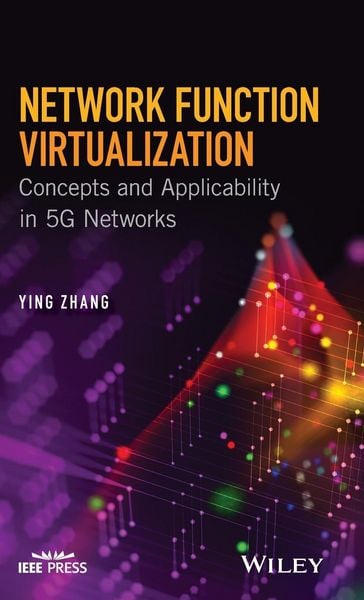
Network Function Virtualization Concepts and Applicability in 5G Networks

Aus der Reihe Wiley - IEEE

153,99 €

inkl. gesetzl. MwSt., Versandkostenfrei


Beschreibung

Produktdetails

Einband

Gebundene Ausgabe

Erscheinungsdatum

11.01.2018

Verlag

John Wiley & Sons

Seitenzahl

192

Maße (L/B/H)

22,2/14,5/1,4 cm

Gewicht

377 g

Auflage

1. Auflage

Sprache

Englisch

ISBN

978-1-119-39060-2

Beschreibung

Produktdetails

Einband

Gebundene Ausgabe

Erscheinungsdatum

11.01.2018

Verlag

John Wiley & Sons

Seitenzahl

192

Maße (L/B/H)

22,2/14,5/1,4 cm

Gewicht

377 g

Auflage

1. Auflage

Sprache

Englisch

ISBN

978-1-119-39060-2

Herstelleradresse

Libri GmbH
Europaallee 1
36244 Bad Hersfeld
DE

Email: gpsr@libri.de

Noch keine Bewertungen vorhanden

Verfassen Sie die erste Bewertung zu diesem Artikel

Helfen Sie anderen Kundinnen und Kunden durch Ihre Meinung.

Kundinnen und Kunden meinen

Bewertungen (0)

Die Leseprobe wird geladen.
  • Produktbild: Network Function Virtualization
  • Produktbild: Network Function Virtualization
  • List of Figures ix

    List of Tables xii

    Preface xiii

    List of Abbreviation and Acronyms xv

    1 Introduction 1

    1.1 Cloud-Enabled 5G: SDN and NFV 3

    1.1.1 Benefits 6

    1.1.2 Challenges 7

    1.2 Supporting Technologies 8

    1.2.1 Cloud Computing 8

    1.2.2 Network Virtualization 9

    1.2.3 Network Functions Virtualization 9

    1.2.4 Software-Defined Networking 10

    1.3 Outline of Chapters 10

    2 Virtualization and Cloud Computing 13

    2.1 Cloud Computing 13

    2.1.1 Architecture 13

    2.1.2 Types of Clouds 15

    2.1.3 Challenges 16

    2.2 Host Virtualization 18

    2.2.1 Overview 18

    2.2.1.1 Benefits 19

    2.2.1.2 Use Cases 19

    2.2.2 Virtualization Techniques 20

    2.2.2.1 Hardware-Level Virtualization 20

    2.2.2.2 Other Virtualization Techniques 21

    2.2.3 Containers 21

    2.3 Network Virtualization 22

    2.3.1 Overlay Networks 24

    2.3.2 Virtual Private Network 24

    2.3.3 Virtual Sharing Networks 27

    2.3.4 Switch-Based SDN Virtualization 29

    2.3.5 Host-Based Network Virtualization 31

    2.4 Wireless Virtualization 32

    2.5 Summary 36

    3 Network Function Virtualization 37

    3.1 NFV Architecture 38

    3.2 NFV Use Cases and Examples 42

    3.3 NFV Challenges 45

    3.4 NFV Orchestration 46

    3.4.1 NFV Performance Characterization 47

    3.4.2 NFV Performance Improvements 49

    3.5 NF Modeling 50

    3.5.1 Source-Code-Based Modeling 52

    3.5.1.1 Background 52

    3.5.1.2 Modeling Example 53

    3.5.1.3 Models 55

    3.5.1.4 Model Extraction Overview 56

    3.5.2 Modeling Applications 58

    3.6 VNF Placement 59

    3.7 Summary 63

    4 Software-Defined Networks Principles and Applications 65

    4.1 SDN Overview 66

    4.1.1 Motivations 66

    4.1.2 Architecture 67

    4.1.2.1 Separation of Control and Data Plane 67

    4.1.2.2 Northbound Open APIs 69

    4.1.2.3 Southbound Control/Data Plane Protocol 69

    4.1.2.4 Applications 70

    4.1.3 Use Cases 70

    4.2 SDN Controller 71

    4.2.1 Controller Deployment Choices 73

    4.2.2 Apps on SDN Controller 75

    4.3 SDN Data Plane 76

    4.4 SDN Management 78

    4.4.1 Anomaly Detection 78

    4.4.2 Network Measurement 80

    4.4.3 Failure Recovery 82

    4.4.4 Controller Placement 84

    4.4.4.1 A Special Study: Controller to Switch Connectivity 87

    4.4.4.2 Node Versus Link Failure 92

    4.4.4.3 Downstream Versus Upstream Nodes 93

    4.5 SDN Security Attack Prevention 94

    4.6 SDN Traffic Engineering 96

    4.6.1 TE Architecture and Solution Overview 98

    4.6.1.1 Hierarchical Control Structure 98

    4.6.1.2 Control Node Design 99

    4.6.1.3 Scalability Benefit 100

    4.6.2 Design Challenges 100

    4.6.3 TE Solution Overview 101

    4.7 Summary 102

    5 SDN and NFV in 5G 105

    5.1 5G Overview 106

    5.1.1 Architecture 106

    5.2 Service Function Chaining 108

    5.2.1 OpenFlow-Based SFC Solution 110

    5.2.1.1 Represent Directions with Port Types 114

    5.2.1.2 Realize Policies with Multiple Forwarding Tables 115

    5.2.1.3 Handle Dynamics with the Microflow Table 116

    5.2.1.4 Encode Service Chaining with Metadata 117

    5.2.1.5 Summary of Dataplane Functions 118

    5.2.2 SFC Monitoring 118

    5.2.2.1 Handling Multiple Monitoring Tasks 121

    5.2.3 Optical SFC 122

    5.2.3.1 Service Placement in Optical NFV 125

    5.2.4 Verification of Service Function Chaining 128

    5.3 Core Network Functions Virtualization: vEPC 131

    5.3.1 Existing Solutions Problems 133

    5.3.2 Virtualization and Cloud-Assisted PC 134

    5.4 Virtualized Customer Premises Equipment 137

    5.4.1 Requirements 138

    5.4.2 Design 140

    5.5 Summary 142

    6 Open Source and Research Activities 143

    6.1 Open Source Initiatives 144

    6.1.1 OpenStack 144

    6.1.2 OpenDayLight 146

    6.1.3 OPNFV 148

    6.1.4 CORD: Central Office Re-architected as a Data Center 150

    6.2 NFV Research Problems 151

    6.3 Summary 152

    References 153

    Index 163