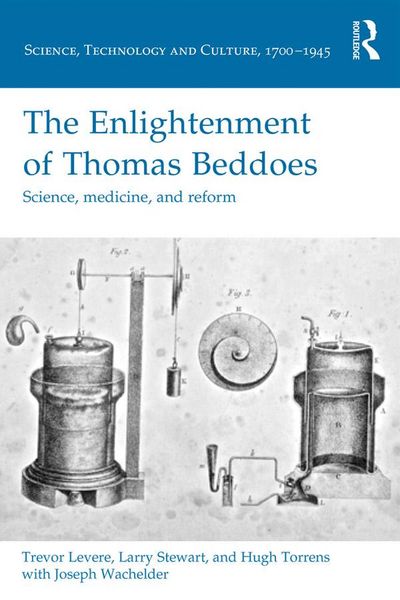
The Enlightenment of Thomas Beddoes Science, medicine, and reform
-
- Einzelkauf Download ausgewählt
-
Sprache:Englisch
-
eBook Format:ePUB 3
- ePUB 3 77,70 € ausgewählt
- PDF 77,70 €
77,70 €
inkl. gesetzl. MwSt.Beschreibung
Produktdetails
Format
ePUB 3
Kopierschutz
Ja
Family Sharing
Nein
Text-to-Speech
Ja
Erscheinungsdatum
10.11.2016
Verlag
Taylor & Francis eBooksSeitenzahl
280 (Printausgabe)
Dateigröße
4039 KB
Sprache
Englisch
EAN
9781315411910
Thomas Beddoes (1760-1808) lived in 'decidedly interesting times' in which established orders in politics and science were challenged by revolutionary new ideas. Enthusiastically participating in the heady atmosphere of Enlightenment debate, Beddoes' career suffered from his radical views on politics and science. Denied a professorship at Oxford, he set up a medical practice in Bristol in 1793. Six years later - with support from a range of leading industrialists and scientists including the Wedgwoods, Erasmus Darwin, James Watt, James Keir and others associated with the Lunar Society - he established a Pneumatic Institution for investigating the therapeutic effects of breathing different kinds of 'air' on a wide spectrum of diseases.
The treatment of the poor, gratis, was an important part of the Pneumatic Institution and Beddoes, who had long concerned himself with their moral and material well-being, published numerous pamphlets and small books about their education, wretched material circumstances, proper nutrition, and the importance of affordable medical facilities. Beddoes' democratic political concerns reinforced his belief that chemistry and medicine should co-operate to ameliorate the conditions of the poor. But those concerns also polarized the medical profession and the wider community of academic chemists and physicians, many of whom became mistrustful of Beddoes' projects due to his radical politics.
Highlighting the breadth of Beddoes' concerns in politics, chemistry, medicine, geology, and education (including the use of toys and models), this book reveals how his reforming and radical zeal were exemplified in every aspect of his public and professional life, and made for a remarkably coherent program of change. He was frequently a contrarian, but not without cause, as becomes apparent once he is viewed in the round, as part of the response to the politics and social pressures of the late Enlightenment.
Noch keine Bewertungen vorhanden
Verfassen Sie die erste Bewertung zu diesem Artikel
Helfen Sie anderen Kundinnen und Kunden durch Ihre Meinung.
Kurze Frage zu unserer Seite
Vielen Dank für Ihr Feedback
Wir nutzen Ihr Feedback, um unsere Produktseiten zu verbessern. Bitte haben Sie Verständnis, dass wir Ihnen keine Rückmeldung geben können. Falls Sie Kontakt mit uns aufnehmen möchten, können Sie sich aber gerne an unseren Kund*innenservice wenden.
zum Kundenservice