KI-Beratung Beta

Gutscheinbedingungen

**Gültig bis 18.11.2026 auf englischsprachige Klassiker (klassiker-32728) online auf thalia.at und in der Thalia App. Einzelne Artikel können ausgeschlossen sein. Ausgenommen sind preisgebundene Artikel & eBooks. Pro Einkauf einmal einlösbar. Click & Collect nur bei Onlinevorabzahlung möglich. Keine Barauszahlung. Nicht kombinierbar mit anderen Aktionen und Gutscheinen. Gutschein wird auf max. 500€ Bestellwert angerechnet. Nicht gültig für Geschenkkarten, Versandkosten und Services.

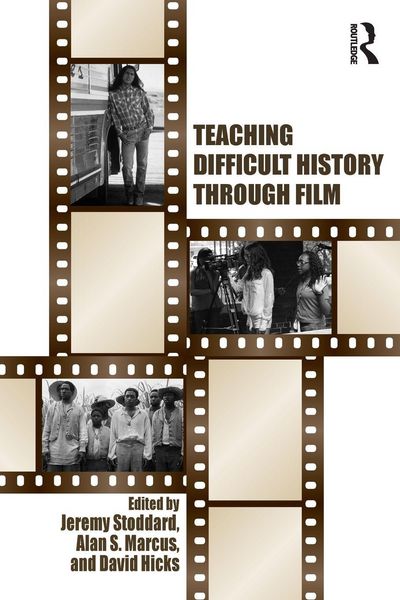
  • Produktbild: Teaching Difficult History through Film
  • Produktbild: Teaching Difficult History through Film

Teaching Difficult History through Film

94,99 €

inkl. gesetzl. MwSt., Versandkostenfrei


Beschreibung

Teaching Difficult History through Film explores the potential of film to engage young people in controversial or contested histories and how they are represented, ranging from gender and sexuality, to colonialism and slavery. Adding to the education literature of how to teach and learn difficult histories,...

Beschreibung

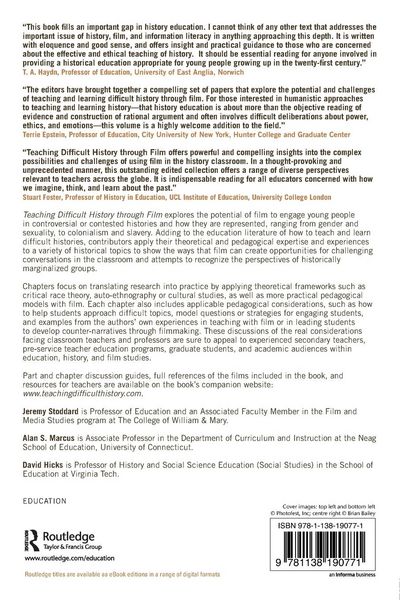
Teaching Difficult History through Film explores the potential of film to engage young people in controversial or contested histories and how they are represented, ranging from gender and sexuality, to colonialism and slavery. Adding to the education literature of how to teach and learn difficult histories, contributors apply their theoretical and pedagogical expertise and experiences to a variety of historical topics to show the ways that film can create opportunities for challenging conversations in the classroom and attempts to recognize the perspectives of historically marginalized groups. Chapters focus on translating research into practice by applying theoretical frameworks such as critical race theory, auto-ethnography or cultural studies, as well as more practical pedagogical models with film. Each chapter also includes applicable pedagogical considerations, such as how to help students approach difficult topics, model questions or strategies for engaging students, and examples from the authors' own experiences in teaching with film or in leading students to develop counter-narratives through filmmaking. These discussions of the real considerations facing classroom teachers and professors are sure to appeal to experienced secondary teachers, pre-service teacher education programs, graduate students, and academic audiences within education, history, and film studies.

Produktdetails

Einband

Taschenbuch

Erscheinungsdatum

15.06.2017

Abbildungen

10 Tables, black and white; 1 Halftones, black and white; 1 Illustrations, black and white

Verlag Routledge

Produktdetails

Einband

Taschenbuch

Erscheinungsdatum

15.06.2017

Abbildungen

10 Tables, black and white; 1 Halftones, black and white; 1 Illustrations, black and white

Verlag Routledge
Seitenzahl

274

Maße (L/B/H)

22,9/15,2/1,5 cm

Gewicht

402 g

Sprache

Englisch

ISBN

978-1-138-19077-1

Herstelleradresse

Libri GmbH
Europaallee 1
36244 Bad Hersfeld
DE

Email: gpsr@libri.de

Noch keine Bewertungen vorhanden

Verfassen Sie die erste Bewertung zu diesem Artikel

Helfen Sie anderen Kundinnen und Kunden durch Ihre Meinung.

Kundinnen und Kunden meinen

Bewertungen (0)

Die Leseprobe wird geladen.
  • Produktbild: Teaching Difficult History through Film
  • Produktbild: Teaching Difficult History through Film
  • Dedications

    Section 1: Introduction to Teaching Difficult History and Film as Difficult History

    Chapter 1: Using Film to Teach Difficult Histories

    Jeremy Stoddard, Alan S. Marcus, and David Hicks

    Chapter 2: Difficult History Means Difficult Questions: Using Film to Reveal the Perspective of 'The Other' in Difficult History Topics

    Ben Walsh, David Hicks, and Stephanie van Hover

    Section 2: Human Rights, Trauma, and Contemporary Difficult Histories

    Chapter 3: Teaching the History and Contemporary Challenge of Human Rights through Film

    Glenn Mitoma

    Chapter 4: From Seeing to Learn to Learning to See: Films on the Palestinian-Israeli Conflict

    Brian Britt

    Chapter 5: The Torturers Among Us: History, the Film Industry, and its Claims to Truth

    Robert P. Stephens

    Section 3: Difficult History, Identity, and Implementation in Curriculum

    Chapter 6: Institutional Roles in Using Film to Teach Difficult History: The Federal Agency for Civic Education and The Lives of Others

    Mattias Frey

    Chapter 7: "I saw a REAL Indian on TV last night!": Engaging Students in Historical Thinking for Social Justice

    Christine Rogers Stanton, Amanda LeClair-Diaz, Brad Hall, and Lucia Ricciardelli

    Chapter 8: What Does History Have to Do With This?: Youth Filmmaking for Social Change

    Sandra Quiñones, Brian Bailey, Joseph Ehman, and Daniel Delehanty

    Section 4: Teaching Common but Difficult Histories through Film

    Chapter 9: Hollywood Histories: Examining Contemporary Depictions of Race and American Slavery in Popular Film

    Keffrelyn D. Brown and Anthony L. Brown

    Chapter 10: Classroom as Memory Workspace: The Educational and Empathetic Potentials of Twelve Years a Slave and Ask a Slave

    Matthew R. Cook and Derek H. Alderman

    Chapter 11: Teaching Difficult History with Film: Multiple Perspectives on the Holocaust

    Alan S. Marcus and Gary Mills

    Section 5: Difficult Histories from the Margins in Curriculum and Teacher Education

    Chapter 12: Questioning "Normal": Actively Undoing Dis/ability Stereotypes Through Teaching a Critical Analysis of Films.

    David J. Connor

    Chapter 13: Invoking Precious Knowledge with Teacher Candidates to Reclaim the Past, Reassess the Present, and Revolutionize Future Practice
    Mark Kohan and Emilie M. Camp

    Chapter 14: Finally "Seeing" a Queer Past: The Importance of Film in Teaching LGBTQ American History

    Sharon Ullman