
Gutscheinbedingungen

**Gültig am 28.06.2026 auf Spielzeug, Schreibwaren, Filme, Geschenke & Trends, Musik, tolino eReader & Zubehör, Hörbücher und Hörbuch-Downloads (außer Abo), nicht preisgebundene Bücher und Kalender online auf thalia.at und in der Thalia App. Einzelne Artikel können ausgeschlossen sein. Aufgrund der Buchpreisbindung sind deutschsprachige Bücher und eBooks ausgenommen. Zusätzlich ausgenommen sind preisgebundene Artikel, Abos & Flatrates, eBooks, Games, Geschenkkarten/-boxen, Shelfies, Software, Zeitschriften sowie einzelne Artikel von tonies®. Pro Einkauf einmal einlösbar. Click & Collect nur bei Onlinevorabzahlung möglich. Keine Barauszahlung. Nicht kombinierbar mit anderen Aktionen und Gutscheinen. Gutschein wird auf max. 500€ Bestellwert angerechnet. Nicht gültig für Versandkosten und Services.

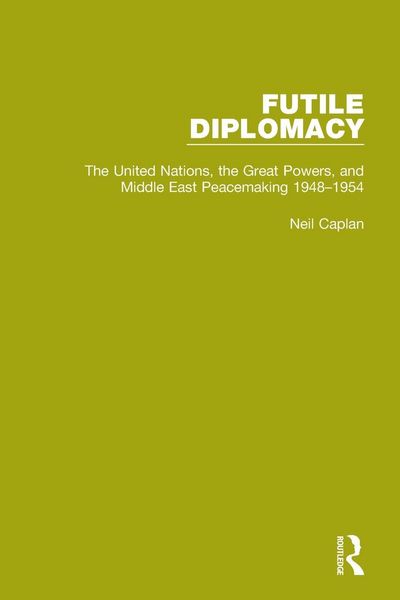
  • Produktbild: Futile Diplomacy, Volume 3
  • Produktbild: Futile Diplomacy, Volume 3

Futile Diplomacy, Volume 3 The United Nations, the Great Powers and Middle East Peacemaking, 1948-1954

75,99 €

inkl. gesetzl. MwSt., Versandkostenfrei


Beschreibung

Produktdetails

Einband

Taschenbuch

Erscheinungsdatum

10.11.2016

Verlag

Taylor and Francis

Seitenzahl

418

Maße (L/B/H)

23,4/15,6/2,3 cm

Gewicht

770 g

Sprache

Englisch

ISBN

978-1-138-90754-6

Beschreibung

Produktdetails

Einband

Taschenbuch

Erscheinungsdatum

10.11.2016

Verlag

Taylor and Francis

Seitenzahl

418

Maße (L/B/H)

23,4/15,6/2,3 cm

Gewicht

770 g

Sprache

Englisch

ISBN

978-1-138-90754-6

Herstelleradresse

Libri GmbH
Europaallee 1
36244 Bad Hersfeld
DE

Email: gpsr@libri.de

Kundinnen und Kunden meinen

0 Bewertungen

Informationen zu Bewertungen

Zur Abgabe einer Bewertung ist eine Anmeldung im Konto notwendig. Die Authentizität der Bewertungen wird von uns nicht überprüft. Wir behalten uns vor, Bewertungstexte, die unseren Richtlinien widersprechen, entsprechend zu kürzen oder zu löschen.

Die Bewertungen sind nach Format, Anzahl Sterne und Datum sortiert.

Verfassen Sie die erste Bewertung zu diesem Artikel

Helfen Sie anderen Kund*innen durch Ihre Meinung

Kundinnen und Kunden meinen

0 Bewertungen filtern

Die Leseprobe wird geladen.
  • Produktbild: Futile Diplomacy, Volume 3
  • Produktbild: Futile Diplomacy, Volume 3
  • 1. Historical and Psychological Context 1.1. Lessons from the Mandate Period 1.2. Changing Structure and Dynamics of the Post-1948 Conflict 1.3. Forms of Third-Party Intervention in the Arab-Israeli Dispute 1.4. The Maze of Mutual Perceptions and Misconceptions 2. War and Mediation, 1948 2.1. Bernadotte's 'Suggestions', 27 June 1948 2.2. Direct Negotiations 2.3. The Bernadotte Plan, September 1948: Acquiescence versus Agreement 2.4. Patterns and Precedents 3. Egypt and Israel at Rhodes 3.1. United Nations Peacemaking: Two Tracks 3.2. From Truce to Armistice 3.3. Getting to the Table 3.4. Opening of Talks 3.5. Breakthrough: Signing the Armistice Agreement 3.6. From Armistice to Peace? 4. The Lausanne Conference: Prenegotiation 4.1. The Palestine Conciliation Commission 4.2. Preparing the Ground 4.3. Shuttle Diplomacy 4.4. Quest for an Advance Gesture from Israel 4.5. PCC Beirut Conference, March 1949 4.6. Continuing Pressure for an Israeli Gesture 4.7. The Shadow of Rhodes 4.8. Strains in the Arab Common Front 5. Manoeuvring at Lausanne 5.1. Opening the Conference 5.2. A Basis for Discussion: The Lausanne Protocol, 12 May 1949 5.3. Staking out the Positions: The First Deadlock 5.4. Israel's Offer to Incorporate the Gaza Strip 6. Lausanne: The Final Stalemate 6.1. July Recess 6.2. Resumption of the Conference 6.3. Israel's Offer to Repatriate 100,000 Refugees 6.4. Continued Conciliation or Imposed Settlement? 6.5. Winding up the Conference 6.6. Lausanne Postcripts 7. Geneva Interlude 7.1. Years of Drift 7.2. From Conciliation to Mediation? 7.3. Bilateral Negotiations 7.4. PCC Geneva Meetings, January-July 1950 8. Deterioration of the Armistice 8.1. From Negative Peace to Positive Peace? 8.2. Beginnings of the Arms Race 8.3. Regional Stability and Arms Control: The Tripartite Declaration, May 1950 8.4. The Entrenchment of Israeli and Arab Positions 8.5. Piecemeal Approaches: 'Knitting Tissue' over the Wound 9. PCC Paris Conference, Autumn 1951 9.1. From Atrophy to Activity: Ely Palmer, the State Department, and the PCC Initiative 9.2. Preparing the Conference 9.3. The Conference Begins 9.4. The PCC's Comprehensive Pattern of Proposal 10. The Paris Conference and the Demise of PCC Mediation 10.1. Draft Non-Aggression Formulae 10.2. From Preamble to Proposals 10.3. Paris Deadlock and the General Assembly 10.4. The Final Sessions: 14 November 1951 10.5. The Demise of the PCC and United Nations Mediation 11. The United Nations and Direct Negotiations, 1952-53 11.1. The Seventh General Assembly (1952): Eight-Power Draft Resolution 11.2. Changes during 1953: Qibiya and Israeli-Jordanian Tensions 11.3. The Israeli Call for Direct Negotiations: November 1953 12. The United Nations Conference that Never Was, 1953-54 12.1. Invoking Article XII: The First Stages 12.2. Arab Reactions to International Pressure 12.3. Responses to Jordan's Refusal Aftermath 13. Conclusion 13.1. Assessment of the Arab-Israeli Impasse 13.2. Approaches to Conflict Resolution 13.3. American Leverage on the Parties 13.4. Techniques of Conciliation 13.5. The Attitudes and Positions of the Parties 13.6. From War to War 14. Documents