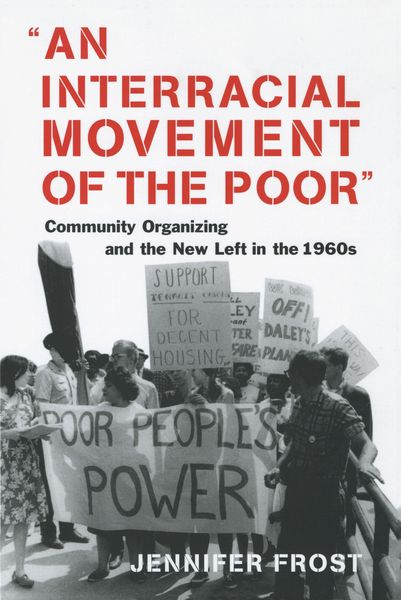
An Interracial Movement of the Poor Community Organizing and the New Left in the 1960s
-
- Taschenbuch
- eBook ausgewählt
-
Form:Einzelkauf Download
-
Sprache:Englisch
33,40 €
inkl. gesetzl. MwSt.Beschreibung
Produktdetails
Format
ePUB
Kopierschutz
Nein
Family Sharing
Nein
Text-to-Speech
Ja
Erscheinungsdatum
01.11.2005
Verlag
United Methodist Publishing HouseSeitenzahl
(Printausgabe)
Dateigröße
3385 KB
Sprache
Englisch
EAN
9780814728680
Choice Outstanding Academic Title 2002
Community organizing became an integral part of the activist repertoire of the New Left in the 1960s. Students for a Democratic Society, the organization that came to be seen as synonymous with the white New Left, began community organizing in 1963, hoping to build an interracial movement of the poor through which to demand social and political change. SDS sought nothing less than to abolish poverty and extend democratic participation in America.
Over the next five years, organizers established a strong presence in numerous low-income, racially diverse urban neighborhoods in Chicago, Cleveland, Newark, and Boston, as well as other cities. Rejecting the strategies of the old left and labor movement and inspired by the Civil Rights Movement, activists sought to combine a number of single issues into a broader, more powerful coalition. Organizers never limited themselves to today's simple dichotomies of race vs. class or of identity politics vs. economic inequality. They actively synthesized emerging identity politics with class and coalition politics and with a drive for a more participatory welfare state, treating these diverse political approaches as inextricably intertwined. While common wisdom holds that the New Left rejected all state involvement as cooptative at best, Jennifer Frost traces the ways in which New Left and community activists did in fact put forward a prescriptive, even visionary, alternative to the welfare state.
After Students for a Democratic Society and its community organizing unit, the Economic Research and Action Project, disbanded, New Left and community participants went on to apply their strategies and goals to the welfare rights, women's liberation, and the antiwar movements. In her study of activism before the age of identity politics, Frost has given us the first full-fledged history of what was arguably the most innovative community organizing campaign in post-war American history.
Noch keine Bewertungen vorhanden
Verfassen Sie die erste Bewertung zu diesem Artikel
Helfen Sie anderen Kundinnen und Kunden durch Ihre Meinung.
Kurze Frage zu unserer Seite
Vielen Dank für Ihr Feedback
Wir nutzen Ihr Feedback, um unsere Produktseiten zu verbessern. Bitte haben Sie Verständnis, dass wir Ihnen keine Rückmeldung geben können. Falls Sie Kontakt mit uns aufnehmen möchten, können Sie sich aber gerne an unseren Kund*innenservice wenden.
zum Kundenservice