Gutscheinbedingungen

**Gültig bis 04.08.2026 ab einem Mindestbestellwert von 30€ auf Spielzeug, Schreibwaren, Filme, Geschenke & Trends, Musik, tolino eReader & Zubehör, Hörbücher und Hörbuch-Downloads (außer Abo), nicht preisgebundene Bücher und Kalender online auf thalia.at und in der Thalia App. Einzelne Artikel können ausgeschlossen sein. Aufgrund der Buchpreisbindung sind deutschsprachige Bücher und eBooks ausgenommen. Zusätzlich ausgenommen sind preisgebundene Artikel, Abos & Flatrates, eBooks, Games, Geschenkkarten/-boxen, Shelfies, Software, Zeitschriften sowie einzelne Artikel von tonies®. Pro Einkauf einmal einlösbar. Click & Collect nur bei Onlinevorabzahlung möglich. Keine Barauszahlung. Nicht kombinierbar mit anderen Aktionen und Gutscheinen. Gutschein wird auf max. 500€ Bestellwert angerechnet. Nicht gültig für Versandkosten und Services. Preisgebundene Artikel sind vom Mindestbestellwert ausgeschlossen.

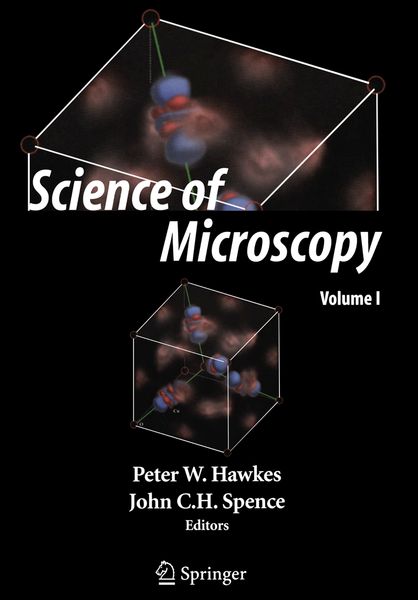
Produktbild: Science of Microscopy
- 17%

Science of Microscopy

17% sparen

496,99 € UVP 604,99 €

inkl. gesetzl. MwSt., Versandkostenfrei


Beschreibung

Produktdetails

Einband

Set mit diversen Artikeln

Erscheinungsdatum

04.11.2016

Herausgeber

P.W. Hawkes + weitere

Verlag

Springer Us

Seitenzahl

1322

Maße (L/B/H)

24,4/17/7,5 cm

Gewicht

2360 g

Auflage

Softcover reprint of the original 1st ed. 2007

Sprache

Englisch

ISBN

978-1-4939-3864-3

Beschreibung

Rezension

From the reviews:

In Science of Microscopy, comprehensive reviews set these innovations in the context of microscopy today. Each contribution presents a form of microscopy or occasionally a microscopic technique, and provides information about the instruments involved and their areas of application. The contributions are written in such a way that the reader can understand how the various instruments function, their strengths and weaknesses, and whether they are suitable for a particular scientific investigation. Science of Microscopy will be an indispensible guide to both a wide range of scientists in university laboratories and to engineers and scientists in industrial R&D departments.

"The Science of Microscopy presents 20 essays (in 2 volumes) covering topics within modern microscopy contributed by national and international experts. … Many of the essays contain a valuable section entitled ‘Relevance to Humans’, that talks about data pertinent to human applications. … The encyclopedia is highly recommended for science collections in large public, community college, and academic libraries." (Laura J. Bender, ARBA online, March, 2007)

"The editors of Science of Microscopy are notable authors and researchers in the areas of physics, optics, and electron microscopy. Hawkes and Spence are fully qualified to present this set (each editor also contributes an essay), which will be a valuable addition to academic libraries serving upper-level undergraduates and graduate students who need to learn various microscopic techniques." (Caroline L. Gilson, ARBA online, Vol. 39, 2008)

"This is an excellent book on the subject of modern microscopies. … Numerous detailed applications are given to guide the readers decision which instrument or technique seems to be best suited for retrieving information. … the book is aimed at institutions such as research groups and libraries. … could be a valuable source of knowledge for both individual researchers and doctoral students." (Dr. Thomas Matzelle, Imaging and Microscopy, Vol. 10 (2), 2008)

Portrait

Peter Hawkes received his Ph.D. in physics from the University of Cambridge in 1963, after which he continued his research on electron optics, and in particular on aberration theory and image processing, in the Cavendish Laboratory until 1975. During this period, he was a Fellow of Peterhouse and of Churchill College. He then moved to the CNRS laboratory of Electron Optics in Toulouse, of which he was Director in 1987, and published extensively on electron lens aberrations and theoretical aspects of image processing. In 2002, he was awarded the status of Emeritus CNRS Director of Research. He has been President of the French Microscopy Society and was Founder-President of the European Microscopy Society. He is author or editor of numerous books on electron optics and image processing, notably the three-volume Principles of Electron Optics (with E. Kasper). He is general editor of the series Advances in Imaging & Electron Physics and edited a special volume on the 'Beginnings of Electron Microscopy' with contributions from many of the founders of the subject. His most recent interest is the introduction of image algebra into electron optical thinking and he has published many historical articles on forgotten aspects of the subject. He has been a member of the editorial boards of Ultramicroscopy and the Journal of Microscopy for many years. He has been a member of the advisory boards of numerous European and International Congresses on Electron Microscopy and was one of the founder-organizers of the series of Congresses on Charged-particle Optics, the third of which was organized by him in Toulouse in 1990. He is a fellow of the Optical Society of America and member of EMAG (Institute of Physics), the Microscopy Society of America, the European Microscopy Society, the French Microscopy Society and the Royal Microscopical Society. In 1983, he was awarded the Silver medal of the CNRS.

John Spence received his PhD in Physics from Melbourne in 1973 followed by post-doctoral work in Oxford, UK. He joined John Cowley's electron microscopy group at Arizona State University in 1977 where he is Regent's Professor of Physics. His group has worked in many areas connected with the development of novel microscopies and diffraction physics, especially quantitative convergent-beam electron diffraction and the multiple-scattering inversion problem. Instrumentation projects have included a time-of-flight spectrometer for scanning tunnelling microscopy, a point-projection field-emission microscope for molecular imaging (both with Weierstall), cathodoluminescence for scanning transmission electron microscopy (with Yamamoto), development with Tafto of the ALCHEMI method for locating foreign atoms in crystals using channeling effects on X-ray production in TEM, and development of perhaps the first direct-detection CCD camera for TEM. He was co-editor for North America of Acta Cryst. for ten years, is a Fellow of the American Physical Society, the Institute of Physics, Churchill College, and Chair of the International Union of Crystallography Commission on Electron Diffraction. He is the author of two texts (one with Zuo) on electron microscopy, and a member of the Scientific Advisory committees of the Advanced Light Source and Molecular Foundry at Lawrence Berkeley Laboratory, and of the department of energy's BESAC committee. His current interests include lensless (diffractive) imaging with electrons or X--rays, and use of laser-aligned protein beams for protein crystallography.

Produktdetails

Einband

Set mit diversen Artikeln

Erscheinungsdatum

04.11.2016

Herausgeber

Verlag

Springer Us

Seitenzahl

1322

Maße (L/B/H)

24,4/17/7,5 cm

Gewicht

2360 g

Auflage

Softcover reprint of the original 1st ed. 2007

Sprache

Englisch

ISBN

978-1-4939-3864-3

Herstelleradresse

Springer-Verlag KG
Sachsenplatz 4-6
1201 Wien
AT

Email: GPSR Kontakt

Noch keine Bewertungen vorhanden

Verfassen Sie die erste Bewertung zu diesem Artikel

Helfen Sie anderen Kundinnen und Kunden durch Ihre Meinung.

Kundinnen und Kunden meinen

Bewertungen (0)

  • Produktbild: Science of Microscopy
  • Imaging With Electrons.- Atomic Resolution Transmission Electron Microscopy.- Scanning Transmission Electron Microscopy.- Scanning Electron Microscopy.- Analytical Electron Microscopy.- High-Speed Electron Microscopy.- In Situ Transmission Electron Microscopy.- Cryoelectron Tomography (CET).- LEEM and SPLEEM.- Photoemission Electron Microscopy (PEEM).- Aberration Correction.- Imaging With Photons.- Two-Photon Excitation Fluorescence Microscopy.- Nanoscale Resolution in Far-Field Fluorescence Microscopy.- Principles and Applications of Zone Plate X-Ray Microscopes.- Near-Field Scanning Probes.- Scanning Probe Microscopy in Materials Science.- Scanning Tunneling Microscopy in Surface Science.- Atomic Force Microscopy in the Life Sciences.- Low-Temperature Scanning Tunneling Microscopy.- Holographic And Lensless Modes.- Electron Holography.- Diffractive (Lensless) Imaging.- The Notion of Resolution.