KI-Beratung Beta

Gutscheinbedingungen

**Gültig bis 05.10.2026 ab einem Mindestbestellwert von 30€ auf Spielzeug, Schreibwaren, Filme, Geschenke & Trends, Musik, tolino eReader & Zubehör, Hörbücher und Hörbuch-Downloads, nicht preisgebundene Bücher und Kalender online auf thalia.at und in der Thalia App. Einzelne Artikel können ausgeschlossen sein. Aufgrund der Buchpreisbindung sind deutschsprachige Bücher und eBooks ausgenommen. Zusätzlich ausgenommen sind Abos & Flatrates, Games, Geschenkkarten/-boxen, Shelfies, Software, Zeitschriften sowie einzelne Artikel von tonies®. Pro Einkauf einmal einlösbar. Nur gültig mit im Onlineshop hinterlegter Bonuscard. Click & Collect nur bei Onlinevorabzahlung möglich. Keine Barauszahlung. Nicht kombinierbar mit anderen Aktionen und Gutscheinen. Gutschein wird auf max. 500€ Bestellwert angerechnet. Nicht gültig für Versandkosten und Services. Preisgebundene Artikel sind vom Mindestbestellwert ausgeschlossen.

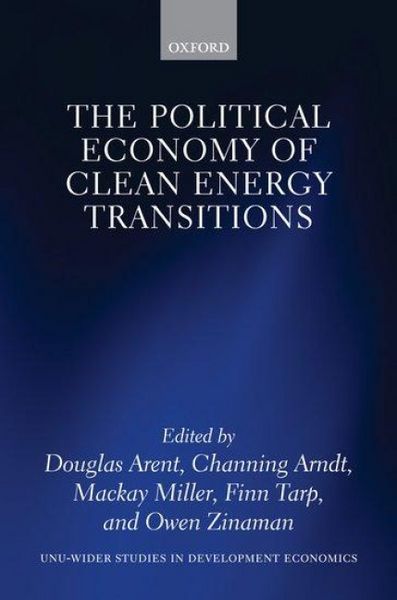
Produktbild: The Political Economy of Clean Energy Transitions

The Political Economy of Clean Energy Transitions

221,99 €

inkl. gesetzl. MwSt., Versandkostenfrei


Beschreibung

Produktdetails

Einband

Gebundene Ausgabe

Erscheinungsdatum

13.06.2017

Abbildungen

Figures and Tables

Herausgeber

Douglas Arent + weitere

Verlag

Oxford University Press

Seitenzahl

632

Maße (L/B/H)

23,6/16,5/4,1 cm

Gewicht

1039 g

Sprache

Englisch

ISBN

978-0-19-880224-2

Beschreibung

Produktdetails

Einband

Gebundene Ausgabe

Erscheinungsdatum

13.06.2017

Abbildungen

Figures and Tables

Herausgeber

Verlag

Oxford University Press

Seitenzahl

632

Maße (L/B/H)

23,6/16,5/4,1 cm

Gewicht

1039 g

Sprache

Englisch

ISBN

978-0-19-880224-2

Herstelleradresse

Libri GmbH
Europaallee 1
36244 Bad Hersfeld
DE

Email: gpsr@libri.de

Noch keine Bewertungen vorhanden

Verfassen Sie die erste Bewertung zu diesem Artikel

Helfen Sie anderen Kundinnen und Kunden durch Ihre Meinung.

Kundinnen und Kunden meinen

Bewertungen (0)

Die Leseprobe wird geladen.
  • Produktbild: The Political Economy of Clean Energy Transitions
    • Part I. The Political Economy of Clean Energy Transitions
    • 1: Douglas Arent, Channing Arndt, Mackay Miller, Finn Tarp, and Owen Zinaman: Introduction and Synthesis
    • 2: Benjamin K. Sovacool: The history and politics of energy transitions: Comparing contested views and finding common ground
    • Part II. Climate Policy
    • 3: Jesse D. Jenkins and Valerie J. Karplus: Carbon pricing under political Constraints: insights for accelerating clean energy transitions
    • 4: Julien Bueb, Lilian Richieri Hanania, and Alice Le Clézio: Border adjustment mechanisms: Elements for economic, legal, and political analysis
    • 5: Erik Gawel, Sebastian Strunz, and Paul Lehmann: Support policies for renewables: Instrument choice and instrument change from a public choice perspective
    • Part III. Institutions and Governance
    • 6: Stefan Cetkovic, Aron Buzogány, and Miranda Schreurs: Varieties of clean energy transitions in Europe: Political-economic foundations of onshore and offshore wind development
    • 7: Shouro Dasgupta, Enrica De Cian, and Elena Verdolini: The political economy of energy innovation
    • 8: Dewi Yuliani: Is feed-in-tariff policy effective for increasing deployment of renewable energy in Indonesia?
    • 9: Éric Nazindigouba Kere: Do political economy factors matter in explaining the increase in the production of bioenergy?
    • 10: Jonas Sonnenschein: Understanding indicator choice for the assessment of RDandD financing of low-carbon energy technologies: Lessons from the Nordic countries
    • 11: David Onyinyechi Agu and Evelyn Nwamaka Ogbeide-Osaretin: An inquiry into the political economy of the global clean energy transition policies and Nigeria's federal and state governments' fiscal policies
    • Part IV. Actors and Interests
    • 12: Karoliina Isoaho, Alexandra Goritz, and Nicolai Schulz: Governing clean energy transitions in China and India
    • 13: Michael R. Davidson, Fredrich Kahrl, and Valerie J. Karplus: Towards a political economy framework for wind power: Does China break the mould?
    • 14: Britta Rennkamp and Radhika Bhuyan: The social shaping of nuclear energy technology in South Africa
    • 15: Almas Heshmati and Shahrouz Abolhosseini: European energy security: challenges and green opportunities
    • Part V. Incumbency
    • 16: Ross Astoria: Incumbancy and the legal configuration of hydrocarbon infrastructure
    • 17: Cherrelle Eid, Rudi Hakvoort, Martin de Jong: Global trends in the political economy of smart grids
    • 18: Henok Birhanu Asmelash: Falling oil prices and sustainable energy transition: Towards a multilateral agreement on fossil-fuel subsidies
    • Part VI. Sector Reform
    • 19: Lucy Baker: Post-apartheid electricity policy and the emergence of South Africa's renewable energy sector
    • 20: Eric Kehinde Ogunleye: Political economy of Nigerian power sector reform
    • 21: José María Valenzuela and Isabel Studer: Climate change policy and power sector reform in Mexico under the golden age of gas
    • 22: Santiago Bucaram, Mario Andrés Fernández, and Diego Grijalva: Sell the oil deposits! A financial proposal to keep the oil underground in the Yasuni National Park, Ecuador
    • Part VII. Social Inclusion
    • 23: Chika Ezeanya and Abel Kennedy: Integrating clean energy use in national poverty reduction strategies: Opportunities and challenges in Rwanda's Girinka programme
    • 24: Sabrina McCormick: Renewable energy in the Brazilian Amazon: the drivers of political economy and climate
    • 25: Wikus Kruger, Louise Tait, and Jiska de Groot: The political economy of household thermal energy choices in developing countries: comparing the LPG sectors in Indonesia and South Africa
    • Part VIII. Regional Dynamics
    • 26: Kim Hang Pham Do and Ariel Dinar: The linkages of energy, water, and land use in Southeast Asia: Challenges and opportunities for the Mekong region
    • 27: Jose A. Puppim de Oliveira and Celio Andrade: The political economy of clean energy transitions at sub-national level: Understanding the role of international climate regimes in energy policy in two Brazilian states
    • 28: Gilles Lepesant: Implementing EU renewable energy policy at the subnational level: navigating between conflicting interests
    • Part IX. Moving Forward
    • 29: Douglas Arent, Channing Arndt, Mackay Miller, Finn Tarp, and Owen Zinaman: Moving forward