Gutscheinbedingungen

**Gültig bis 17.08.2026 auf Schreibwaren & Office-Artikel online auf thalia.at, in der Thalia App und in teilnehmenden Thalia Buchhandlungen in Österreich mit Schulsortiment. In den Buchhandlungen nur gültig auf lagernde Ware. Einzelne Artikel können ausgeschlossen sein. Ausgenommen sind preisgebundene Artikel. Pro Einkauf einmal einlösbar. Nur gültig gegen Vorlage oder im Onlineshop hinterlegter Bonuscard. Infos zur Einlösung in der Buchhandlung sind auf der Bonuscard-Vorteilspreisseite zu finden. Click & Collect nur bei Onlinevorabzahlung möglich. Keine Einlösung bei Scan & Go-Bezahlung. Keine Barauszahlung. Nicht kombinierbar mit anderen Aktionen und Gutscheinen. Gutschein wird auf max. 500€ Bestellwert angerechnet. Nicht gültig für Geschenkkarten, Versandkosten und Services.

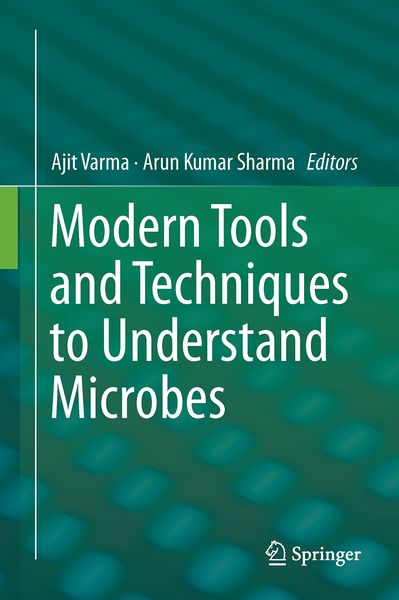
Produktbild: Modern Tools and Techniques to Understand Microbes
- 10%

Modern Tools and Techniques to Understand Microbes

10% sparen

147,99 € UVP 164,99 €

inkl. gesetzl. MwSt., Versandkostenfrei


Beschreibung

Produktdetails

Einband

Gebundene Ausgabe

Erscheinungsdatum

03.05.2017

Abbildungen

XIII, 461 p. 89 illus., 66 illus. in color.

Herausgeber

Ajit Varma + weitere

Verlag

Springer

Seitenzahl

461

Maße (L/B/H)

24,1/16/3,1 cm

Gewicht

875 g

Auflage

1st ed. 2017

Sprache

Englisch

ISBN

978-3-319-49195-0

Beschreibung

Portrait

Prof. Dr. Ajit Varma , M.Sc. Ph.D. is Distinguished Scientist and Professor of Eminence at Amity University Uttar Pradesh, Noida (India). He is recipient of Alexander Von Humboldt Foundation Fellowship (Germany).  Dr. Varma research interest is Plant-Microbe Interactions and Mycorrhizal fungi. He has discovered cultivable mycorrhiza and named it Piriformospora indica . As on today, he has authored and edited 78 books and published 314 research articles in International Journal of repute. Dr. Varma is the Editor -in -Chief of Soil Biology Series being published by Springer Verlag, Germany.

Dr Arun Kumar Sharma did his M.Sc. and Ph.D. from Jammu University, Jammu, J&K, in the discipline of Botany, specializing in Mycology and Plant Pathology.  He joined the Agricultural Research Service (ARS) under the Indian Council of Agricultural Research during 1978 and has the research experience of over 37 years in ICAR in various capacities. Healso worked as Plant Pathologist under Food and Agriculture Organization (FAO) of the United Nations in South America for a couple of years. Dr.  Sharma has worked as Director, ICAR-National Bureau of Agriculturally Important Microorganisms (Department of Agricultural Research and Education, DARE, Govt. of India). ICAR–NBAIM is the Repository of the agriculturally important microorganisms, designated by the National Biodiversity Authority of India. It holds more than 6500 microbial cultures in its culture collection. He has a vast experience of working on rusts, Karnal Bunt and other major diseases of wheat, pest problems of rice, IPM, pest survey–surveillance, Human Resource Development, agriculturally important microorganisms and other allied sectors.  Dr. Sharma has a great interest in Agriculturally Important Micro-organisms, especially in the utilization of microorganisms in crop health management and other allied areas.

Produktdetails

Einband

Gebundene Ausgabe

Erscheinungsdatum

03.05.2017

Abbildungen

XIII, 461 p. 89 illus., 66 illus. in color.

Herausgeber

Verlag

Springer

Seitenzahl

461

Maße (L/B/H)

24,1/16/3,1 cm

Gewicht

875 g

Auflage

1st ed. 2017

Sprache

Englisch

ISBN

978-3-319-49195-0

Herstelleradresse

Springer-Verlag KG
Sachsenplatz 4-6
1201 Wien
AT

Email: GPSR Kontakt

Noch keine Bewertungen vorhanden

Verfassen Sie die erste Bewertung zu diesem Artikel

Helfen Sie anderen Kundinnen und Kunden durch Ihre Meinung.

Kundinnen und Kunden meinen

Bewertungen (0)

  • Produktbild: Modern Tools and Techniques to Understand Microbes
  • Introduction to Modern Tools and Techniques to Understand Microbes.- Novel Approaches to Identify and Characterise Microorganisms in Food Industry.- Strategies of Mass Cultivation of Sebacinales.- Biophysical Phenotyping as an Essential Tool for Understanding Host-Microbe Interaction.- Targeted Gene Disruption Tools for Fungal Genomics.- Polyphasic Approaches to Characterize Mushroom species.- Function-based Metagenomics to Reveal Rhizosphere Microbiome: A Glimpse.- Biological Indicators for Soil Health: Potential for Development and Use of On-Farm Tests.- Mycotoxin Biosynthetic Pathways: A Window on the Evolutionary Relationships Among Toxigenic Fungi.- How to Disentangle Changes in Microbial Function from Changes in Microbial Community.- Legume-Rhizobium Symbioses: Significance for Sustainable Plant Production.- Tools and Techniques to Study Multidrug Transporters of Yeast.- Approaches for Determining Antimicrobial Drug-Resistant Bacteria: The Way Ahead.- Continuous Elution Electrophoresis as a Unique Tool for Microbial Protein Analysis.- Detection and Characterization of Endobacteria in the Fungal Endophyte Piriformospora indica.- Metabolomic Mediated Characterization of Endophytic spp. in Recalcitrant Tree Species.- Analytical Techniques to Assess Medicinal Plants Value Addition after Microbial Associations.- Omics: Tools for Assessing Environmental Microbial Diversity and Composition.- Arbuscular Mycorrhizal Fungi: Evolution and Functions in Alleviating Plant Drought Stress.- Engineered Nanostructured Materials for Antimicrobial and Photocatalytic Applications.- Cryopreservation of Microorganisms.- Microbial Cultures: Maintenance, Preservation and Registration.- Biosurfactants in Microbial Enhanced Oil Recovery.- Fed-batch Cultivation for High Density Culture of Pseudomonas Spp. for Bioinoculant Preparation.- Protocol for Biocontrol of Soybean Cyst Nematode with Root Endophytic Fungi.- Spectrophotometric Assays to Evaluate the RhizosphericMicrobes Mediated Drought Tolerance in Plants.- Subject Index.