Gutscheinbedingungen

**Gültig bis 15.06.2026 auf Spiele & Spielzeug online auf thalia.at, in der Thalia App ab einem Mindestbestellwert von 30€ und in allen Thalia Buchhandlungen in Österreich. In den Buchhandlungen nur gültig auf lagernde Ware. Einzelne Artikel können ausgeschlossen sein. Ausgenommen sind preisgebundene Artikel sowie online auf thalia.at und in der Thalia App einzelne Artikel von tonies®. Pro Einkauf einmal einlösbar. Nur gültig gegen Vorlage oder im Onlineshop hinterlegter Bonuscard. Infos zur Einlösung in der Buchhandlung sind auf der Bonuscard-Vorteilspreisseite zu finden. Click & Collect nur bei Onlinevorabzahlung möglich. Keine Einlösung bei Scan & Go-Bezahlung. Keine Barauszahlung. Nicht kombinierbar mit anderen Aktionen und Gutscheinen. Gutschein wird auf max. 500€ Bestellwert angerechnet. Nicht gültig für Geschenkkarten, Versandkosten und Services.

  • Produktbild: Sabkha Ecosystems
  • Produktbild: Sabkha Ecosystems
Band 47 - 12%

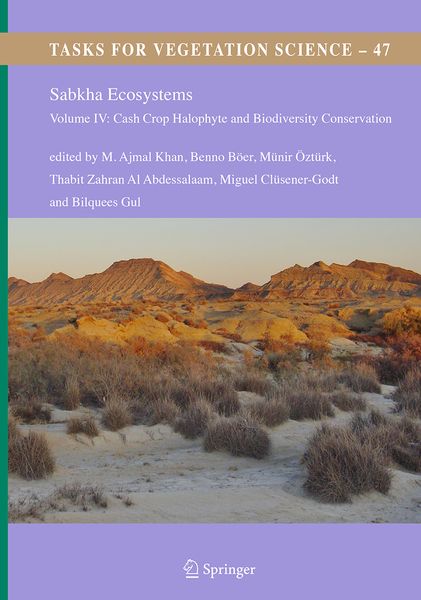
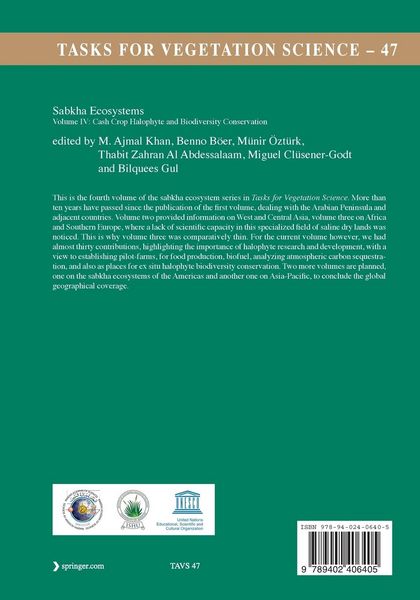
Sabkha Ecosystems Volume IV: Cash Crop Halophyte and Biodiversity Conservation

12% sparen

95,99 € UVP 109,99 €

inkl. gesetzl. MwSt., Versandkostenfrei


Beschreibung

Produktdetails

Einband

Taschenbuch

Erscheinungsdatum

02.10.2016

Abbildungen

XXIII, 121 illus., schwarz-weiss Illustrationen

Herausgeber

M. Ajmal Khan + weitere

Verlag

Springer Netherland

Seitenzahl

339

Maße (L/B/H)

25,4/17,8/2 cm

Gewicht

684 g

Auflage

Softcover reprint of the original 1st ed. 2014

Sprache

Englisch

ISBN

978-94-024-0640-5

Beschreibung

Produktdetails

Einband

Taschenbuch

Erscheinungsdatum

02.10.2016

Abbildungen

XXIII, 121 illus., schwarz-weiss Illustrationen

Herausgeber

Verlag

Springer Netherland

Seitenzahl

339

Maße (L/B/H)

25,4/17,8/2 cm

Gewicht

684 g

Auflage

Softcover reprint of the original 1st ed. 2014

Sprache

Englisch

ISBN

978-94-024-0640-5

Herstelleradresse

Springer-Verlag GmbH
Tiergartenstr. 17
69121 Heidelberg
DE

Email: ProductSafety@springernature.com

Kundinnen und Kunden meinen

0 Bewertungen

Informationen zu Bewertungen

Zur Abgabe einer Bewertung ist eine Anmeldung im Konto notwendig. Die Authentizität der Bewertungen wird von uns nicht überprüft. Wir behalten uns vor, Bewertungstexte, die unseren Richtlinien widersprechen, entsprechend zu kürzen oder zu löschen.

Die Bewertungen sind nach Format, Anzahl Sterne und Datum sortiert.

Verfassen Sie die erste Bewertung zu diesem Artikel

Helfen Sie anderen Kund*innen durch Ihre Meinung

Kundinnen und Kunden meinen

0 Bewertungen filtern

  • Produktbild: Sabkha Ecosystems
  • Produktbild: Sabkha Ecosystems
  • List of Authors.- Preface; Sheikha Abdulla Al Misnad, Ph.D.- Foreword; Prof. emeritus Dr. Helmut Lieth, Mrs. Marina Lieth.- Acknowledgements.- Introduction; B. Böer, M.A. Khan.- 1. Economic sustainability for halophyte cash farms in urban environments; P. Bierman-Lytle.- 2. Spatial distribution of soil salinity and its management options in the Northern Emirates, UAE; M.A. Abdelfattah, S.A. Shahid.- 3. Gypsum crystals formation and habits, Umm Said sabkha, Qatar; M. Al-Youssef.- 4. Distribution, ecology and ecophysiology of mangroves in Pakistan; I. Aziz, F. Khan.- 5. Halophytes for the production of liquid biofuels; J.J. Brown et al.- 6. Feasibility of halophyte domestication for high-salinity agriculture; J.J. Brown et al.- 7. The gypsum dunes of Cuatrociénegas Valley, Mexico – A secondary Sabkha ecosystem with gypsophytes; A. Czaja et al.- 8. Effects of seed storage on germination of desert halophytes with transient seed bank; A. El-Keblawy.- 9. Halophytes of southwest Asia; S.A. Ghazanfar et al.- 10. From halophyte research to halophytes farming; K.B. Hamed et al.- 11. Interactive effect of salinity and drought on the germination of dimorphic seeds of Suaeda salsa; W. Huang et al.- 12. Kochia (Kochia scoparia (L.) Schrad) unwanted or wanted plant for forage production in harsh environments; M. Kafi et al.- 13. Importance of the diversity in between halophytes to agriculture and land management in arid and semiarid countries; H.-W. Koyro et al.- 14. Is soil heterogeneity the major factor influencing vegetation zonation at Karachi coast?; S. Gulzar et al.- 15. Research and development with seawater and halophytic plants for sustainable saline agro systems in the Arabian Gulf; R.A. Loughland et al.- 16. Salinity tolerant turfgrasses for biosaline urban landscape agriculture; K.B. Markum.- 17. Ecology, distribution and ecophysiology of Salicornia Europaea L.; A. Muscolo et al.- 18. Germination pre-treatments in Haloxylon persicum (Amaranthaceae), an economically important tree of desert ecosystems in western Asia; K. Nosrati et al.- 19. Halophytes in the east Mediterranean – their medicinal and other economical values; M. Oztürk et al.- 20. Germination and early seedling growth of two salt-tolerant Atriplex species that prevent erosion in Iranian deserts; A. Shahbazi et al.- 21. Salt marshes and biodiversity; A. Teixeira et al.- 22. Distinctive features and role of sulfur-containing compounds in marine plants, seaweeds, seagrasses and halophytes from an evolutionary point of view; N.X. Vy et al.- 23. The chemical composition and technological properties of seagrasses – a basis for their use (a review); N.A. Milchakova et al.- 24. Seagrass terraces for food security and carbon sequestration; B. Böer et al.- 25. Floating mangroves: the solution to reduce atmospheric carbon levels and land-based marine pollution?; B. Böer.- 26. World Halophyte Garden: Economic dividends with global significance; B. Böer, M.A. Khan.- Index.