KI-Beratung Beta

Gutscheinbedingungen

**Gültig bis 30.11.2026 auf Spielzeug, Schreibwaren, Filme, Geschenke & Trends, Musik, tolino eReader & Zubehör, Hörbücher und Hörbuch-Downloads, nicht preisgebundene Bücher und Kalender online auf thalia.at und in der Thalia App. Einzelne Artikel können ausgeschlossen sein. Aufgrund der Buchpreisbindung sind deutschsprachige Bücher und eBooks ausgenommen. Zusätzlich ausgenommen sind Abos & Flatrates, Games, Geschenkkarten/-boxen, Shelfies, Software, Zeitschriften sowie einzelne Artikel von tonies®. Pro Einkauf einmal einlösbar. Nur gültig mit im Onlineshop hinterlegter Bonuscard. Click & Collect nur bei Onlinevorabzahlung möglich. Keine Barauszahlung. Nicht kombinierbar mit anderen Aktionen und Gutscheinen. Gutschein wird auf max. 500€ Bestellwert angerechnet. Nicht gültig für Versandkosten und Services.

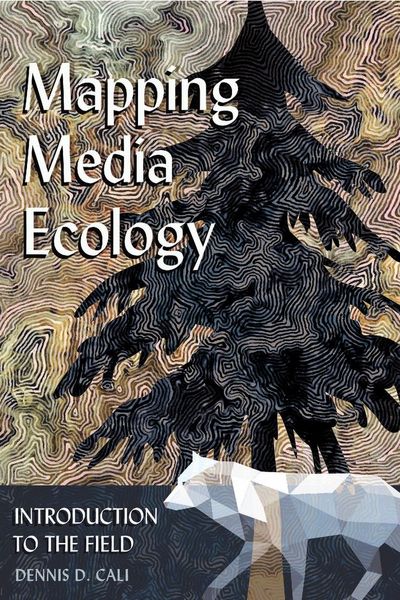
  • Produktbild: Mapping Media Ecology
  • Produktbild: Mapping Media Ecology
Band 4

Mapping Media Ecology Introduction to the Field

61,80 €

inkl. gesetzl. MwSt., Versandkostenfrei


Beschreibung

Until now, the academic foundations of media ecology have been passed down primarily in the form of edited volumes, often by students of Neil Postman, or are limited to a focus on Marshall McLuhan and/or Postman or some other individual important to the field. Those volumes are invaluable in pointing...

Beschreibung

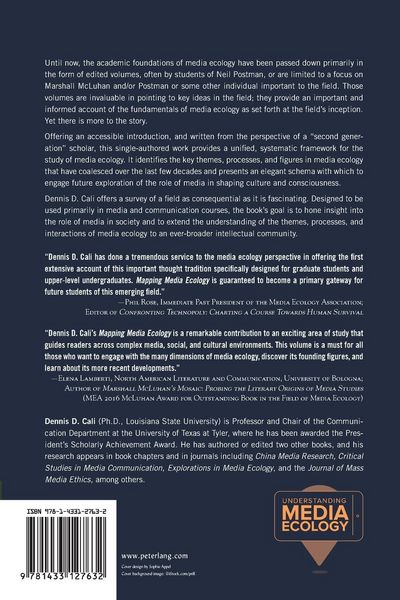
Until now, the academic foundations of media ecology have been passed down primarily in the form of edited volumes, often by students of Neil Postman, or are limited to a focus on Marshall McLuhan and/or Postman or some other individual important to the field. Those volumes are invaluable in pointing to key ideas in the field; they provide an important and informed account of the fundamentals of media ecology as set forth at the field’s inception. Yet there is more to the story. Offering an accessible introduction, and written from the perspective of a «second generation» scholar, this single-authored work provides a unified, systematic framework for the study of media ecology. It identifies the key themes, processes, and figures in media ecology that have coalesced over the last few decades and presents an elegant schema with which to engage future exploration of the role of media in shaping culture and consciousness.Dennis D. Cali offers a survey of a field as consequential as it is fascinating. Designed to be used primarily in media and communication courses, the book’s goal is to hone insight into the role of media in society and to extend the understanding of the themes, processes, and interactions of media ecology to an ever-broader intellectual community.

Produktdetails

Einband

Taschenbuch

Erscheinungsdatum

18.01.2017

Herausgeber Lance Strate
Verlag Peter Lang Publishing Inc. New York

Produktdetails

Einband

Taschenbuch

Erscheinungsdatum

18.01.2017

Herausgeber Lance Strate
Verlag Peter Lang Publishing Inc. New York
Seitenzahl

258

Maße (L/B/H)

22,5/15/1,6 cm

Gewicht

400 g

Auflage

1

Sprache

Englisch

ISBN

978-1-4331-2763-2

EU-Ansprechpartner

Kolibri 360 GmbH
Ettore-Bugatti-Straße 6-14
51149 Köln
DE
produktsicherheit@kolibri360.de

Herstelleradresse

Peter Lang
Avenue du Théâtre 7
1005 Lausanne
CH
orders@peterlang.com

Noch keine Bewertungen vorhanden

Verfassen Sie die erste Bewertung zu diesem Artikel

Helfen Sie anderen Kundinnen und Kunden durch Ihre Meinung.

Kundinnen und Kunden meinen

Bewertungen (0)

Die Leseprobe wird geladen.
  • Produktbild: Mapping Media Ecology
  • Produktbild: Mapping Media Ecology

  • Foreword – Preface – Section One: Foundational Questions – What Is Media Ecology? – What Are the Primary Themes of Media Ecology? – What Are the Margins of Media Ecology? – Section Two: Canonical Figures – Marshall McLuhan—Canada’s and the Field’s Intellectual Comet – Walter J. Ong: Voice of Consciousness in Orality-Literacy – Jacques Ellul: Prophet of
    La Technique
    – Section Three: Orality-Literacy Studies – Orality-Literacy Studies – Section Four: Technology Studies – Technology Studies – Section Five: Culture Studies – Culture Studies – Section Six: Bias Studies – Bias Studies – Section Seven: Language Studies – Language Studies – Section Eight: “Doing” Media Ecology – Doing Media Ecology – Index.