KI-Beratung Beta

Gutscheinbedingungen

**Gültig bis 30.11.2026 auf Spielzeug, Schreibwaren, Filme, Geschenke & Trends, Musik, tolino eReader & Zubehör, Hörbücher und Hörbuch-Downloads, nicht preisgebundene Bücher und Kalender online auf thalia.at und in der Thalia App. Einzelne Artikel können ausgeschlossen sein. Aufgrund der Buchpreisbindung sind deutschsprachige Bücher und eBooks ausgenommen. Zusätzlich ausgenommen sind Abos & Flatrates, Games, Geschenkkarten/-boxen, Shelfies, Software, Zeitschriften sowie einzelne Artikel von tonies®. Pro Einkauf einmal einlösbar. Nur gültig mit im Onlineshop hinterlegter Bonuscard. Click & Collect nur bei Onlinevorabzahlung möglich. Keine Barauszahlung. Nicht kombinierbar mit anderen Aktionen und Gutscheinen. Gutschein wird auf max. 500€ Bestellwert angerechnet. Nicht gültig für Versandkosten und Services.

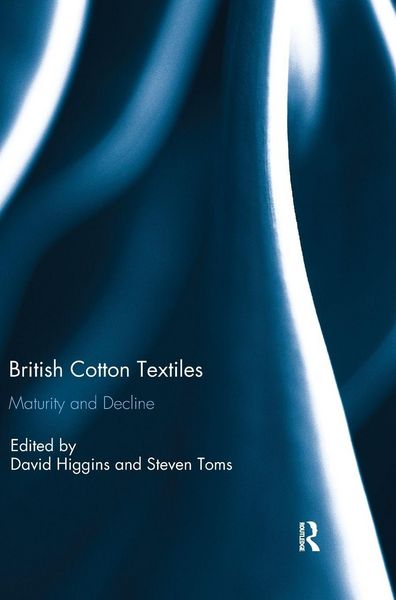
Produktbild: British Cotton Textiles

British Cotton Textiles Maturity and Decline

229,99 €

inkl. gesetzl. MwSt., Versandkostenfrei


Beschreibung

This book examines the decline of the cotton textiles industry, which defined Britain as an industrial nation, from its peak in the late nineteenth century to the state of the industry at the end of the twentieth century. Focusing on the owners and managers of cotton businesses, the authors examine how...

Beschreibung

This book examines the decline of the cotton textiles industry, which defined Britain as an industrial nation, from its peak in the late nineteenth century to the state of the industry at the end of the twentieth century. Focusing on the owners and managers of cotton businesses, the authors examine how they mobilised financial resources; their attitudes to industry structure and technology; and their responses to the challenges posed by global markets.

The origins of the problems which forced the industry into decline are not found in any apparent loss of competitiveness during the long nineteenth century but rather in the disastrous reflotation after the First World War. As a consequence of these speculations, rationalisation and restructuring became more difficult at the time when they were most needed, and government intervention led to a series of partial solutions to what became a process of protracted decline.

In the post-1945 period, the authors show how government policy encouraged capital withdrawal rather than encouraging the investment needed for restructuring. The examples of corporate success since the Second World War - such as David Alliance and his Viyella Group - exploited government policy, access to capital markets, and closer relationships with retailers, but were ultimately unable to respond effectively to international competition and the challenges of globalisation. A new introduction and epilogue provide an updated framework for the chapters in this book, which were originally published in Business History and Accounting, Business and Financial History

Produktdetails

Einband

Gebundene Ausgabe

Erscheinungsdatum

23.05.2017

Herausgeber David Higgins + weitere
Verlag Taylor & Francis

Produktdetails

Einband

Gebundene Ausgabe

Erscheinungsdatum

23.05.2017

Herausgeber
Verlag Taylor & Francis
Seitenzahl

236

Maße (L/B/H)

25/17,5/1,7 cm

Gewicht

536 g

Sprache

Englisch

ISBN

978-1-138-22388-2

Herstelleradresse

Libri GmbH
Europaallee 1
36244 Bad Hersfeld
DE

Email: gpsr@libri.de

Noch keine Bewertungen vorhanden

Verfassen Sie die erste Bewertung zu diesem Artikel

Helfen Sie anderen Kundinnen und Kunden durch Ihre Meinung.

Kundinnen und Kunden meinen

Bewertungen (0)

Die Leseprobe wird geladen.
  • Produktbild: British Cotton Textiles
  • Introduction - The decline of the British cotton textile industry: A review and reinterpretation 1. Windows of Opportunity in the Textile Industry: The Business Strategies of Lancashire Entrepreneurs, 1880-1914 2. Producer co-operatives and economic efficiency: Evidence from the nineteenth-century cotton textile industry 3. Financial constraints on economic growth: profits, capital accumulation and the development of the Lancashire cotton-spinning industry, 1885-1914 4. Firm structure and financial performance: the Lancashire textile industry, c.1884-c.1960 5. Financial distress, corporate borrowing, and industrial decline: the Lancashire cotton spinning industry, 1918-38 6. Ownership, financial strategy and performance: the Lancashire cotton textile industry, 1918-1938 7. Public Subsidy and Private Divestment: The Lancashire Cotton Textile Industry, c.1950-c.1965 8. Financial Institutions and Corporate Strategy: David Alliance and the Transformation of British Textiles, c.1950-c.1990 Epilogue - Survival strategies in textiles