Gutscheinbedingungen

**Gültig von 22.06.2026 ab 19 Uhr bis 23.06.2026 24 Uhr auf Spielzeug, Schreibwaren, Filme, Geschenke & Trends, Musik, tolino eReader & Zubehör, Hörbücher und Hörbuch-Downloads (außer Abo), nicht preisgebundene Bücher und Kalender online auf thalia.at und in der Thalia App. Einzelne Artikel können ausgeschlossen sein. Aufgrund der Buchpreisbindung sind deutschsprachige Bücher und eBooks ausgenommen. Zusätzlich ausgenommen sind preisgebundene Artikel, Abos & Flatrates, eBooks, Games, Geschenkkarten/-boxen, Shelfies, Software, Zeitschriften sowie einzelne Artikel von tonies®. Pro Einkauf einmal einlösbar. Click & Collect nur bei Onlinevorabzahlung möglich. Keine Barauszahlung. Nicht kombinierbar mit anderen Aktionen und Gutscheinen. Gutschein wird auf max. 500€ Bestellwert angerechnet. Nicht gültig für Versandkosten und Services.

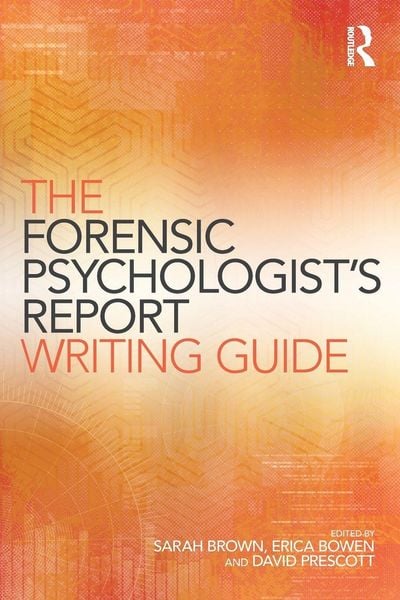
Produktbild: The Forensic Psychologist's Report Writing Guide

The Forensic Psychologist's Report Writing Guide

52,99 €

inkl. gesetzl. MwSt., Versandkostenfrei


Beschreibung

Produktdetails

Einband

Taschenbuch

Erscheinungsdatum

09.05.2017

Herausgeber

Sarah Brown + weitere

Verlag

Taylor & Francis

Seitenzahl

272

Maße (L/B/H)

23,4/15,6/1,5 cm

Gewicht

418 g

Sprache

Englisch

ISBN

978-1-138-84151-2

Beschreibung

Rezension

'Those who aspire to excellence in forensic and correctional report-writing will find that the various chapters in The Forensic Psychologists' Report Writing Guide offer superb guidance. It will be supremely helpful to psychologists who write such reports, attorneys who use them in litigation, judges who rely on them to inform their decisions, and clinical administrators who seek high quality in their reports.' - Kirk Heilbrun, Drexel University, Philadelphia, USA

'This volume is an excellent resource for students developing their report writing skills, and an essential desk reference for practitioners. An international team of leading academics and practitioners take an evidence-based approach supported by concrete real world examples and advice on the diverse range of reports that forensic psychologists are asked to write.' - Caoilte Ó Ciardha, University of Kent, Canterbury, UK


"Overall, I thoroughly recommend this book to trainee and qualified practitioners. The editors have done an excellent job of collating accessible and practical expertise from the current field. New assessors will find it a useful primer and existing assessors will find chapters on neglected areas stimulating for new reflection. I recommend using it alongside a writing style guide and maintaining a critical stance, remembering that we can still improve the accessibility, language and cultural sensitivity of our reports." - Sophie Ellis, Trainee Forensic Psychologist, Institute of Criminology: Cambridge University, Forensic Update (British Psychological Society)

Produktdetails

Einband

Taschenbuch

Erscheinungsdatum

09.05.2017

Herausgeber

Verlag

Taylor & Francis

Seitenzahl

272

Maße (L/B/H)

23,4/15,6/1,5 cm

Gewicht

418 g

Sprache

Englisch

ISBN

978-1-138-84151-2

Herstelleradresse

Produktsicherheitsverantwortliche/r
Europaallee 1
36244 Bad Hersfeld
DE

Email: gpsr@libri.de

Kundinnen und Kunden meinen

0 Bewertungen

Informationen zu Bewertungen

Zur Abgabe einer Bewertung ist eine Anmeldung im Konto notwendig. Die Authentizität der Bewertungen wird von uns nicht überprüft. Wir behalten uns vor, Bewertungstexte, die unseren Richtlinien widersprechen, entsprechend zu kürzen oder zu löschen.

Die Bewertungen sind nach Format, Anzahl Sterne und Datum sortiert.

Verfassen Sie die erste Bewertung zu diesem Artikel

Helfen Sie anderen Kund*innen durch Ihre Meinung

Kundinnen und Kunden meinen

0 Bewertungen filtern

Die Leseprobe wird geladen.
  • Produktbild: The Forensic Psychologist's Report Writing Guide
  • Introduction

    Section 1: general issues of reporting across different types of assessments

    Chapter 1: Reporting psychometric tests

    Chapter 2: Reporting intellectual capacity/cognitive functioning

    Chapter 3: Reporting actuarial risk

    Chapter 4: Reporting case formulation and opinion

    Chapter 5: Reporting structured professional judgement

    Chapter 6: Reporting personality functioning

    Chapter 7: Reporting change

    Section 2: considerations when reporting on specific client groups

    Chapter 8: Reporting on juvenile clients

    Chapter 9: Reporting on female clients

    Chapter 10: Reporting on vulnerable clients including those with cognitive impairments

    Chapter 11: Reporting on relationships, e.g. parenting competence, couples' assessments

    Section 3: considerations when reporting in specific contexts

    Chapter 12: Reporting in secure settings, e.g. prisons, forensic hospitals

    Chapter 13: Reporting for parole or other hearings, e.g. mental health tribunals

    Chapter 14: Reporting for community contexts, e.g. probation, community-based programmes/organisations

    Appendix 1: Example Report 1

    Appendix 2: Example Report 2

    Appendix 3: Example Report 3