KI-Beratung Beta

Gutscheinbedingungen

**Gültig bis 18.11.2026 auf englischsprachige Klassiker (klassiker-32728) online auf thalia.at und in der Thalia App. Einzelne Artikel können ausgeschlossen sein. Ausgenommen sind preisgebundene Artikel & eBooks. Pro Einkauf einmal einlösbar. Click & Collect nur bei Onlinevorabzahlung möglich. Keine Barauszahlung. Nicht kombinierbar mit anderen Aktionen und Gutscheinen. Gutschein wird auf max. 500€ Bestellwert angerechnet. Nicht gültig für Geschenkkarten, Versandkosten und Services.

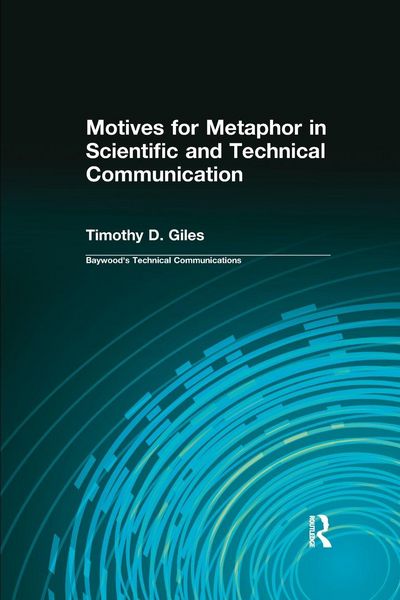
Produktbild: Large Type Edition

Large Type Edition Large Type Edition

104,99 €

inkl. gesetzl. MwSt., Versandkostenfrei


Beschreibung

Examination of the work of scientific icons-Newton, Descartes, and others-reveals the metaphors and analogies that directed their research and explain their discoveries. Today, scientists tend to balk at the idea of their writing as rhetorical, much less metaphorical. How did this schism over metaphor...

Beschreibung

Examination of the work of scientific icons-Newton, Descartes, and others-reveals the metaphors and analogies that directed their research and explain their discoveries. Today, scientists tend to balk at the idea of their writing as rhetorical, much less metaphorical. How did this schism over metaphor occur in the scientific community? To establish that scientists should use metaphors to explain science to the public and need to be conscious of how metaphor can be useful to their research, this book examines the controversy over cloning and the lack of a metaphor to explain it to a public fearful of science's power.The disjunction between metaphor and science is traced to the dispensation of the Solar System Analogy in favor of a mathematical model. Arguing that mathematics is metaphorical, the author supports the idea of all language as metaphorical-unlike many rhetoricians and philosophers of science who have proclaimed all language as metaphorical but have allowed a distinction between a metaphorical use of language and a literal use.For technical communication pedagogy, the implications of this study suggest foregrounding metaphor in textbooks and in the classroom. Though many technical communication textbooks recommend metaphor as a rhetorical strategy, some advise avoiding it, and those that recommend it usually do so in a paragraph or two, with little direction for students on how to recognize metaphors or to how use them. This book provides the impetus for a change in the pedagogical approach to metaphor as a rhetorical tool with epistemological significance.

Produktdetails

Einband

Taschenbuch

Erscheinungsdatum

29.03.2017

Verlag Taylor and Francis
Seitenzahl

184

Produktdetails

Einband

Taschenbuch

Erscheinungsdatum

29.03.2017

Verlag Taylor and Francis
Seitenzahl

184

Maße (L/B/H)

22,9/15,2/1 cm

Gewicht

254 g

Sprache

Englisch

ISBN

978-0-415-43440-9

Herstelleradresse

Libri GmbH
Europaallee 1
36244 Bad Hersfeld
DE

Email: gpsr@libri.de

Noch keine Bewertungen vorhanden

Verfassen Sie die erste Bewertung zu diesem Artikel

Helfen Sie anderen Kundinnen und Kunden durch Ihre Meinung.

Kundinnen und Kunden meinen

Bewertungen (0)

Die Leseprobe wird geladen.
  • Produktbild: Large Type Edition
  • Acknowledgments

    Introduction: The Problem of Metaphor in Scientific and Technical Communication
    Differentiating between Scientific and Technical Communication
    Metaphor and Analogy
    Summary of Chapters

    Chapter One: Reintroducing Metaphor in the Technical Communication Classroom
    Problem
    Methodology
    Some General Considerations of Metaphor
    Technical Communication Textbooks
    Science Writing Texts

    Chapter Two: Metaphor in the Technical Communication Literature
    Metaphor and the Computer
    Technical Communication Theory
    Technical Communication Pedagogy
    Conclusion

    Chapter Three: A Review of the Theories of Metaphor
    Substitution Theory of Metaphor
    Aristotle on Metaphor
    Twentieth-Century Substitutionists
    Nietzsche and Post-Modern Metaphor
    The Tensionists: An Introduction to Interaction
    The Interactionists
    Metaphor as Epistemology
    Conclusion

    Chapter Four: The Metaphor of Mathematics: A Case Study of the Solar System Analogy
    Scottish Natural Philosophy
    Lodge and the BAAS
    The Solar System Analogy
    The Solar System Analogy in Secondary-School Texts
    A Narrative History of the Solar System Analogy
    Lord Kelvin
    James Clerk Maxwell
    J. J. Thomson
    Oliver Lodge
    Ernest Rutherford
    Niels Bohr
    Conclusion

    Chapter Five: The Question of Metaphor in Natural Language: A Case Study
    The Question of Cloning
    Recognition of the Dominant/Emergent Metaphors
    The Effect Upon the Scientific Community
    Conclusion

    Chapter Six: Implications
    An Approach Based on this Study
    Other Avenues for Research

    References

    Index