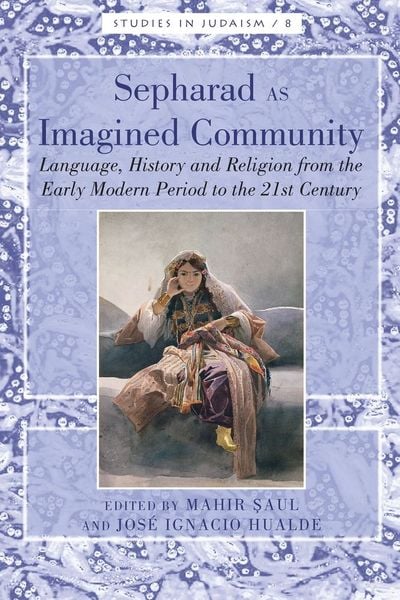
Mahir Şaul/José Ignacio Hualde: Sepharad as Imagined Translocal Mediterranean Community: Introduction – John Zemke: An Overlooked 15th Century «
demand d’amor
»
in Hebrew «
alxamía
»: Parma Biblioteca Palatina 2666, folio 207 «
verso
» – Olga Borovaya: How Old Is Ladino Literature? – Aldina Quintana: Historical Overview and Outcome of Three Portuguese Patterns in Judeo-Spanish: «
quer(em)-se
»
+ part. in Active Constructions, the wh-operator
o
«
que
», and the Inflected Infinitive – Matthew Maddox: The Syntactic Structure of Liturgical Ladino: Construct State Nominals, Multiple Determiners, and Verbless Sentences – Pamela Dorn Sezgin:
«
Ke Haber/Ne Haber
»: Linguistic Interference, Cross-Meaning, and Lexical Borrowing between Ottoman Turkish and Judeo-Spanish – Matthias B . Lehmann: Networks of Patronage and the Making of Two Ladino Newspapers – Elisa Martín Ortega: Itzhak Benveniste and Reina Hakohén: Narrative and Essay for Sephardic Youth – Marie-Christine Bornes Varol: The Invention of Eastern Judeo-Spanish: The Betrayals of Spanish in the Re-romanization Process (End of 19th Century) and Its Consequences – Aitor García Moreno: Salomon Israel Cherezli’s «
Nuevo chico diccionario udeo- español–francés
»
(Jerusalem 1898–1899) as a Judeo-Spanish Monolingual Dictionary – Eliezer Papo: The Creation of the State of Israel and Its Impact on the Self-Image of the Sephardim, as Reflected in Judeo-Spanish Parodic War Haggadahs – Paloma Díaz-Mas: The Hispanic Legacy and Sephardic Culture: Sephardim and Hispanists in the First Half of the 20th Century – Agnieszka August-Zarębska: Contemporary Judeo-Spanish Poetry in Its Rediscovery of the Past – Rey Romero
«
En tierras virtualas
»: Sociolinguistic Implications for Judeo-Spanish as a Cyber-vernacular – Ana Stulic/Soufiane Rouissi: Judeo-Spanish on the Web – Index of Personal Names – Index of Subjects.