KI-Beratung Beta

Gutscheinbedingungen

**Gültig bis 18.11.2026 auf englischsprachige Klassiker (klassiker-32728) online auf thalia.at und in der Thalia App. Einzelne Artikel können ausgeschlossen sein. Ausgenommen sind preisgebundene Artikel & eBooks. Pro Einkauf einmal einlösbar. Click & Collect nur bei Onlinevorabzahlung möglich. Keine Barauszahlung. Nicht kombinierbar mit anderen Aktionen und Gutscheinen. Gutschein wird auf max. 500€ Bestellwert angerechnet. Nicht gültig für Geschenkkarten, Versandkosten und Services.

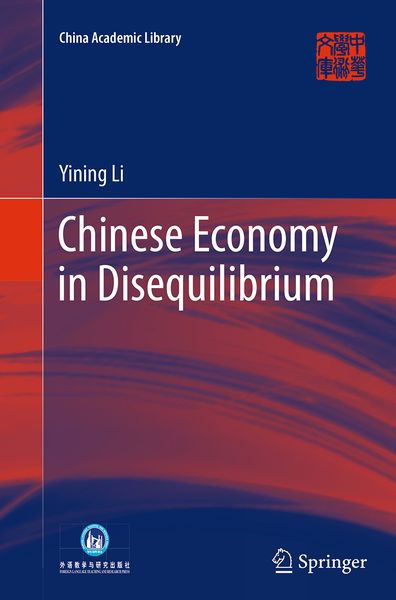
Produktbild: Chinese Economy in Disequilibrium
- 11%

Chinese Economy in Disequilibrium

Aus der Reihe China Academic Library
11% sparen

96,99 € UVP 109,99 €

inkl. gesetzl. MwSt., Versandkostenfrei


Beschreibung

Known internationally as ‘Mr. Shareholding’ economist, Li Yining has had a transformative impact on China's economic transition, most notably as an early advocate of ownership reform and in his promotion of shareholding theory. By examining the interrelationship between the government, enterprises and...

Beschreibung

Known internationally as ‘Mr. Shareholding’ economist, Li Yining has had a transformative impact on China's economic transition, most notably as an early advocate of ownership reform and in his promotion of shareholding theory. By examining the interrelationship between the government, enterprises and the market, Chinese Economy in Disequilibrium presents an in-depth discussion on the issues of resource allocation, industrial structure, institutional innovation and economic fluctuation in the current Chinese economy under the condition of disequilibrium. Credited with developing the theory of economic disequilibrium, Professor Li distinguishes two types of disequilibrium on the basis of whether or not the majority of firms in the economy are viable profit-makers. In Chinese Economy in Disequilibrium, Professor Li points out that not only has China’s economy been in a state of disequilibrium, but it also has issues with enterprises not being under budget constraint. Given the limitations of market regulation under economic disequilibrium, Professor Li advocates the reform of the enterprise system and upholds the government’s leading role in the establishment of order in the socialist commodity economy. A number of measures are also proposed with the aim of facilitating the transition of China’s economy from disequilibrium to equilibrium. The central theme is that the reform and transition are means to serve economic growth and social development, which would eventually benefit the ordinary citizens in society.

Yining Li is a Professor of Economics and Emeritus Dean of Peking University’s Guanghua School of Management. He is one of China’s foremost economists, and the author of twenty books and numerous articles on a wide range of economic subjects including reform and development in China. He has received a number of prestigious awards and honours for his research. As the leading proponent of a market economy in China, Professor Li hashad a tremendous influence on China’s economic reform policy over the last three decades. He has served on the Standing Committee of the National People’s Congress of China and is currently Vice-Chairman of the Economic Committee of the Chinese People’s Political Consultative Conference.

Produktdetails

Einband

Taschenbuch

Erscheinungsdatum

27.08.2016

Abbildungen

XVIII, 203 p.

Verlag Springer Berlin

Produktdetails

Einband

Taschenbuch

Erscheinungsdatum

27.08.2016

Abbildungen

XVIII, 203 p.

Verlag Springer Berlin
Seitenzahl

203

Maße (L/B/H)

23,5/15,5/1,3 cm

Gewicht

347 g

Auflage

Softcover reprint of the original 1st ed. 2014

Sprache

Englisch

ISBN

978-3-662-51380-4

Herstelleradresse

Springer-Verlag GmbH
Tiergartenstr. 17
69121 Heidelberg
DE

Email: ProductSafety@springernature.com

Noch keine Bewertungen vorhanden

Verfassen Sie die erste Bewertung zu diesem Artikel

Helfen Sie anderen Kundinnen und Kunden durch Ihre Meinung.

Kundinnen und Kunden meinen

Bewertungen (0)

  • Produktbild: Chinese Economy in Disequilibrium

  • Preface.- Exploring The Issues In Resource Allocation.- Market Regulation And Resource Allocation.- Government Regulation And Resource Allocation.- The Mechanism Of The Operation Of The Economy.- Rationing Equilibrium Of The Commodity Market.- Easing Supply And Demand Mismatch Under Disequilibrium Economic Conditions.- Industrial Restructuring.- Government Regulation On Agriculture.- Establishing The Order Of The Socialist Commodity Economy.- The Standardization Of Institutional Innovation.