KI-Beratung Beta

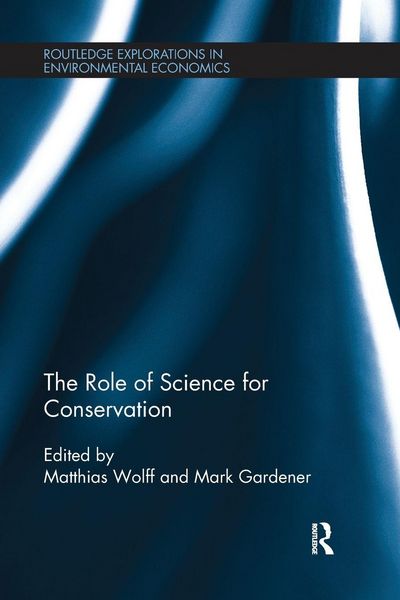
Produktbild: The Role of Science for Conservation

The Role of Science for Conservation

74,99 €

inkl. gesetzl. MwSt., Versandkostenfrei


Beschreibung

Produktdetails

Einband

Taschenbuch

Erscheinungsdatum

09.12.2016

Abbildungen

79 SW-Abb., 24 SW-Fotos, 55 SW-Zeichn., 13 Tabellen

Herausgeber

Matthias Wolff + weitere

Verlag

Taylor & Francis

Seitenzahl

302

Maße (L/B/H)

23,4/15,6/1,7 cm

Gewicht

449 g

Sprache

Englisch

ISBN

978-1-138-24386-6

Beschreibung

Produktdetails

Einband

Taschenbuch

Erscheinungsdatum

09.12.2016

Abbildungen

79 SW-Abb., 24 SW-Fotos, 55 SW-Zeichn., 13 Tabellen

Herausgeber

Verlag

Taylor & Francis

Seitenzahl

302

Maße (L/B/H)

23,4/15,6/1,7 cm

Gewicht

449 g

Sprache

Englisch

ISBN

978-1-138-24386-6

Herstelleradresse

Libri GmbH
Europaallee 1
36244 Bad Hersfeld
DE

Email: gpsr@libri.de

Noch keine Bewertungen vorhanden

Verfassen Sie die erste Bewertung zu diesem Artikel

Helfen Sie anderen Kundinnen und Kunden durch Ihre Meinung.

Kundinnen und Kunden meinen

Bewertungen (0)

Weitere Artikel finden Sie in

Die Leseprobe wird geladen.
  • Produktbild: The Role of Science for Conservation
  • Part 1: The Evolutionary Context 1.1. What Darwin Found Convincing in Galapagos William Durham 1.2. Research on Evolutionary Principles in Galapagos: Research on Evolutionary Principles in Galapagos: An Overview of the Past 50 Years Carloss Valle and Patricia G. Parker 1.3. Evolution of Pathogens and Parasites on the Galapagos Islands Patricia G. Parker and Noah K. Whiteman 1.4. Turning Points in the Evolution of Vertebrates Eibl-Eibesfeld 1.5. The Boat, the Bay, and the Museum: Significance of the 1905-1906: Galapogos Expedition of the California Academy of Sciences Matthew James 1.6. Chapter Summary Part 2: Biodiversity Assessment and Monitoring of Change 2.1. Monitoring the Galapagos Ecosystem: Challenges, Pitfalls and a Vision for the Future James P. Gibbs and Bryan Milstead 2.2. The Neglected Majority - Biodiversity Inventories as an Integral Part of Conservation Biology Frank Bungartz 2.3. The Power of Long-Term Monitoring to Understand Mechanisms of Ecosystem Change: the Case of the Galapagos Marine Reserve Stuart Banks, Rodrigo Bustamante, Diego Ruiz, Natalia Tirado, Mariana Vera and Franz Smith 2.4. Wildlife Health Monitoringand Disease Management Protecting the Biodiversity of Galapagos Patricia G. Parker and Sharon L. Deem 2.5. Chapter Summary Part 3: A Systemic Approach: Modeling and Restoration 3.1. A Review of 40 Years of Eradication Programs in Galapagos: Impacts on the Whole Ecosystem Rachel Atkinson, Mark Gardener, Grant Harper and Victor Carrion 3.2. Food Web Structure of the Galapogas Pelagic Econosystem after a Decade of Protective Insights from Trophic Modelling Matthias Wolff and Cesar Peñaherrera 3.3. Mediated Modelling: A System Dynamics Approach To Environmental Consensus Building for the Galapagos Marjan van den Belt 3.4. Chapter Summary Part 4: Reconciliation of the Conservation with Socio-Economic Development 4.1. The Value of Ecosystem Services and Biodiversity Conservation: A Challenge for the Galapagos Robert Costanza