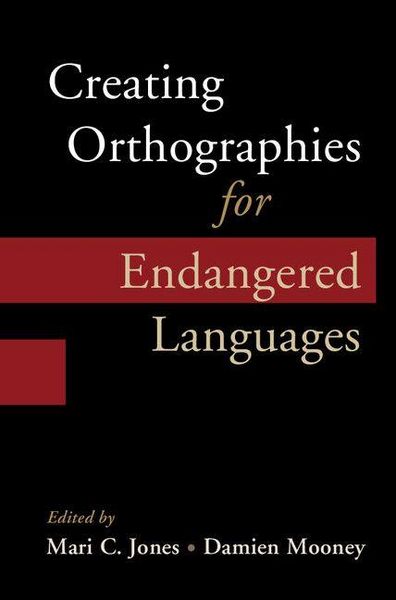
Creating Orthographies for Endangered Languages
-
- Hardcover ausgewählt
- Taschenbuch
- eBook
-
Sprache:Englisch
122,99 €
inkl. gesetzl. MwSt.,
Beschreibung
Produktdetails
Einband
Gebundene Ausgabe
Erscheinungsdatum
03.08.2017
Herausgeber
Jones Mari C. + weitereVerlag
Cambridge AcademicSeitenzahl
344
Maße (L/B/H)
23,5/15,7/2,3 cm
Gewicht
650 g
Sprache
Englisch
ISBN
978-1-107-14835-2
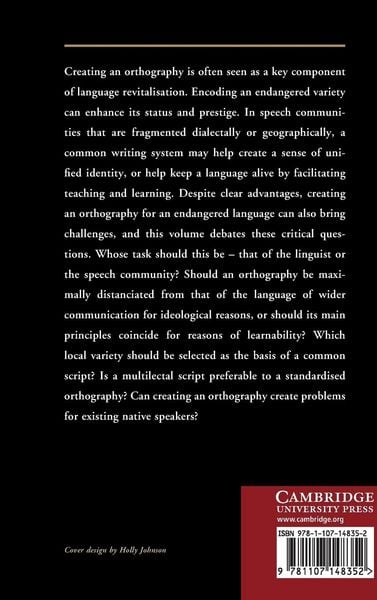
Creating an orthography is often seen as a key component of language revitalisation. Encoding an endangered variety can enhance its status and prestige. In speech communities that are fragmented dialectally or geographically, a common writing system may help create a sense of unified identity, or help keep a language alive by facilitating teaching and learning. Despite clear advantages, creating an orthography for an endangered language can also bring challenges, and this volume debates the following critical questions: whose task should this be - that of the linguist or the speech community? Should an orthography be maximally distanciated from that of the language of wider communication for ideological reasons, or should its main principles coincide for reasons of learnability? Which local variety should be selected as the basis of a common script? Is a multilectal script preferable to a standardised orthography? And can creating an orthography create problems for existing native speakers?
Noch keine Bewertungen vorhanden
Verfassen Sie die erste Bewertung zu diesem Artikel
Helfen Sie anderen Kundinnen und Kunden durch Ihre Meinung.
Kurze Frage zu unserer Seite
Vielen Dank für Ihr Feedback
Wir nutzen Ihr Feedback, um unsere Produktseiten zu verbessern. Bitte haben Sie Verständnis, dass wir Ihnen keine Rückmeldung geben können. Falls Sie Kontakt mit uns aufnehmen möchten, können Sie sich aber gerne an unseren Kund*innenservice wenden.
zum Kundenservice