KI-Beratung Beta

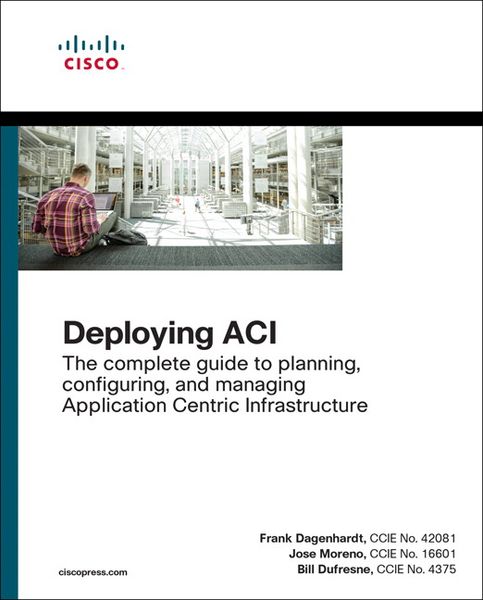
Produktbild: Deploying ACI: The complete guide to planning, configuring, and managing Application Centric Infrastructure

Deploying ACI: The complete guide to planning, configuring, and managing Application Centric Infrastructure

52,99 €

inkl. gesetzl. MwSt., Versandkostenfrei


Beschreibung

Produktdetails

Einband

Taschenbuch

Erscheinungsdatum

19.02.2018

Verlag

Pearson Education Limited

Seitenzahl

704

Maße (L/B/H)

23,5/19,5/3,8 cm

Gewicht

930 g

Auflage

1

Sprache

Englisch

ISBN

978-1-58714-474-5

Beschreibung

Produktdetails

Einband

Taschenbuch

Erscheinungsdatum

19.02.2018

Verlag

Pearson Education Limited

Seitenzahl

704

Maße (L/B/H)

23,5/19,5/3,8 cm

Gewicht

930 g

Auflage

1

Sprache

Englisch

ISBN

978-1-58714-474-5

Herstelleradresse

Pearson
St.-Martin-Straße 82
81541 München
DE

Email: salesde@pearson.com

Noch keine Bewertungen vorhanden

Verfassen Sie die erste Bewertung zu diesem Artikel

Helfen Sie anderen Kundinnen und Kunden durch Ihre Meinung.

Kundinnen und Kunden meinen

Bewertungen (0)

Die Leseprobe wird geladen.
  • Produktbild: Deploying ACI: The complete guide to planning, configuring, and managing Application Centric Infrastructure
  •     Introduction xxiv

    Chapter 1 You’ve Purchased ACI. Now What? 1

        Industry Trends and Transitions 1

        Next-Generation Data Center Concepts 2

            New Application Types 2

            Automation, Orchestration, and Cloud 3

            End-to-End Security 4

        Spine-Leaf Architecture 5

            Existing Infrastructure and ACI (Places in the Network) 8

        ACI Overview 9

        ACI Functional Components 10

            Nexus 9500 10

            Nexus 9300 10

            Application Centric Infrastructure Controllers 11

        Protocols Enabling the ACI Fabric 11

            Data Plane Protocols 11

            Control Plane Protocols 12

        Interacting with ACI 13

            GUI 13

            NX-OS CLI 14

            Open REST API 14

        Introduction to the Policy Model 14

            Application Network Profiles and Endpoint Groups 14

            VRFs and Bridge Domains 15

        Fabric Topologies 15

            Single-Site Model 15

            Multi-Pod Model 16

            Multi-Site Model 16

        Summary 17

    Chapter 2 Building a Fabric 19

        Building a Better Network 19

            Fabric Considerations 20

            Phased ACI Migration 33

            Evolution to Application-Centric Mode 41

        Virtual Machine Manager (VMM) Integration 46

            AVS 46

            VMware 48

            Microsoft 50

        OpenStack 51

        Layer 4-7 Services 51

            Managed Mode 52

            Unmanaged Mode 53

        Additional Multisite Configurations 54

            Cisco ACI Stretched Fabric 55

            Cisco ACI Multi-Pod 56

            Cisco ACI Multi-Site 57

            Cisco ACI Dual-Fabric Design 57

            Pervasive Gateway 57

            VMM Considerations 58

        Summary 59

    Chapter 3 Bringing Up a Fabric 61

        Out of the Box 61

            Suggested Services 62

            Management Network 64

        Logging In to the GUI for the First Time 73

            Basic Mode vs. Advanced Mode 74

            Discovering the Fabric 77

            Fabric Extenders 79

        Required Services 79

            Basic Mode Initial Setup 80

            Advanced Mode Initial Setup 84

            Management Network 92

            Fabric Policies 94

        Managing Software Versions 96

            Firmware Repository 97

            Controller Firmware and Maintenance Policy 98

        Configuration Management 101

            Configuration Snapshots 101

            Configuration Backup 102

        Summary 105

    Chapter 4 Integration of Virtualization Technologies with ACI 107

        Why Integrate Cisco ACI with Virtualization Technologies? 107

        Networking for Virtual Machines and Containers 108

            Benefits of Cisco ACI Integration with Virtual Switches 111

            Comparing ACI Integration to Software Network Overlays 112

            Virtual Machine Manager Domains 115

            EPG Segmentation and Micro-Segmentation 121

            Intra-EPG Isolation and Intra-EPG Contracts 129

            Cisco ACI Integration with Virtual Switches in Blade Systems 132

            OpFlex 134

            Deployments over Multiple Data Centers 136

        VMware vSphere 137

            Cisco ACI Coexistence with the vSphere Standard Switch 138

            Cisco ACI Coexistence with the vSphere Distributed Switch 139

            Cisco ACI Integration with the vSphere Distributed Switch 139

            vCenter User Requirements 141

            Micro-Segmentation with the VDS 142

            Blade Servers and VDS Integration 142

            Cisco ACI Integration with Cisco Application Virtual Switch 143

            Cisco AVS Installation 147

            Blade Servers and AVS Integration 147

            Distributed Firewall 148

            Virtual Network Designs with VDS and AVS 150

            Cisco ACI Plug-in for vSphere vCenter Server: Configuring ACI from vCenter 154

            Cisco ACI Coexistence with VMware NSX 157

        Microsoft 158

            Introduction to Microsoft Hyper-V and SCVMM 159

            Preparing for the Integration 159

            Micro-Segmentation 161

            Blade Servers and SCVMM Integration 161

        OpenStack 162

            ML2 and Group-Based Policy 163

            Installing Cisco ACI Integration with OpenStack 164

            Cisco ACI ML2 Plug-in for OpenStack Basic Operations 164

            Cisco ACI ML2 Plug-in for OpenStack Security 166

            Cisco ACI ML2 Plug-in for OpenStack and Network Address Translation 167

        Cisco ACI GBP Plug-in for OpenStack 168

            Docker: Project Contiv 170

        Docker Networking 170

            Kubernetes 174

            Kubernetes Networking Model 175

            Isolation Models 176

            Creating a New EPG for Kubernetes Pods 178

            Assigning a Deployment or a Namespace to an EPG with Annotations 179

            Visibility in ACI for Kubernetes Objects 180

        Public Cloud Integration 180

        Summary 180

    Chapter 5 Introduction to Networking with ACI 183

        Exploring Networking in ACI 184

            Groups and Contracts 184

            VRFs and Bridge Domains 197

            Connecting External Networks to the Fabric 208

        Network-Centric VLAN=BD=EPG 227

            Applying Policy to Physical and Virtual Workloads 230

            Moving Devices to the Fabric, VLAN by VLAN 232

            Unenforced vs. Enforced VRF 236

            L3 Connections to the Core 236

            Migrating the Default Gateway to the Fabric 242

        Summary 246

    Chapter 6 External Routing with ACI 247

        Layer 3 Physical Connectivity Considerations 247

            Routed Ports Versus Switched Virtual Interfaces 249

            Outside Bridge Domains 250

            Bidirectional Forwarding Detection 251

            Access Port 252

            Port Channel 252

            Virtual Port Channel 254

            Gateway Resiliency with L3 Out 256

            Hot Standby Routing Protocol 256

        Routing Protocols 259

            Static Routing 259

            Enhanced Interior Gateway Routing Protocol 260

            Open Shortest Path First 261

            Border Gateway Protocol 265

        External Endpoint Groups and Contracts 268

            External Endpoint Groups 268

            Contracts Between L3 Out EPGs and Internal EPGs 269

        Multitenant Routing Consideration 269

            Shared Layer 3 Outside Connection 271

            Transit Routing 273

            WAN Integration 278

            Design Recommendations for Multitenant External Layer 3Connectivity 280

            Quality of Service 280

        Multicast 282

            Multicast Best-Practice Recommendations 283

            Multicast Configuration Overview 286

        Summary 287

    Chapter 7 How Life Is Different with ACI 289

        Managing Fabrics versus Managing Devices 290

            Centralized CLI 290

            System Dashboard 291

            Tenant Dashboards 292

            Health Scores 294

            Physical and Logical Objects 295

            Network Policies 296

        Maintaining the Network 300

            Fault Management 300

            Configuration Management 304

            Upgrading the Software 313

        Breaking the Shackles of IP Design 317

            Access Control Lists Without IP Addresses 317

            QoS Rules Without IP Addresses 317

            QoS Rules Without TCP or UDP Ports 317

        Physical Network Topology 318

            ACI as a Clos Fabric and Design Implications 318

            Fabric Topology and Links 320

            Individual Device View 320

            Port View 322

        Changing the Network Consumption Model 322

        Summary 324

    Chapter 8 Moving to Application-Centric Networking 325

        “Network-Centric” Deployments 326

            Removing Packet Filtering in Network-Centric Deployments 328

            Increasing Per-Leaf VLAN Scalability 328

            Looking at the Configuration of a Network-Centric Design 329

        “Application-Centric” Deployment: Security Use Case 332

            Whitelist vs. Blacklist Models 333

            Enforced vs. Unenforced: ACI Without Contracts 333

            Endpoint Groups as a Zone-Based Firewall 334

            Contract Security Model 336

            Stateful Firewalling with Cisco Application Virtual Switch 344

            Intra-EPG Communication 346

            Any EPG 348

            Contract Definition Best Practices to Efficiently Use Resources 350

        “Application-Centric” Deployment: Operations Use Case 351

            Application-Centric Monitoring 351

            Quality of Service 352

        Migrating to an Application-Centric Model 355

            Disable Bridge Domain Legacy Mode 355

            Disable VRF Unenforced Mode 356

            Create New Application Profiles and EPGs 357

            Move Endpoints to the New EPGs 357

            Fine-Tune Security Rules 358

        How to Discover Application Dependencies 358

            Focus on New Applications 359

            Migrate Existing Applications 360

        Summary 364

    Chapter 9 Multi-Tenancy 365

        The Need for Network Multi-Tenancy 366

            Data-Plane Multi-Tenancy 366

            Management Multi-Tenancy 366

        Multi-Tenancy in Cisco ACI 367

            Security Domains 368

            Role-Based Access Control 369

            Physical Domains 373

            Logical Bandwidth Protection Through Quality of Service 376

            What Is a Tenant? What Is an Application? 377

        Moving Resources to Tenants 382

            Creating the Logical Tenant Structure 382

            Implementing Management Multi-Tenancy 382

            Implementing Data-Plane Multi-Tenancy 386

            When to Use Dedicated or Shared VRFs 388

            Multi-Tenant Scalability 390

        External Connectivity 390

            Shared External Network for Multiple Tenants 393

        Inter-Tenant Connectivity 396

            Inter-VRF External Connectivity 396

            Inter-VRF Internal Connectivity (Route Leaking) 397

        L4-7 Services Integration 400

            Exporting L4-7 Devices 400

            Multi-Context L4-7 Devices 401

        Use Cases for Multi-Tenancy Connectivity 401

            ACI as Legacy Network 401

            Granting Network Visibility to Other Departments 401

            Network Shared Across Organizations with Shared Services 402

            External Firewall Interconnecting Multiple Security Zones 404

            Service Provider 404

        Summary 405

    Chapter 10 Integrating L4-7 Services 407

        Inserting Services 407

            How We Do It Today 408

            Managed vs. Unmanaged 415

            Ecosystem Partners 420

            Management Model 422

            Functional Profiles 425

        Security for All Hosts 430

            Building an End-to-End Security Solution 431

            Integrating Firewalls 438

            Integrating Security Monitoring 452

            Integrating Intrusion Prevention Systems 453

            Integrating Server Load Balancing and ADC 457

            Two-node Service Graph Designs 462

        Summary 465

    Chapter 11 Multi-Site Designs 467

        Bringing Up a Second Site 468

            Stretched Fabric Design 470

            Multiple-Fabric Design 476

        Multi-Pod Architecture 488

        ACI Multi-Pod Use Cases and Supported Topologies 489

            ACI Multi-Pod Scalability Considerations 492

            Inter-Pod Connectivity Deployment Considerations 493

            IPN Control Plane 494

            IPN Multicast Support 496

            Spines and IPN Connectivity Considerations 500

            Pod Auto-Provisioning 505

            APIC Cluster Deployment Considerations 507

            Reducing the Impact of Configuration Errors with Configuration Zones 513

            Migration Strategies 516

        Multi-Site Architecture 517

            APIC Versus Multi-Site Controller Functionalities 521

            Multi-Site Schema and Templates 522

            Multi-Site Use Cases 527

            Multi-Site and L3 Out Considerations 533

            Layer 3 Multicast Deployment Options 535

            Migration of Cisco ACI Fabric to Cisco ACI Multi-Site 537

        Summary 539

    Chapter 12 Troubleshooting and Monitoring 541

        You Have a Poor Health Score. Now What? 542

        NX-OS CLI 543

            Connecting to the Leaf Switches 546

            Linux Commands 549

            Mapping Local Objects to Global Objects 551

            Some Useful Leaf Commands 556

            ping 560

        Troubleshooting Physical Issues 562

            Troubleshooting Cabling 562

            Troubleshooting Switch Outages 565

            Replacing a Fabric Switch 566

            Troubleshooting Contracts 567

        Troubleshooting Tools in ACI 570

            Hardware Diagnostics 570

            Dropped Packets: Counter Synchronization 571

            Atomic Counters 572

            Traffic Mirroring: SPAN and Copy Services 572

            Troubleshooting Wizard 581

            Endpoint Tracker 588

            Effectively Using Your Fabric Resources 590

        Monitoring Policies and Statistics 596

            SNMP Policies 596

            Syslog Policies 598

            Statistics 598

        Third-Party Monitoring Tools with ACI Support 601

            IBM Tivoli Netcool 601

            SevOne 601

            ScienceLogic 601

            Splunk 601

            Zenoss 601

        Summary 602

    Chapter 13 ACI Programmability 603

        Why Network Programmability? Save Money, Make Money! 603

            What Is Wrong with Previous Network Automation Concepts? 604

            Programming Interfaces and SDKs 606

        Cisco ACI Programming Interfaces 607

            Cisco ACI REST API 607

            Cisco ACI Object Model 609

            Cisco ACI Software Development Kits 617

            Where to Find Automation and Programmability Examples 619

            Developing and Testing Your Code Without an ACI Fabric at Hand 620

        Increasing Operational Efficiency Through Network Automation 622

            Offering Visibility to the Network 622

            Externalizing Network Configuration 623

            Horizontal Automation Integrations 626

            Automating the Generation of Network Documentation 630

        Enabling Additional Business Models Through Network Automation 630

            Agile Application Deployment and DevOps 631

            Private Cloud and IaaS 634

            Hybrid Cloud 638

            Platform as a Service 639

            ACI Integration with Apprenda 640

            Mantl and Shipped 640

        Cisco ACI App Center 642

        Summary 644

    9781587144745, TOC, 1/31/2018