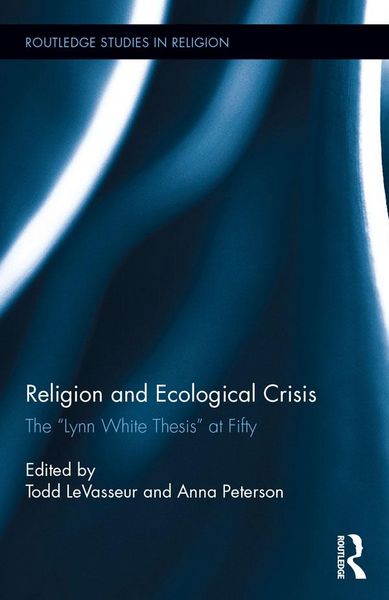
Religion and Ecological Crisis The "Lynn White Thesis" at Fifty
-
- Hardcover
- Taschenbuch
- eBook ausgewählt
-
Form:Einzelkauf Download
-
Sprache:Englisch
-
eBook Format:PDF
- ePUB 3 67,90 €
- PDF 67,90 € ausgewählt
67,90 €
inkl. gesetzl. MwSt.Beschreibung
Produktdetails
Format
Kopierschutz
Ja
Family Sharing
Nein
Text-to-Speech
Nein
Erscheinungsdatum
01.07.2016
Herausgeber
Todd LeVasseur + weitereVerlag
Taylor & Francis eBooksSeitenzahl
214 (Printausgabe)
Dateigröße
806 KB
Sprache
Englisch
EAN
9781317242765
In 1967, Lynn White, Jr.'s seminal article The Historical Roots of Our Ecologic Crisis was published, essentially establishing the academic study of religion and nature. White argues that religions-particularly Western Christianity-are a major cause of worldwide ecological crises. He then asserts that if we are to halt, let alone revert, anthropogenic damages to the environment, we need to radically transform religious cosmologies. White's hugely influential thesis has been cited thousands of times in a variety of disciplines, including but not limited to religious studies, environmental ethics, history, ecological science, philosophy, psychology, and anthropology.
In practical terms, the ecological crisis to which White was responding has only worsened in the decades since the article was published. This collection of original essays by leading scholars in a variety of interdisciplinary settings, including religion and nature, environmental ethics, animal studies, ecofeminism, restoration ecology, and ecotheology, considers the impact of White's arguments, offering constructive criticism as well as reflections on the ongoing, ever-changing scholarly debate about the way religion and culture contribute to both environmental crises and to their possible solutions. Religion and Ecological Crisis addresses a wide range of topics related to White's thesis, including its significance for environmental ethics and philosophy, the response from conservative Christians and evangelicals, its importance for Asian religious traditions, ecofeminist interpretations of the article, and which perspectives might have, ultimately, been left out of his analysis. This book is a timely reflection on the legacy and continuing challenge of White's influential article.
Kundinnen und Kunden meinen
Verfassen Sie die erste Bewertung zu diesem Artikel
Helfen Sie anderen Kund*innen durch Ihre Meinung
Kurze Frage zu unserer Seite
Vielen Dank für Ihr Feedback
Wir nutzen Ihr Feedback, um unsere Produktseiten zu verbessern. Bitte haben Sie Verständnis, dass wir Ihnen keine Rückmeldung geben können. Falls Sie Kontakt mit uns aufnehmen möchten, können Sie sich aber gerne an unseren Kund*innenservice wenden.
zum Kundenservice