KI-Beratung Beta

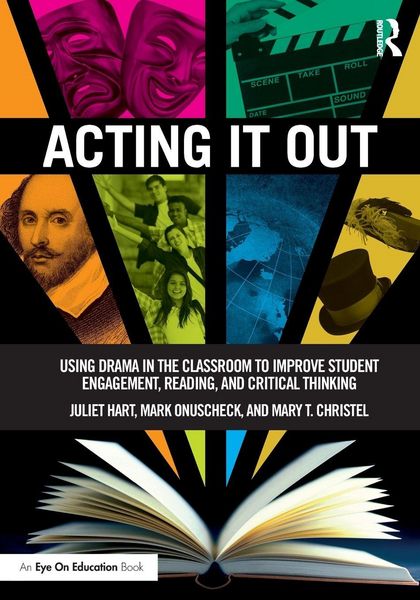
  • Produktbild: Acting It Out
  • Produktbild: Acting It Out

Acting It Out Using Drama in the Classroom to Improve Student Engagement, Reading, and Critical Thinking

45,99 €

inkl. gesetzl. MwSt., Versandkostenfrei


Beschreibung

Produktdetails

Einband

Taschenbuch

Erscheinungsdatum

04.10.2016

Abbildungen

1 SW-Abb.

Verlag

Taylor & Francis

Seitenzahl

142

Maße (L/B/H)

25,4/17,8/0,8 cm

Gewicht

282 g

Sprache

Englisch

ISBN

978-1-138-67744-9

Beschreibung

Rezension

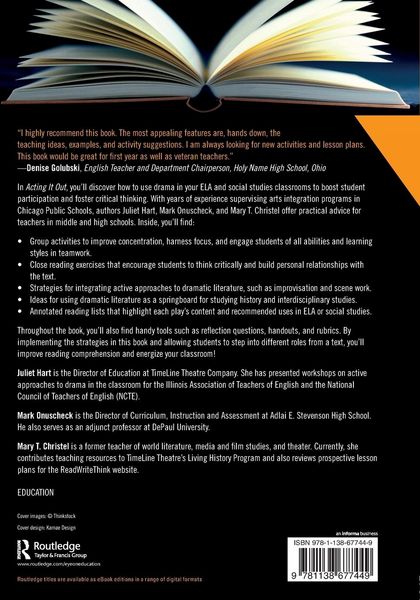
"I highly recommend this book. The most appealing features are, hands down, the teaching ideas, examples, and activity suggestions. I am always looking for new activities and lesson plans. This book would be great for first year as well as veteran teachers." - Denise Golubski, English Teacher and Department Chairperson, Holy Name High School, OH

Produktdetails

Einband

Taschenbuch

Erscheinungsdatum

04.10.2016

Abbildungen

1 SW-Abb.

Verlag

Taylor & Francis

Seitenzahl

142

Maße (L/B/H)

25,4/17,8/0,8 cm

Gewicht

282 g

Sprache

Englisch

ISBN

978-1-138-67744-9

Herstelleradresse

Libri GmbH
Europaallee 1
36244 Bad Hersfeld
DE

Email: gpsr@libri.de

Noch keine Bewertungen vorhanden

Verfassen Sie die erste Bewertung zu diesem Artikel

Helfen Sie anderen Kundinnen und Kunden durch Ihre Meinung.

Kundinnen und Kunden meinen

Bewertungen (0)

Die Leseprobe wird geladen.
  • Produktbild: Acting It Out
  • Produktbild: Acting It Out
  • Contents

    Meet the Authors

    Acknowledgements

    Chapter 1: Bringing Dramatic Literature to Life Through An Active Approach

    What Does "Acting It Out" Really Involve?

    Offering A Bit of Context: TimeLine Theatre Company and Chicago Public

    Schools Partnership

    Not Just in Drama Class: Using Active Approaches in Any Classroom

    Opportunity for Reflection

    Chapter 2: Engaging Students: The Key Ingredient

    Make the Connection: Engagement and Standards for Learning

    Empowering Learners: Long Term Outcomes

    Opportunity for Reflection

    Chapter 3: Opening Up the Classroom Actor's Toolkit: Promoting Student Engagement

    How to Build an Ensemble

    Introducing Classroom Actor Basics

    Sharing Energy and Building Trust

    Making Body and Voice Connections

    Creating A New Approach to Bell Ringers and Redirection Strategies

    Beyond Bell Ringer Ensemble Building Activities: Exploring a Monologue

    Activity #6: Group Monologue Work

    Fostering "Buy In" and A Classroom that "Connects"

    Opportunity for Reflection

    Chapter 4: The Play's the Thing: To Read or Not To Read Dramatic Literature

    Why Read a Play?

    Act One: Start by Addressing Accessible Literary Themes

    Act Two: Build Critical Thinking Around Social Issues

    Act Three: Create and Recreate Historical Perspective

    Opportunity for Reflection

    Chapter 5: Acting It Out: Applying Active Approaches to Scene Study

    Introducing the Play

    Selecting Scenes and Monologues

    Starting the Rehearsal Process

    More Body and Character Connections

    Casting the Scenes, Creating Rehearsal Groups

    Starting with a "Table Read"

    The Reader-Feeder Approach

    Moving with a Purpose: Blocking the Scene

    Showing Scenes

    Assessment: What Are My Students Learning? How Do They Want to

    Grow?

    Building Confidence, Fostering Success

    Opportunity for Reflection

    Handout: Self-Assessment: My Personal Goals

    Handout: Formative Assessment: Checklist for Meeting Rehearsal Objectives

    Rubric: Summative Assessment of Scene Showing

    Chapter 6: Discovering the World of the Play: Researching Complementary Nonfiction, Primary Sources, and Visual Texts

    What is a Dramaturg?

    Teacher as Dramaturg: Providing Students with Complementary Non-fiction Texts

    Students as Dramaturgs: Researching the World of the Play

    Seeing the World of the Play Through Visual Media Research

    The Play's "Backstory": Creating a Dramaturgical Packet

    Step into the Play's World: Creating a "Lobby Display" for the Classroom

    Opportunity for Reflection

    Handout: Brainstorming to Set a Research Agenda

    Chapter 7: It's All Connected: Making Interdisciplinary Connections through Dramatic Texts

    Why Interdisciplinary Connections through Dramatic Texts?

    Excerpting a Play, Capturing a Crucial Moment in History

    Use History Plays Like Time Machines

    More Specifically: Unpack Social Issues

    Use Plays to Establish a Different Viewpoint on Segregation

    Use Plays to Gain a Different Viewpoint on Prejud