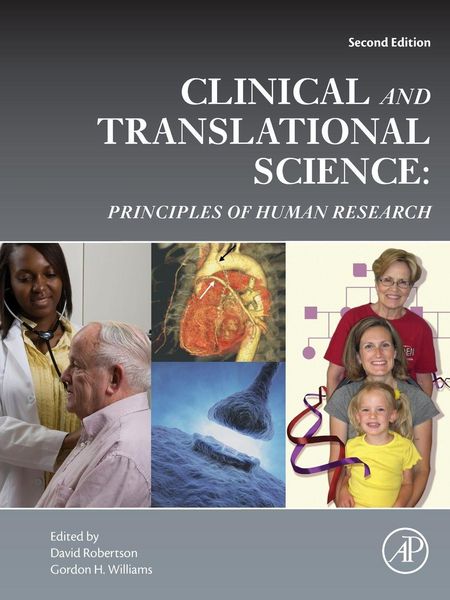
Clinical and Translational Science Principles of Human Research
-
- Taschenbuch ausgewählt
- eBook
-
Sprache:Englisch
198,99 €
inkl. gesetzl. MwSt.,
Portrait
In 1978, Robertson returned to Vanderbilt as assistant professor of Medicine and Pharmacology, became an associate professor in 1982, then rose to professor in 1986. He spent one year as a visiting professor in the Department of Molecular Endocrinology at National, then served as a visiting professor in the Department of Anatomy and Embryology at University College in London. In 1993, Robertson became director of the Medical Scientist Training Program at Vanderbilt University and also took the position of director of the Division of Movement Disorders in the Department of Neurology, which he held until 2000.
Along with his current roles as professor of Medicine and Pharmacology and professor of Neurology, Robertson is currently the Elton Yates Professor of Autonomic Disorders, director of the General Clinical Research Center and director of the Center for Space Physiology and Medicine for Vanderbilt University.
Robertson currently serves on the Board of Advisors for the World Life Foundation, the NASA Microgravity Human Research Committee, the Merck Advisory Board, and the editorial boards of American Journal of Medicine, Autonomic Neuroscience and Clinical Autnomic Research. He is also associate editor for the Journal of Pharmacology and Experimental Therapeutics.
Dr. Williams’ group’s first major goal is the identification of the genetic underpinnings of endocrine factors related to cardiovascular (CV) risk in hypertension and diabetes with the ultimate goal of using genetic markers to develop individualized, personal treatment programs for patients with these diseases. His is a translational research group with interdisciplinary focus in humans and at the bench. The group's major focus in human studies is on careful phenotyping of patients with hypertension and diabetes relative to cardiovascular risk factors. The research focuses on evaluating hormones that can modify vascular contractility and/or salt handling. The major current thrusts are the renin-angiotensin-aldosterone system (RAAS), kallikrein, cortisol, adducin, the beta-2 adrenergic receptor and ion transport systems. The second major goal is to determine the role of aldosterone in producing CV disease at molecular, cellular, organ, whole animal and clinical levels. Recent studies suggest that aldosterone has a wide range of effects including inducing microvascular ischemia, thrombosis, fibrosis, and inflammatory responses many of them potentially mediated by aldosterone’s interaction with caveolins and two recently discovered proteins---striatin and lysine specific demethylase 1 (LSD1). Techniques employed include whole animal physiological studies using normal animals, those made hypertensive and those genetically modified (e.g. knock-outs and transgenics). Molecular and cellular techniques include gene arrays using chip technology, proteomics, confocal microscopy, electrophysiology and in situ hybridization. Finally, the group has just begin the first proof of concept clinical trial for using genetic information to provide personalized medicine.
Produktdetails
Einband
Taschenbuch
Erscheinungsdatum
06.01.2017
Herausgeber
David Robertson + weitereVerlag
ElsevierSeitenzahl
810
Maße (L/B/H)
27,9/21/4,1 cm
Gewicht
2200 g
Auflage
2. Auflage
Sprache
Englisch
ISBN
978-0-12-802101-9
In 1978, Robertson returned to Vanderbilt as assistant professor of Medicine and Pharmacology, became an associate professor in 1982, then rose to professor in 1986. He spent one year as a visiting professor in the Department of Molecular Endocrinology at National, then served as a visiting professor in the Department of Anatomy and Embryology at University College in London. In 1993, Robertson became director of the Medical Scientist Training Program at Vanderbilt University and also took the position of director of the Division of Movement Disorders in the Department of Neurology, which he held until 2000.
Along with his current roles as professor of Medicine and Pharmacology and professor of Neurology, Robertson is currently the Elton Yates Professor of Autonomic Disorders, director of the General Clinical Research Center and director of the Center for Space Physiology and Medicine for Vanderbilt University.
Robertson currently serves on the Board of Advisors for the World Life Foundation, the NASA Microgravity Human Research Committee, the Merck Advisory Board, and the editorial boards of American Journal of Medicine, Autonomic Neuroscience and Clinical Autnomic Research. He is also associate editor for the Journal of Pharmacology and Experimental Therapeutics.
Dr. Williams’ group’s first major goal is the identification of the genetic underpinnings of endocrine factors related to cardiovascular (CV) risk in hypertension and diabetes with the ultimate goal of using genetic markers to develop individualized, personal treatment programs for patients with these diseases. His is a translational research group with interdisciplinary focus in humans and at the bench. The group's major focus in human studies is on careful phenotyping of patients with hypertension and diabetes relative to cardiovascular risk factors. The research focuses on evaluating hormones that can modify vascular contractility and/or salt handling. The major current thrusts are the renin-angiotensin-aldosterone system (RAAS), kallikrein, cortisol, adducin, the beta-2 adrenergic receptor and ion transport systems. The second major goal is to determine the role of aldosterone in producing CV disease at molecular, cellular, organ, whole animal and clinical levels. Recent studies suggest that aldosterone has a wide range of effects including inducing microvascular ischemia, thrombosis, fibrosis, and inflammatory responses many of them potentially mediated by aldosterone’s interaction with caveolins and two recently discovered proteins---striatin and lysine specific demethylase 1 (LSD1). Techniques employed include whole animal physiological studies using normal animals, those made hypertensive and those genetically modified (e.g. knock-outs and transgenics). Molecular and cellular techniques include gene arrays using chip technology, proteomics, confocal microscopy, electrophysiology and in situ hybridization. Finally, the group has just begin the first proof of concept clinical trial for using genetic information to provide personalized medicine.
Kundinnen und Kunden meinen
Verfassen Sie die erste Bewertung zu diesem Artikel
Helfen Sie anderen Kund*innen durch Ihre Meinung
Kurze Frage zu unserer Seite
Vielen Dank für Ihr Feedback
Wir nutzen Ihr Feedback, um unsere Produktseiten zu verbessern. Bitte haben Sie Verständnis, dass wir Ihnen keine Rückmeldung geben können. Falls Sie Kontakt mit uns aufnehmen möchten, können Sie sich aber gerne an unseren Kund*innenservice wenden.
zum Kundenservice