Portrait
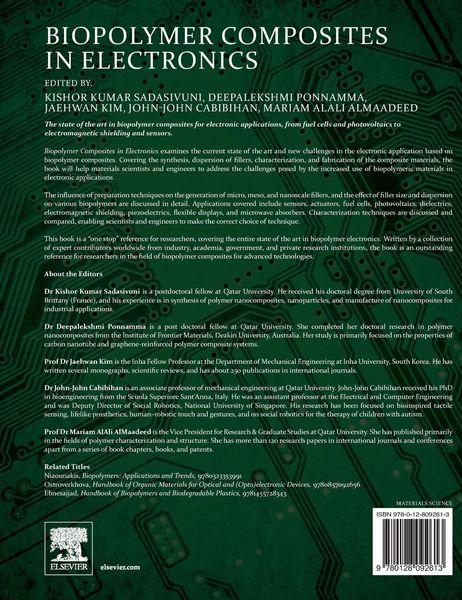
John-John Cabibihan is a Professor at the Department of Mechanical and Industrial Engineering, College of Engineering, Qatar University, in Doha, Qatar. He received the Ph.D. degree in Bioengineering, with specialization in Biorobotics, from the Scuola Superiore Sant’Anna, Pisa, Italy, in 2007. Concurrent with his Ph.D. studies, he was accepted to the co-tutors PhD programme of the École Normale Supérieure Paris-Saclay, France in 2004-2005, where he worked on soft materials at the Laboratoire de Mécanique et Technologie. In 2021, he completed the Venture Creation and Finance Programmes at the Saïd Business School, University of Oxford, UK. Dr. Cabibihan is an inventor in 20 patent families, has over 200 publications and 15 edited books. Dr. Cabibihan was a cofounding Assistant Editor and Editorial Board Member of the International Journal of Social Robotics. Over the years, his work has focused toward healthcare robotics, specifically in assistive and social robotics for the therapy of children with autism, lifelike prosthetics, bio-inspired tactile sensing, and human-robotic touch and gestures. His works were featured by Nature Materials, MIT Technology Review, British Broadcasting Corporation (BBC), Popular Science, New Scientist, Discovery News, New York Magazine, among others.
Dr. Deepalekshmi Ponnamma is the section head of Research Quality in the research planning and development department at Qatar University, Qatar. She is a PhD graduate from the Deakin University, Australia, and finished the post-doctoral studies from Qatar University. Her research interest includes synthesizing the different nanoarchitectures, polymer nanocomposites for efficient technological applications.
Professor Mariam AlAli AlMaadeed is Vice President for Research and Graduate Studies, Professor, Qatar University, Doha, Qatar. She received her Ph.D. in Materials Science from Alexandria University in Alexandria, Egypt in 2001, and joined the Physics Department at Qatar University in the same year. Prof. AlMaadeed has excellent experience and a large amount of internationally recognized work in the field of polymers, characterization and structure, as well as in nanocomposites and nanotechnology. Her work is featured in more than 130 journals and conference publications. Prof. AlMaadeed has given many consultations and workshops to a diverse group of organizations, across industry, government ministries, and communities. She is currently a member in many advisory committees and editorial board bodies such as Advanced Manufacturing: Polymer & Composites Science, Taylor and Francis and Emergent Materials, Springer. Prof. AlMaadeed has designed and contributed to many workshops, symposiums and conferences in the field of materials science, and in teaching and learning strategies. She received the Physics State Award for 2010, the Gulf Petrochemical Association (GPCA) Plastic Excellence Award in 2014 and the ISESCO Prize in Science & Technology 2016.
Jaehwan Kim serves as an Inha Fellow Professor at the Department of Mechanical Engineering at Inha University, Korea. He is also designated as Director of CRC for NanoCellulose Future Composites. Dr. Kim is a Fellow of The Korean Academy of Science and Technology, the National Academy of Engineering of Korea, and the Institute of Physics. He is an Associate Editor of Smart Materials and Structure as well as Smart Nanosystems in Engineering and Medicine and Editor of International Journal of Precision Manufacturing and Engineering, Helyon and Actuators. He has been the Director of Creative Research Center for EAPap Actuator funded by the National Research Foundation of Korea (NRF). Recently, he started the Creative Research Center for Nanocellulose Future Composites, sponsored by NRF. His research interests are smart materials, structures and devices, biomaterial-based smart materials, cellulose, electroactive polymers, power harvesting, biomimetic actuators, biosensors, tactile sensors, and flexible electronics. He has published more than 320 journal papers, presented 360 international conference papers, and filed more than 40 patents.
Produktdetails
Einband
Gebundene Ausgabe
Erscheinungsdatum
23.09.2016
Herausgeber
Kishor Kumar Sadasivuni + weitereVerlag
ElsevierSeitenzahl
544
Maße (L/B/H)
23,5/19,1/3 cm
Gewicht
1143 g
Sprache
Englisch
ISBN
978-0-12-809261-3
John-John Cabibihan is a Professor at the Department of Mechanical and Industrial Engineering, College of Engineering, Qatar University, in Doha, Qatar. He received the Ph.D. degree in Bioengineering, with specialization in Biorobotics, from the Scuola Superiore Sant’Anna, Pisa, Italy, in 2007. Concurrent with his Ph.D. studies, he was accepted to the co-tutors PhD programme of the École Normale Supérieure Paris-Saclay, France in 2004-2005, where he worked on soft materials at the Laboratoire de Mécanique et Technologie. In 2021, he completed the Venture Creation and Finance Programmes at the Saïd Business School, University of Oxford, UK. Dr. Cabibihan is an inventor in 20 patent families, has over 200 publications and 15 edited books. Dr. Cabibihan was a cofounding Assistant Editor and Editorial Board Member of the International Journal of Social Robotics. Over the years, his work has focused toward healthcare robotics, specifically in assistive and social robotics for the therapy of children with autism, lifelike prosthetics, bio-inspired tactile sensing, and human-robotic touch and gestures. His works were featured by Nature Materials, MIT Technology Review, British Broadcasting Corporation (BBC), Popular Science, New Scientist, Discovery News, New York Magazine, among others.
Dr. Deepalekshmi Ponnamma is the section head of Research Quality in the research planning and development department at Qatar University, Qatar. She is a PhD graduate from the Deakin University, Australia, and finished the post-doctoral studies from Qatar University. Her research interest includes synthesizing the different nanoarchitectures, polymer nanocomposites for efficient technological applications.
Professor Mariam AlAli AlMaadeed is Vice President for Research and Graduate Studies, Professor, Qatar University, Doha, Qatar. She received her Ph.D. in Materials Science from Alexandria University in Alexandria, Egypt in 2001, and joined the Physics Department at Qatar University in the same year. Prof. AlMaadeed has excellent experience and a large amount of internationally recognized work in the field of polymers, characterization and structure, as well as in nanocomposites and nanotechnology. Her work is featured in more than 130 journals and conference publications. Prof. AlMaadeed has given many consultations and workshops to a diverse group of organizations, across industry, government ministries, and communities. She is currently a member in many advisory committees and editorial board bodies such as Advanced Manufacturing: Polymer & Composites Science, Taylor and Francis and Emergent Materials, Springer. Prof. AlMaadeed has designed and contributed to many workshops, symposiums and conferences in the field of materials science, and in teaching and learning strategies. She received the Physics State Award for 2010, the Gulf Petrochemical Association (GPCA) Plastic Excellence Award in 2014 and the ISESCO Prize in Science & Technology 2016.
Jaehwan Kim serves as an Inha Fellow Professor at the Department of Mechanical Engineering at Inha University, Korea. He is also designated as Director of CRC for NanoCellulose Future Composites. Dr. Kim is a Fellow of The Korean Academy of Science and Technology, the National Academy of Engineering of Korea, and the Institute of Physics. He is an Associate Editor of Smart Materials and Structure as well as Smart Nanosystems in Engineering and Medicine and Editor of International Journal of Precision Manufacturing and Engineering, Helyon and Actuators. He has been the Director of Creative Research Center for EAPap Actuator funded by the National Research Foundation of Korea (NRF). Recently, he started the Creative Research Center for Nanocellulose Future Composites, sponsored by NRF. His research interests are smart materials, structures and devices, biomaterial-based smart materials, cellulose, electroactive polymers, power harvesting, biomimetic actuators, biosensors, tactile sensors, and flexible electronics. He has published more than 320 journal papers, presented 360 international conference papers, and filed more than 40 patents.
Kundinnen und Kunden meinen
Verfassen Sie die erste Bewertung zu diesem Artikel
Helfen Sie anderen Kund*innen durch Ihre Meinung
Kurze Frage zu unserer Seite
Vielen Dank für Ihr Feedback
Wir nutzen Ihr Feedback, um unsere Produktseiten zu verbessern. Bitte haben Sie Verständnis, dass wir Ihnen keine Rückmeldung geben können. Falls Sie Kontakt mit uns aufnehmen möchten, können Sie sich aber gerne an unseren Kund*innenservice wenden.
zum Kundenservice