KI-Beratung Beta

Gutscheinbedingungen

**Gültig am 27.11.2026 auf Spielzeug, Schreibwaren, Filme, Geschenke & Trends, Musik, tolino eReader & Zubehör, Hörbücher und Hörbuch-Downloads, nicht preisgebundene Bücher und Kalender online auf thalia.at und in der Thalia App. Einzelne Artikel können ausgeschlossen sein. Aufgrund der Buchpreisbindung sind deutschsprachige Bücher und eBooks ausgenommen. Zusätzlich ausgenommen sind Abos & Flatrates, Games, Geschenkkarten/-boxen, Shelfies, Software, Zeitschriften sowie einzelne Artikel von tonies®. Pro Einkauf einmal einlösbar. Click & Collect nur bei Onlinevorabzahlung möglich. Keine Barauszahlung. Nicht kombinierbar mit anderen Aktionen und Gutscheinen. Gutschein wird auf max. 500€ Bestellwert angerechnet. Nicht gültig für Versandkosten und Services.

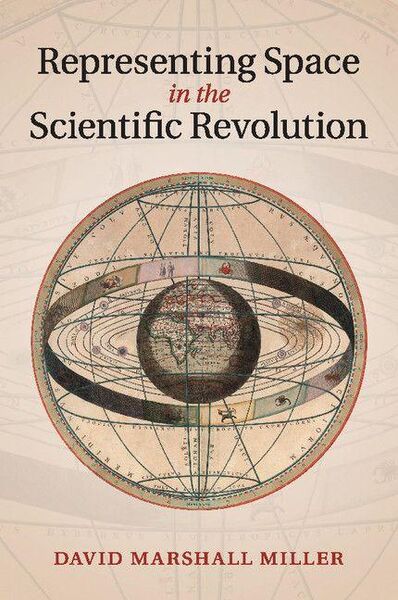
  • Produktbild: Representing Space in the Scientific Revolution
  • Produktbild: Representing Space in the Scientific Revolution

Representing Space in the Scientific Revolution

58,99 €

inkl. gesetzl. MwSt., Versandkostenfrei


Beschreibung

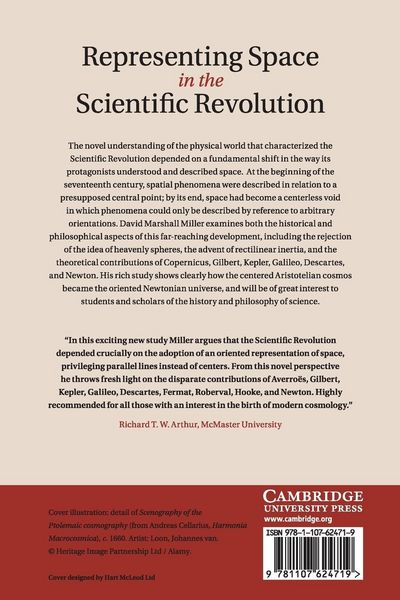
The novel understanding of the physical world that characterized the Scientific Revolution depended on a fundamental shift in the way its protagonists understood and described space. At the beginning of the seventeenth century, spatial phenomena were described in relation to a presupposed central point;...

Beschreibung

The novel understanding of the physical world that characterized the Scientific Revolution depended on a fundamental shift in the way its protagonists understood and described space. At the beginning of the seventeenth century, spatial phenomena were described in relation to a presupposed central point; by its end, space had become a centerless void in which phenomena could only be described by reference to arbitrary orientations. David Marshall Miller examines both the historical and philosophical aspects of this far-reaching development, including the rejection of the idea of heavenly spheres, the advent of rectilinear inertia, and the theoretical contributions of Copernicus, Gilbert, Kepler, Galileo, Descartes, and Newton. His rich study shows clearly how the centered Aristotelian cosmos became the oriented Newtonian universe, and will be of great interest to students and scholars of the history and philosophy of science.

Produktdetails

Einband

Taschenbuch

Erscheinungsdatum

12.04.2016

Abbildungen

21 b/w illus., Zeichnungen, schwarz-weiss

Verlag Cambridge Academic

Produktdetails

Einband

Taschenbuch

Erscheinungsdatum

12.04.2016

Abbildungen

21 b/w illus., Zeichnungen, schwarz-weiss

Verlag Cambridge Academic
Seitenzahl

250

Maße (L/B/H)

22,9/15,2/1,4 cm

Gewicht

368 g

Sprache

Englisch

ISBN

978-1-107-62471-9

Herstelleradresse

Libri GmbH
Europaallee 1
36244 Bad Hersfeld
DE

Email: gpsr@libri.de

Noch keine Bewertungen vorhanden

Verfassen Sie die erste Bewertung zu diesem Artikel

Helfen Sie anderen Kundinnen und Kunden durch Ihre Meinung.

Kundinnen und Kunden meinen

Bewertungen (0)

Die Leseprobe wird geladen.
  • Produktbild: Representing Space in the Scientific Revolution
  • Produktbild: Representing Space in the Scientific Revolution