Gutscheinbedingungen

**Gültig bis 24.09.2026 ab einem Mindestbestellwert von 30€ auf Spielzeug, Schreibwaren, Filme, Geschenke & Trends, Musik, tolino eReader & Zubehör, Hörbücher und Hörbuch-Downloads, nicht preisgebundene Bücher und Kalender online auf thalia.at und in der Thalia App. Einzelne Artikel können ausgeschlossen sein. Aufgrund der Buchpreisbindung sind deutschsprachige Bücher und eBooks ausgenommen. Zusätzlich ausgenommen sind Abos & Flatrates, Games, Geschenkkarten/-boxen, Shelfies, Software, Zeitschriften sowie einzelne Artikel von tonies®. Pro Einkauf einmal einlösbar. Click & Collect nur bei Onlinevorabzahlung möglich. Keine Barauszahlung. Nicht kombinierbar mit anderen Aktionen und Gutscheinen. Gutschein wird auf max. 500€ Bestellwert angerechnet. Nicht gültig für Versandkosten und Services. Preisgebundene Artikel sind vom Mindestbestellwert ausgeschlossen.

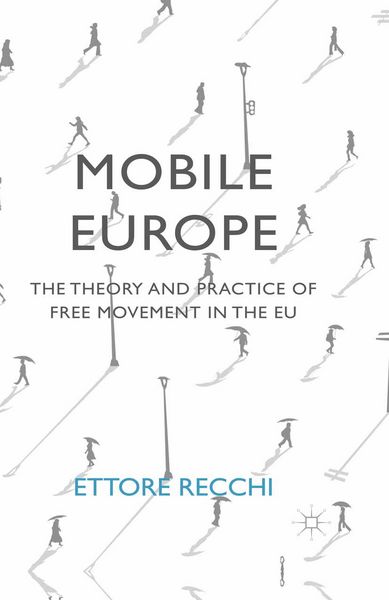
  • Produktbild: Mobile Europe
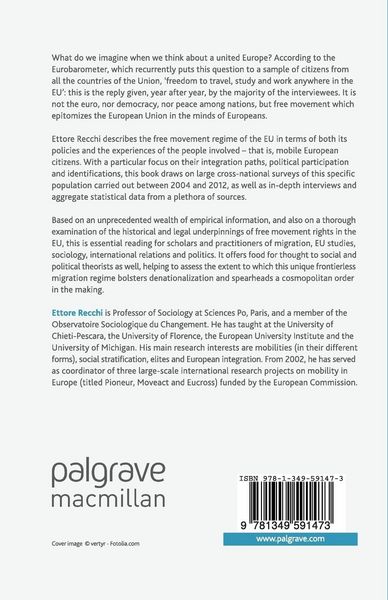
  • Produktbild: Mobile Europe

Mobile Europe The Theory and Practice of Free Movement in the EU

25,99 €

inkl. gesetzl. MwSt., zzgl. Versandkosten


  • Kostenlose Lieferung ab 30 € Einkaufswert
  • Versandkostenfrei für Bonuscard-Kund*innen

Beschreibung

Produktdetails

Einband

Taschenbuch

Erscheinungsdatum

21.03.2019

Abbildungen

XIV, 208 p.

Verlag

Palgrave Macmillan UK

Seitenzahl

208

Maße (L/B/H)

21,6/14/1,3 cm

Gewicht

288 g

Auflage

1st edition 2015

Sprache

Englisch

ISBN

978-1-349-59147-3

Beschreibung

Rezension

“Recchi (Sciences Po, Paris) presents rigorous empirical research on the movement of Europeans across borders and the resulting integration trends of the 20-plus-year European Union (EU) project. … this is a timely contribution to the scholarship and policy of EU population mobility. Summing Up: Recommended. Upper-division undergraduates and above.” (A. H. Fabos, Choice, Vol. 53 (5), January, 2016)

“The book is an important addition to the fields of EU studies and migration studies. It examines concepts of mobility and European citizenship in new ways with more cases. It will be useful for researchers interested in the political and sociological impact of an increasingly mobile Europe.” (Michael Johns, Journal of Common Market Studies, Vol. 54 (2), 2016)

“The new book … is aimed at both social scientists and non-technical readers interested in questions related to free movement in Europe, the related policies and experiences of European movers. The book can also providea valuable reading to experts interested in a broader picture of a borderless Europe. In addition to an interesting description of policies and theories, historical developments and examples of experiences from people’s lives, the book offers original analysis that is carefully interpreted and put into perspective.” (Mariola Pytliková, European Journal of Population, Vol. 32, 2016)

Produktdetails

Einband

Taschenbuch

Erscheinungsdatum

21.03.2019

Abbildungen

XIV, 208 p.

Verlag

Palgrave Macmillan UK

Seitenzahl

208

Maße (L/B/H)

21,6/14/1,3 cm

Gewicht

288 g

Auflage

1st edition 2015

Sprache

Englisch

ISBN

978-1-349-59147-3

Herstelleradresse

Springer-Verlag GmbH
Tiergartenstr. 17
69121 Heidelberg
DE

Email: ProductSafety@springernature.com

Noch keine Bewertungen vorhanden

Verfassen Sie die erste Bewertung zu diesem Artikel

Helfen Sie anderen Kundinnen und Kunden durch Ihre Meinung.

Kundinnen und Kunden meinen

Bewertungen (0)

  • Produktbild: Mobile Europe
  • Produktbild: Mobile Europe
  • Introduction: Between Individualization and Globalization: The Long-Term Premises to Free Movement PART I: THEORIZING FREE MOVEMENT: HISTORY, POLICIES, DEMOGRAPHICS 1. A Frontierless Continent: History of an Idea and its Realization 2. Why Free Movement? Assessing Policies and Rationales 3. Mobile Europeans: How Many are There, Where are They, What do They do? PART II: PRACTISING FREE MOVEMENT: SOCIOLOGICAL PERSPECTIVES 4. 'Old' and 'New' Mobile Europeans: Integration Pathways Compared 5. A Sterile Citizenship? Intra-European Mobility and Political Participation 6. Spatial Mobility and European Identity: Towards a Sense of Shared Belonging Conclusion: Free Movement in Europe: Epitomizing the Age of Mobility?