KI-Beratung Beta

  • Produktbild: Alaska’s Permanent Fund Dividend
  • Produktbild: Alaska’s Permanent Fund Dividend

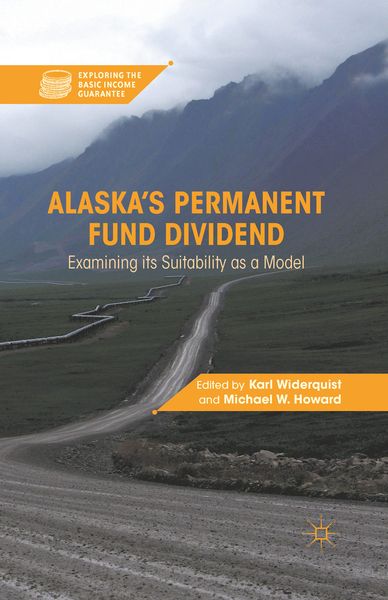
Alaska’s Permanent Fund Dividend Examining Its Suitability as a Model

49,99 €

inkl. gesetzl. MwSt., Versandkostenfrei


Beschreibung

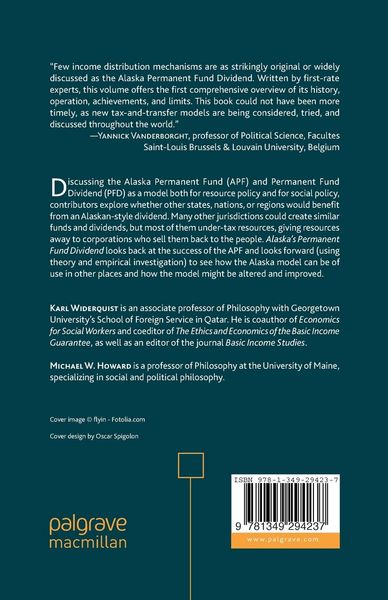
Contributors discuss the Alaska Permanent Fund (APF) and Permanent Fund Dividend (PFD) as a model both for resource policy and for social policy. This book explores whether other states, nations, or regions would benefit from an Alaskan-style dividend. The book also looks at possible ways that the model...

Beschreibung

Contributors discuss the Alaska Permanent Fund (APF) and Permanent Fund Dividend (PFD) as a model both for resource policy and for social policy. This book explores whether other states, nations, or regions would benefit from an Alaskan-style dividend. The book also looks at possible ways that the model might be altered and improved.

Rezension

"Few income distribution mechanisms are as strikingly original or widely discussed as the Alaska Permanent Fund Dividend. Written by first-rate experts, this volume offers the first comprehensive overview of its history, operation, achievements, and limits. This book could not have been more timely, as new tax-and-transfer models are being considered, tried, and discussed throughout the world." - Yannick Vanderborght, professor of Political Science, Facultes Saint-Louis Brussels & Louvain University, Belgium


"A wide-ranging and enjoyable romp through a great deal of intellectual territory . . . An excellent and long overdue examination of a significant and unique government program." - Eastern Economic Journal

Produktdetails

Einband

Taschenbuch

Erscheinungsdatum

29.02.2012

Herausgeber K. Widerquist + weitere
Verlag Palgrave Macmillan US

Produktdetails

Einband

Taschenbuch

Erscheinungsdatum

29.02.2012

Herausgeber
Verlag Palgrave Macmillan US
Seitenzahl

267

Maße (L/B/H)

21,6/14/1,6 cm

Gewicht

365 g

Auflage

1st ed. 2012

Sprache

Englisch

ISBN

978-1-349-29423-7

Herstelleradresse

Palgrave Macmillan
Tiergartenstr. 17
69121 Heidelberg
DE

Email: ProductSafety@springernature.com

Noch keine Bewertungen vorhanden

Verfassen Sie die erste Bewertung zu diesem Artikel

Helfen Sie anderen Kundinnen und Kunden durch Ihre Meinung.

Kundinnen und Kunden meinen

Bewertungen (0)

  • Produktbild: Alaska’s Permanent Fund Dividend
  • Produktbild: Alaska’s Permanent Fund Dividend
  • Introduction Chapter 1: Introduction: Success in Alaska Karl Widerquist and Michael W. Howard Part One: The History, Economics, and Politics of the Alaska Model Chapter 2: The Improbable but True Story of How the Alaska Permanent Fund and the Alaska Permanent Fund Dividend Came to Be Cliff Groh and Gregg Erickson Chapter 3: How the APF and the PFD Operate: the Peculiar Mechanics of Alaska's State Finances Cliff Groh and Gregg Erickson Chapter 4: The Economic and Social Impacts of the Permanent Fund Dividend on Alaska Scott Goldsmith Chapter 5: Politics, Preservation of Natural Resource Wealth, and the Funding of a Basic Income Guarantee James B. Bryan and Sarah Lamarche Castillo Chapter 6: Risk and the Alaska Permanent Fund Dividend Michael A. Lewis Chapter 7: Permanent Perhaps: Challenges to the Model in Alaska in its First 30 Years Gregg Erickson and Cliff Groh Chapter 8: Critical Reflections on the Future of Alaska's Permanent Fund and Dividend Karl Widerquist and Michael W. Howard Part Two: the ethics of the Alaska model Chapter 9: Left-libertarianism and the Resource Dividend Ian Carter Chapter 10: Basic Income and the Alaska Model: Limits of the Resource Dividend Model for the Implementation of an Unconditional Basic Income Almaz Zelleke Chapter 11: Stakeholding Through the Permanent Fund Dividend: Fitting Practice to Theory Christopher L. Griffin, Jr. Chapter 12: The Alaska Model: A Republican Perspective David Casassas and Jurgen De Wispelaere Chapter 13: Climate Change, Complicity & Compensation Stephen Winter Chapter 14: Why Link Basic Income to Resource Taxation? Karl Widerquist and Michael W. Howard Conclusion Chapter 15: Conclusion: Lessons from the Alaska Model Karl Widerquist and Michael W. Howard Bibliography