Gutscheinbedingungen

**Gültig am 28.09.2026 auf fremdsprachige Bücher online auf thalia.at und in der Thalia App. Einzelne Artikel können ausgeschlossen sein. Ausgenommen sind preisgebundene Artikel & eBooks. Pro Einkauf einmal einlösbar. Click & Collect nur bei Onlinevorabzahlung möglich. Keine Barauszahlung. Nicht kombinierbar mit anderen Aktionen und Gutscheinen. Gutschein wird auf max. 500€ Bestellwert angerechnet. Nicht gültig für Geschenkkarten, Versandkosten und Services.

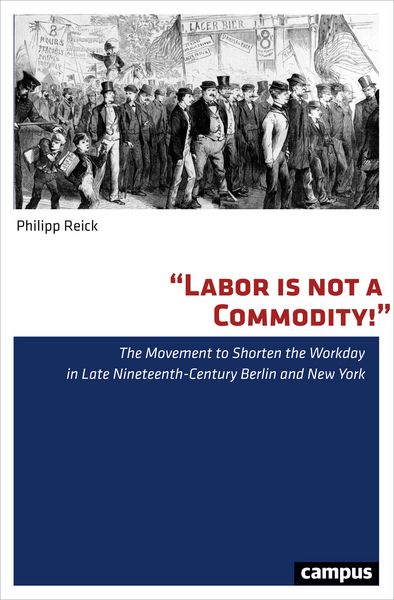
Produktbild: Labor is not a Commodity!
Band 37

Labor is not a Commodity! The Movement to Shorten the Workday in Late Nineteenth-Century Berlin and New York

Aus der Reihe Nordamerikastudien

46,60 €

inkl. gesetzl. MwSt., Versandkostenfrei


Beschreibung

Produktdetails

Einband

Taschenbuch

Erscheinungsdatum

10.11.2016

Verlag

Campus

Seitenzahl

238

Maße (L/B/H)

21,3/14/1,5 cm

Gewicht

308 g

Auflage

1

Sprache

Englisch

ISBN

978-3-593-50627-2

Beschreibung

Produktdetails

Einband

Taschenbuch

Erscheinungsdatum

10.11.2016

Verlag

Campus

Seitenzahl

238

Maße (L/B/H)

21,3/14/1,5 cm

Gewicht

308 g

Auflage

1

Sprache

Englisch

ISBN

978-3-593-50627-2

Herstelleradresse


Email: info@bod.de

Noch keine Bewertungen vorhanden

Verfassen Sie die erste Bewertung zu diesem Artikel

Helfen Sie anderen Kundinnen und Kunden durch Ihre Meinung.

Kundinnen und Kunden meinen

Bewertungen (0)

  • Produktbild: Labor is not a Commodity!

  • Contents


    Acknowledgements 7


    Preface 9


    1. Introduction: Theory and Methods


    1.1. The Polanyian Revival 18


    1.2. The Conceptual Toolbox 21


    1.3. The Comparative Approach 28


    1.4. The Text Corpus 38


    1.5. The State of Research 40


    2. Market: The Commodification of Work and the Birth of Organized Labor


    2.1. The Rise of a Free Labor Market 45


    2.2. Organized Labor in Berlin in the 1860s and early 1870s 55


    2.3. Organized Labor in New York in the 1860s and early 1870s 67


    3. Polity: Shorter Hours and the Struggle for Equality


    3.1. The Movement for Shorter Hours in New York 79


    3.2. The Movement for Shorter Hours in Berlin 88


    3.3. Chapter Conclusion 101


    4. Society: Shorter Hours and the Struggle for Human Rights


    4.1. Commodification as Dehumanization 109


    4.2. De-Commodification as Counter-Hegemony 121


    4.3. Chapter Conclusion 130


    5. Economy: Shorter Hours and the Struggle for Redistribution


    5.1. The Political Economy of Shorter Hours 135


    5.2. The Decline of the Concept of Commodification 141


    5.3. Chapter Conclusion 158


    6. Gender: Shorter Hours and the Protection of Female Labor


    6.1. Women's Work 165


    6.2. Protecting Female Labor 176


    6.3. Chapter Conclusion 196


    7. Conclusion: The Past and Present of Commodification 202


    Abbreviations 211


    Bibliography 212


    Index of Subjects 234


    Index of Persons 236