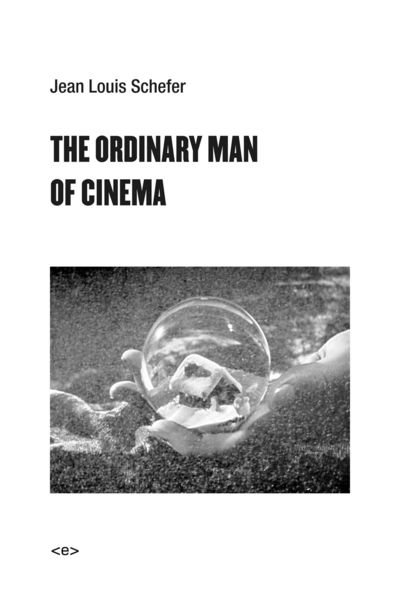
The Ordinary Man of Cinema
-
- Englisch ausgewählt
16,99 €
UVP
20,00 €
inkl. gesetzl. MwSt.,
- Kostenlose Lieferung ab 30 € Einkaufswert
- Versandkostenfrei für Bonuscard-Kund*innen
Beschreibung
Produktdetails
Einband
Taschenbuch
Erscheinungsdatum
16.09.2016
Abbildungen
34 B&W ILLUS.
Verlag
MIT PressSeitenzahl
224
Maße (L/B/H)
22,8/15,1/2 cm
Gewicht
344 g
Übersetzt von
Max Cavitch + weitere
Sprache
Englisch
ISBN
978-1-58435-185-6
When it was first published in French in 1980, The Ordinary Man of Cinema signaled a shift from the French film criticism of the 1960s to a new breed of film philosophy that disregarded the semiotics and post-structuralism of the preceding decades. Schefer describes the schizophrenic subjectivity the cinema offers us: the film as a work projected without memory, viewed by (and thereby lived by) a subject scarred and shaped by memory. The Ordinary Man of Cinema delineates the phenomenology of movie-going and the fleeting, impalpable zone in which an individual's personal memory confronts the cinema's ideological images to create a new way of thinking.
It is also a book replete with mummies and vampires, tyrants and prostitutes, murderers and freaks figures that are fundamental to Schefer's conception of the cinema, because the worlds that cinema traverses (our worlds, interior and exterior) are worlds of pain, unconscious desire, decay, repressed violence, and the endless mystery of the body. Fear and pleasure breed monsters, and such are what Schefer's emblematic ordinary man seeks and encounters when engaging in the disordering of the ordinary that the movie theater offers him. Among other things, Schefer considers The Gods in 31 brief essays on film stills and The Criminal Life with reflections on spectatorship and autobiography.
While Schefer's book has long been standard reading in French film scholarship, until now it has been something of a missing link to the field (and more broadly, French theory) in English. It is one of the building blocks of more widely known and read translations of Gilles Deleuze (who cited this book as an influence on his own cinema books) and Jacques Rancière.
Noch keine Bewertungen vorhanden
Verfassen Sie die erste Bewertung zu diesem Artikel
Helfen Sie anderen Kundinnen und Kunden durch Ihre Meinung.
Kurze Frage zu unserer Seite
Vielen Dank für Ihr Feedback
Wir nutzen Ihr Feedback, um unsere Produktseiten zu verbessern. Bitte haben Sie Verständnis, dass wir Ihnen keine Rückmeldung geben können. Falls Sie Kontakt mit uns aufnehmen möchten, können Sie sich aber gerne an unseren Kund*innenservice wenden.
zum Kundenservice