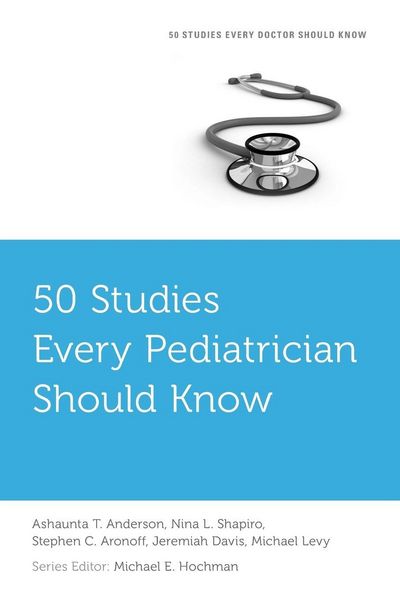
Produktbild: 50 Studies Every Pediatrician Should Know

50 Studies Every Pediatrician Should Know

105,99 €

inkl. gesetzl. MwSt., Versandkostenfrei


Beschreibung

Produktdetails

Einband

Taschenbuch

Erscheinungsdatum

31.05.2016

Verlag

Oxford Academic

Seitenzahl

360

Maße (L/B/H)

23,4/15,6/2 cm

Gewicht

547 g

Sprache

Englisch

ISBN

978-0-19-020403-7

Beschreibung

Produktdetails

Einband

Taschenbuch

Erscheinungsdatum

31.05.2016

Verlag

Oxford Academic

Seitenzahl

360

Maße (L/B/H)

23,4/15,6/2 cm

Gewicht

547 g

Sprache

Englisch

ISBN

978-0-19-020403-7

Herstelleradresse

Libri GmbH
Europaallee 1
36244 Bad Hersfeld
DE

Email: gpsr@libri.de

Noch keine Bewertungen vorhanden

Verfassen Sie die erste Bewertung zu diesem Artikel

Helfen Sie anderen Kundinnen und Kunden durch Ihre Meinung.

Kundinnen und Kunden meinen

Bewertungen (0)

Die Leseprobe wird geladen.
  • Produktbild: 50 Studies Every Pediatrician Should Know
    • Section I: Allergy Immunology
    • 1. Efficacy of Immunoglobulin Plus Prednisolone in Prevention of Coronary Artery Abnormalities in Kawasaki Disease
    • Section II: Behavioral
    • 2. Measles, Mumps, and Rubella Vaccination and Autism
    • 3. Treatment for adolescents with depression study (TADS)
    • 4. The Multimodal Treatment Study of Children with Attention Deficit/Hyperactivity Disorder (MTA)
    • Section III: Cardiology
    • 5. Pharmacologic Closure of a Patent Ductus Arteriosus in Premature Infants
    • 6. The relation of overweight to cardiovascular risk factors among children and adolescents: the Bogalusa heart study
    • Section IV: Dermatology
    • 7. Propranolol vs. Prednisolone for Symptomatic Proliferating Infantile Hemangiomas: A Randomized Clinical Trial
    • Section V: Endocrinology
    • 8. Risk Factors for Cerebral Edema in Children with Diabetic Ketoacidosis
    • Section VI: ENT
    • 9. A Trial of Early Ear Tube Placement in Children with Persistent Otitis Media
    • Section VII: General Pediatrics
    • 10. Maintenance IV Fluid Requirements
    • 11. Predischarge Serum Bilirubin to Predict Significant Hyperbilirubinemia in Newborns
    • 12. Sudden Infant Death Syndrome Risk Factors: The Chicago Infant Mortality Study
    • 13. Treatment of Acute Otitis Media in Children
    • 14. The Human Papillomavirus Vaccine
    • 15. Evidence of Decrease in Vaccine-Type Human Papillomavirus (HPV) and Herd Protection in Adolescents and Young Women
    • 16. Effects of Lead Exposure in Childhood
    • Section VIII: Hematology
    • 17. Iron Supplementation for Breastfed Infants
    • 18. Transfusion Strategies for Patients in Pediatric Intensive Care Units
    • 19. Prophylactic Penicillin in Sickle Cell Anemia
    • Section IX: Infectious Disease
    • 20. Empiric Antimicrobial Therapy for Skin and Soft-Tissue Infections
    • 21. Infants at Low Risk for Serious Bacterial Infection
    • 22. Outpatient Treatment of Febrile Infants at Low Risk for Serious Bacterial Infection
    • 23. Outpatient Treatment of Selected Febrile Infants Without Antibiotics
    • 24. Neonatal Fever Without a Source
    • 25. Serious Bacterial Infections and Viral Infections in Febrile Infants
    • 26. Chest Radiograph and Lower Respiratory Tract Infection
    • 27. Vidarabine Therapy of Neonatal Herpes Simplex Virus Infection
    • 28. Early Reversal of Pediatric and Neonatal Septic Shock
    • 29. Reduction of vertical transmission of human immunodeficiency virus (HIV)
    • 30. Palivizumab prophylaxis against Respiratory Syncytial Virus (RSV) in high risk infants
    • 31. The Spectrum of Bronchiolitis
    • 32. Preventing Early-Onset Neonatal Group B Streptococcal Disease
    • Section X: Neonatology
    • 33. Apgar Scoring of Infants at Delivery
    • 34. Prophylactic Treatment with Human Surfactant in Extremely Preterm Infants
    • Section XI: Nephrology
    • 35. Oral versus Initial Intravenous Antibiotics for Urinary Tract Infection in Young Febrile Children
    • 36. Identifying children with minimal change disease (MCD)
    • 37. Chronic renal disease following poststreptococcal glomerulonephritis
    • Section XII: Neurology
    • 38. Antipyretic Agents for Preventing Febrile Seizure Recurrence
    • 39. Febrile Seizures and Risk for Epilepsy
    • 40. Seizure Recurrence After First Unprovoked Afebrile Seizure
    • 41. Mortality and Childhood-Onset Epilepsy
    • 42. Identifying Children with Low-Risk Head Injuries Who Do Not Require Computed Tomography
    • Section XIII: Oncology
    • 43. Health-Related Quality of Life Among Children with Acute Lymphoblastic Leukemia
    • Section XIV: Ophthalmology
    • 44. Treatment of Acute Conjunctivitis in Children
    • 45. Screening for Amblyopia
    • Section XV: Orthopedics
    • 46. Differentiation Between Septic Arthritis and Transient Synovitis of the Hip in Children
    • Section XVI: Pulmonary
    • 47. Steroids for the Treatment of Croup
    • 48. Inhaled Corticosteroids for Mild Persistent Asthma
    • 49. Inhaled Salbutamol (Albuterol) vs. Injected Epinephrine in Acute Asthma
    • 50. Long-term Inhaled Hypertonic Saline for Cystic Fibrosis