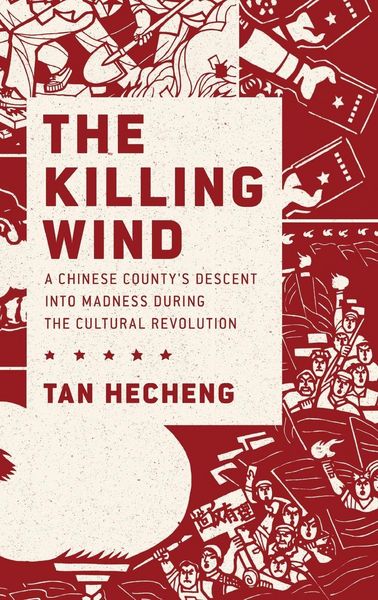
Killing Wind A Chinese County's Descent Into Madness During the Cultural Revolution
65,99 €
inkl. gesetzl. MwSt.,
Beschreibung
Produktdetails
Einband
Gebundene Ausgabe
Erscheinungsdatum
11.01.2017
Verlag
Oxford AcademicSeitenzahl
534
Maße (L/B/H)
24/16,1/3,3 cm
Gewicht
960 g
Übersetzt von
Mosher Stacy + weitere
Sprache
Englisch
ISBN
978-0-19-062252-7
Over the course of 66 days in 1967, more than 4,000 "class enemies"--including young children and the elderly--were murdered in Daoxian, a county in China's Hunan province. The killings spread to surrounding counties, resulting in a combined death toll of more than 9,000. Commonly known as the Daoxian massacre, the killings were one of many acts of so-called mass dictatorship and armed factional conflict that rocked China during the Cultural Revolution. However, in spite of the scope and brutality of the killings, there are few detailed accounts of mass killings in China's countryside during the Cultural Revolution's most tumultuous years. Years after the massacre, journalist Tan Hecheng was sent to Daoxian to report on an official investigation into the killings. Tan was prevented from publishing his findings in China, but in 2010, he published the Chinese edition of The Killing Wind in Hong Kong. Tan's first-hand investigation of the atrocities, accumulated over the course of more than 20 years, blends his research with the recollections of survivors to provide a vivid account exploring how and why the massacre took place and describing its aftermath. Dispelling the heroic aura of class struggle, Tan reveals that most of the Daoxian massacre's victims were hard-working, peaceful members of the rural middle class blacklisted as landlords or rich peasants. Tan also describes how political pressure and brainwashing turned ordinary people into heartless killing machines. More than a catalog of horrors, The Killing Wind is also a poignant meditation on memory, moral culpability, and the failure of the Chinese government to come to terms with the crimes of the Maoist era. By painting a detailed portrait of this massacre, Tan makes a broader argument about the long-term consequences of the Cultural Revolution, one of the most violent political movements of the twentieth century. A compelling testament to the victims and survivors of the Daoxian massacre, The Killing Wind is a monument to historical truth: one that fills an immense gap in our understanding of the Mao era, the Cultural Revolution, and the status of truth in contemporary China.
Noch keine Bewertungen vorhanden
Verfassen Sie die erste Bewertung zu diesem Artikel
Helfen Sie anderen Kundinnen und Kunden durch Ihre Meinung.
Kurze Frage zu unserer Seite
Vielen Dank für Ihr Feedback
Wir nutzen Ihr Feedback, um unsere Produktseiten zu verbessern. Bitte haben Sie Verständnis, dass wir Ihnen keine Rückmeldung geben können. Falls Sie Kontakt mit uns aufnehmen möchten, können Sie sich aber gerne an unseren Kund*innenservice wenden.
zum Kundenservice