Beschreibung
Produktdetails
Einband
Gebundene Ausgabe
Erscheinungsdatum
30.04.2028
Herausgeber
Lai Choo Malone-Lee + weitereVerlag
World Scientific PublishingSeitenzahl
250
Maße (L/B/H)
22,9/15,3/1,3 cm
Gewicht
341 g
Sprache
Englisch
ISBN
978-981-4733-53-3
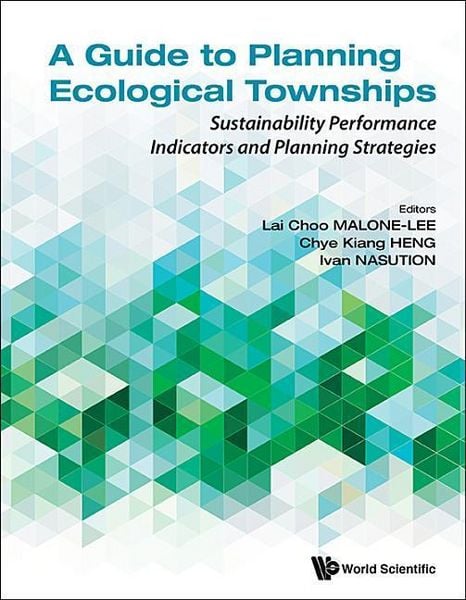
Population pressures and urbanization, together with the challenges of sustainable development, have, in recent decades, led to a proliferation of township developments which are termed "eco-cities." These townships seek to attain a wide range of social, economic and environmental sustainability goals. They adopt various quantitative targets or key performance indicators (KPIs) in a bid to substantiate sustainability claims in a number of common themes, for example, energy efficiency, water consumption reduction, public transport planning, waste management, carbon reduction strategies, and biodiversity conservation. They apply ecological principles to guide urban planning, design and management. Given that there are no universal standards, different townships have adopted their own criteria and interpretation on what is to be achieved. This book presents a systematic compilation of sustainability indicators adopted in selected township case studies, with a focus on relatively high density projects in Asia. Using a methodical mode of enquiry, it sets forth a systematic approach towards profiling sustainability performance. In the process, it derives a framework of sustainability domains, performance targets and planning standards which operationalises the concept of sustainability, and lends tangible dimensions to its evaluation. The indicator framework demonstrates the contemporary sustainability considerations that have been embraced by the case studies. They illustrates elements of compact development, social diversity, resource efficiency, economic sufficiency and climate resilience. Planners, designers, developers and their consultants can use the indicator framework to guide project implementation and performance assessment. The methodological structuring of planning parameters lays the foundation for an evolved paradigm in ecological township planning, and a sharpened way of defining the future of human settlements.
Noch keine Bewertungen vorhanden
Verfassen Sie die erste Bewertung zu diesem Artikel
Helfen Sie anderen Kundinnen und Kunden durch Ihre Meinung.
Kurze Frage zu unserer Seite
Vielen Dank für Ihr Feedback
Wir nutzen Ihr Feedback, um unsere Produktseiten zu verbessern. Bitte haben Sie Verständnis, dass wir Ihnen keine Rückmeldung geben können. Falls Sie Kontakt mit uns aufnehmen möchten, können Sie sich aber gerne an unseren Kund*innenservice wenden.
zum Kundenservice