KI-Beratung Beta

Gutscheinbedingungen

**Gültig bis 18.11.2026 auf englischsprachige Klassiker (klassiker-32728) online auf thalia.at und in der Thalia App. Einzelne Artikel können ausgeschlossen sein. Ausgenommen sind preisgebundene Artikel & eBooks. Pro Einkauf einmal einlösbar. Click & Collect nur bei Onlinevorabzahlung möglich. Keine Barauszahlung. Nicht kombinierbar mit anderen Aktionen und Gutscheinen. Gutschein wird auf max. 500€ Bestellwert angerechnet. Nicht gültig für Geschenkkarten, Versandkosten und Services.

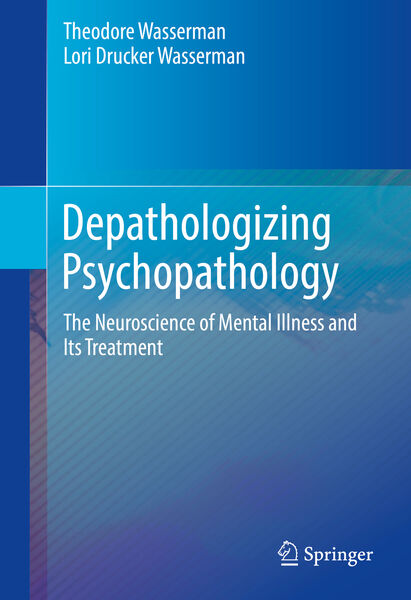
  • Produktbild: Depathologizing Psychopathology
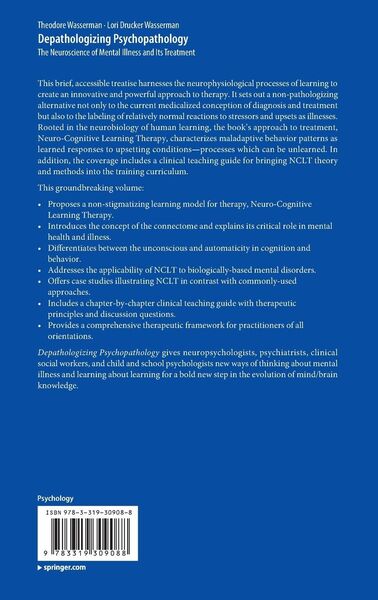
  • Produktbild: Depathologizing Psychopathology

Depathologizing Psychopathology The Neuroscience of Mental Illness and Its Treatment

51,99 €

inkl. gesetzl. MwSt., Versandkostenfrei


Beschreibung

This brief, accessible treatise harnesses the neurophysiological processes of learning to create an innovative and powerful approach to therapy. It sets out a non-pathologizing alternative not only to the current medicalized conception of diagnosis and treatment but also to the labeling of relatively...

Beschreibung

This brief, accessible treatise harnesses the neurophysiological processes of learning to create an innovative and powerful approach to therapy. It sets out a non-pathologizing alternative not only to the current medicalized conception of diagnosis and treatment but also to the labeling of relatively normal reactions to stressors and upsets as illnesses. Rooted in the neurobiology of human learning, the book’s approach to treatment, Neuro-Cognitive Learning Therapy, characterizes maladaptive behavior patterns as learned responses to upsetting conditions—processes which can be unlearned. In addition, the coverage includes a clinical teaching guide for bringing NCLT theory and methods into the training curriculum.

This groundbreaking volume:


  • Proposes a non-stigmatizing learning model for therapy, Neuro-Cognitive Learning Therapy.


  • Introduces the concept of the connectome and explains its critical role in mental health and illness.


  • Differentiates between the unconscious and automaticity in cognition and behavior.


  • Addresses the applicability of NCLT to biologically-based mental disorders.


  • Offers case studies illustrating NCLT in contrast with commonly-used approaches.


  • Includes a chapter-by-chapter clinical teaching guide with therapeutic principles and discussion questions.


  • Provides a comprehensive therapeutic framework for practitioners of all orientations.


Depathologizing Psychopathology gives neuropsychologists, psychiatrists, clinical social workers, and child and school psychologists new ways of thinking about mental illness and learning about learning for a bold new step in the evolution of mind/brain knowledge.

Rezension

“This volume might be best used as an addition to an advanced psychopathology for graduate students and psychiatry residents. … the authors include an appendix with suggested teaching objectives and exercises. It will also be of use and of interest to practitioners and researchers. There is much of intellectual and clinical value in this volume. Wasserman and Wasserman do us a great service in challenging the status quo and in developing a true neuropsychological model of psychopathology and its treatment.” (Jerry Gold, PsycCRITIQUES, Vol. 62 (7), February, 2017)

Produktdetails

Einband

Gebundene Ausgabe

Erscheinungsdatum

27.07.2016

Abbildungen

IX, 181 p. 2 illus. in color.

Verlag Springer

Produktdetails

Einband

Gebundene Ausgabe

Erscheinungsdatum

27.07.2016

Abbildungen

IX, 181 p. 2 illus. in color.

Verlag Springer
Seitenzahl

181

Maße (L/B/H)

24,1/16/1,7 cm

Gewicht

407 g

Auflage

1st ed. 2016

Sprache

Englisch

ISBN

978-3-319-30908-8

Herstelleradresse

Springer-Verlag KG
Sachsenplatz 4-6
1201 Wien
AT

Email: ProductSafety@springernature.com

Noch keine Bewertungen vorhanden

Verfassen Sie die erste Bewertung zu diesem Artikel

Helfen Sie anderen Kundinnen und Kunden durch Ihre Meinung.

Kundinnen und Kunden meinen

Bewertungen (0)

  • Produktbild: Depathologizing Psychopathology
  • Produktbild: Depathologizing Psychopathology
  • Principles of Learning.- Therapy versus education--why education is better.- Automaticity.- How we learn.- Mental illness as a white matter connectivity problem.- What Is Cognitive Learning Therapy?.- Introduction to cognitive learning therapy.- Key concepts in cognitive learning therapy.- The relationship between therapist and client in cognitive learning therapy.- Applications of Cognitive Learning Therapy.- Cognitive learning therapy for depression.- Cognitive learning therapy for obsessive thinking and compulsive behavior.- Cognitive learning therapy for anxiety and other regulatory disorders.- Cognitive learning therapy and educating parents on how to manage their children.- Summary and concluding remarks: where do we go from here?.