KI-Beratung Beta

Gutscheinbedingungen

**Gültig bis 05.10.2026 ab einem Mindestbestellwert von 30€ auf Spielzeug, Schreibwaren, Filme, Geschenke & Trends, Musik, tolino eReader & Zubehör, Hörbücher und Hörbuch-Downloads, nicht preisgebundene Bücher und Kalender online auf thalia.at und in der Thalia App. Einzelne Artikel können ausgeschlossen sein. Aufgrund der Buchpreisbindung sind deutschsprachige Bücher und eBooks ausgenommen. Zusätzlich ausgenommen sind Abos & Flatrates, Games, Geschenkkarten/-boxen, Shelfies, Software, Zeitschriften sowie einzelne Artikel von tonies®. Pro Einkauf einmal einlösbar. Nur gültig mit im Onlineshop hinterlegter Bonuscard. Click & Collect nur bei Onlinevorabzahlung möglich. Keine Barauszahlung. Nicht kombinierbar mit anderen Aktionen und Gutscheinen. Gutschein wird auf max. 500€ Bestellwert angerechnet. Nicht gültig für Versandkosten und Services. Preisgebundene Artikel sind vom Mindestbestellwert ausgeschlossen.

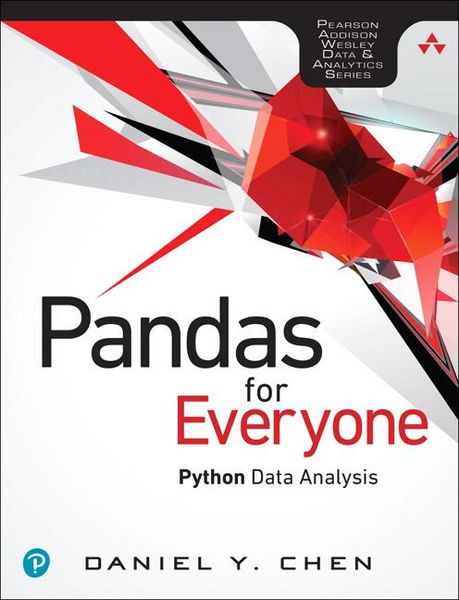
Produktbild: Pandas for Everyone

Pandas for Everyone Python Data Analysis

36,37 €

inkl. gesetzl. MwSt., Versandkostenfrei


Beschreibung

Produktdetails

Einband

Taschenbuch

Erscheinungsdatum

26.12.2017

Verlag

Pearson Education Limited

Seitenzahl

416

Maße (L/B/H)

23,1/17,7/2,7 cm

Gewicht

660 g

Auflage

1. Auflage

Sprache

Englisch

ISBN

978-0-13-454693-3

Beschreibung

Produktdetails

Einband

Taschenbuch

Erscheinungsdatum

26.12.2017

Verlag

Pearson Education Limited

Seitenzahl

416

Maße (L/B/H)

23,1/17,7/2,7 cm

Gewicht

660 g

Auflage

1. Auflage

Sprache

Englisch

ISBN

978-0-13-454693-3

Herstelleradresse

Libri GmbH
Europaallee 1
36244 Bad Hersfeld
DE

Email: gpsr@libri.de

Noch keine Bewertungen vorhanden

Verfassen Sie die erste Bewertung zu diesem Artikel

Helfen Sie anderen Kundinnen und Kunden durch Ihre Meinung.

Kundinnen und Kunden meinen

Bewertungen (0)

Die Leseprobe wird geladen.
  • Produktbild: Pandas for Everyone
  • Foreword xix

    Preface xxi

    Acknowledgments xxvii

    About the Author xxxi


    Part I: Introduction 1


    Chapter 1: Pandas DataFrame Basics 3

    1.1 Introduction 3

    1.2 Loading Your First Data Set 4

    1.3 Looking at Columns, Rows, and Cells 7

    1.4 Grouped and Aggregated Calculations 18

    1.5 Basic Plot 23

    1.6 Conclusion 24


    Chapter 2: Pandas Data Structures 25

    2.1 Introduction 25

    2.2 Creating Your Own Data 26

    2.3 The Series 28

    2.4 The DataFrame 36

    2.5 Making Changes to Series and DataFrames 38

    2.6 Exporting and Importing Data 43

    2.7 Conclusion 47


    Chapter 3: Introduction to Plotting 49

    3.1 Introduction 49

    3.2 Matplotlib 51

    3.3 Statistical Graphics Using matplotlib 56

    3.4 Seaborn 61

    3.5 Pandas Objects 83

    3.6 Seaborn Themes and Styles 86

    3.7 Conclusion 90


    Part II: Data Manipulation 91


    Chapter 4: Data Assembly 93

    4.1 Introduction 93

    4.2 Tidy Data 93

    4.3 Concatenation 94

    4.4 Merging Multiple Data Sets 102

    4.5 Conclusion 107


    Chapter 5: Missing Data 109

    5.1 Introduction 109

    5.2 What Is a NaN Value? 109

    5.3 Where Do Missing Values Come From? 111

    5.4 Working with Missing Data 116

    5.5 Conclusion 121


    Chapter 6: Tidy Data 123

    6.1 Introduction 123

    6.2 Columns Contain Values, Not Variables 124

    6.3 Columns Contain Multiple Variables 128

    6.4 Variables in Both Rows and Columns 133

    6.5 Multiple Observational Units in a Table (Normalization) 134

    6.6 Observational Units Across Multiple Tables 137

    6.7 Conclusion 141


    Part III: Data Munging 143


    Chapter 7: Data Types 145

    7.1 Introduction 145

    7.2 Data Types 145

    7.3 Converting Types 146

    7.4 Categorical Data 152

    7.5 Conclusion 153


    Chapter 8: Strings and Text Data 155

    8.1 Introduction 155

    8.2 Strings 155

    8.3 String Methods 158

    8.4 More String Methods 160

    8.5 String Formatting 161

    8.6 Regular Expressions (RegEx) 164

    8.7 The regex Library 170

    8.8 Conclusion 170


    Chapter 9: Apply 171

    9.1 Introduction 171

    9.2 Functions 171

    9.3 Apply (Basics) 172

    9.4 Apply (More Advanced) 177

    9.5 Vectorized Functions 182

    9.6 Lambda Functions 185

    9.7 Conclusion 187


    Chapter 10: Groupby Operations: Split–Apply–Combine 189

    10.1 Introduction 189

    10.2 Aggregate 190

    10.3 Transform 197

    10.4 Filter 201

    10.5 The pandas.core.groupby.DataFrameGroupBy Object 202

    10.6 Working with a MultiIndex 207

    10.7 Conclusion 211


    Chapter 11: The datetime Data Type 213

    11.1 Introduction 213

    11.2 Python’s datetime Object 213

    11.3 Converting to datetime 214

    11.4 Loading Data That Include Dates 217

    11.5 Extracting Date Components 217

    11.6 Date Calculations and Timedeltas 220

    11.7 Datetime Methods 221

    11.8 Getting Stock Data 224

    11.9 Subsetting Data Based on Dates 225

    11.10 Date Ranges 227

    11.11 Shifting Values 230

    11.12 Resampling 237

    11.13 Time Zones 238

    11.14 Conclusion 240


    Part IV: Data Modeling 241


    Chapter 12: Linear Models 243

    12.1 Introduction 243

    12.2 Simple Linear Regression 243

    12.3 Multiple Regression 247

    12.4 Keeping Index Labels From sklearn 251

    12.5 Conclusion 252


    Chapter 13: Generalized Linear Models 253

    13.1 Introduction 253

    13.2 Logistic Regression 253

    13.3 Poisson Regression 257

    13.4 More Generalized Linear Models 260

    13.5 Survival Analysis 260

    13.6 Conclusion 264


    Chapter 14: Model Diagnostics 265

    14.1 Introduction 265

    14.2 Residuals 265

    14.3 Comparing Multiple Models 270

    14.4 k-Fold Cross-Validation 275

    14.5 Conclusion 278


    Chapter 15: Regularization 279

    15.1 Introduction 279

    15.2 Why Regularize? 279

    15.3 LASSO Regression 281

    15.4 Ridge Regression 283

    15.5 Elastic Net 285

    15.6 Cross-Validation 287

    15.7 Conclusion 289


    Chapter 16: Clustering 291

    16.1 Introduction 291

    16.2 k-Means 291

    16.3 Hierarchical Clustering 297

    16.4 Conclusion 301


    Part V: Conclusion 303


    Chapter 17: Life Outside of Pandas 305

    17.1 The (Scientific) Computing Stack 305

    17.2 Performance 306

    17.3 Going Bigger and Faster 307


    Chapter 18: Toward a Self-Directed Learner 309

    18.1 It’s Dangerous to Go Alone! 309

    18.2 Local Meetups 309

    18.3 Conferences 309

    18.4 The Internet 310

    18.5 Podcasts 310

    18.6 Conclusion 311


    Part VI: Appendixes 313


    Appendix A: Installation 315

    A.1 Installing Anaconda 315

    A.2 Uninstall Anaconda 316


    Appendix B: Command Line 317

    B.1 Installation 317

    B.2 Basics 318


    Appendix C: Project Templates 319


    Appendix D: Using Python 321

    D.1 Command Line and Text Editor 321

    D.2 Python and IPython 322

    D.3 Jupyter 322

    D.4 Integrated Development Environments (IDEs) 322


    Appendix E: Working Directories 325


    Appendix F: Environments 327


    Appendix G: Install Packages 329

    G.1 Updating Packages 330


    Appendix H: Importing Libraries 331


    Appendix I: Lists 333


    Appendix J: Tuples 335


    Appendix K: Dictionaries 337


    Appendix L: Slicing Values 339


    Appendix M: Loops 341


    Appendix N: Comprehensions 343


    Appendix O: Functions 345

    O.1 Default Parameters 347

    O.2 Arbitrary Parameters 347


    Appendix P: Ranges and Generators 349


    Appendix Q: Multiple Assignment 351


    Appendix R: numpy ndarray 353


    Appendix S: Classes 355


    Appendix T: Odo: The Shapeshifter 357


    Index 359