KI-Beratung Beta

Gutscheinbedingungen

**Gültig bis 18.11.2026 auf englischsprachige Klassiker (klassiker-32728) online auf thalia.at und in der Thalia App. Einzelne Artikel können ausgeschlossen sein. Ausgenommen sind preisgebundene Artikel & eBooks. Pro Einkauf einmal einlösbar. Click & Collect nur bei Onlinevorabzahlung möglich. Keine Barauszahlung. Nicht kombinierbar mit anderen Aktionen und Gutscheinen. Gutschein wird auf max. 500€ Bestellwert angerechnet. Nicht gültig für Geschenkkarten, Versandkosten und Services.

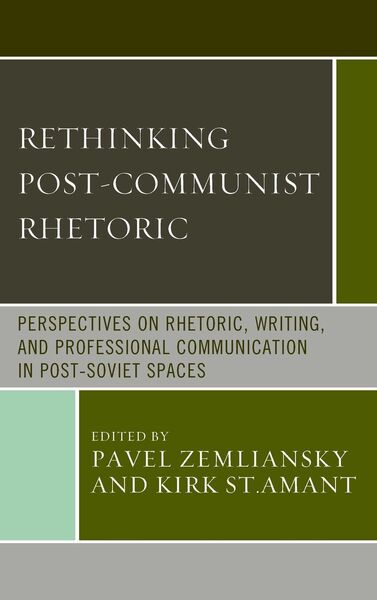
Produktbild: Rethinking Post-Communist Rhetoric

Rethinking Post-Communist Rhetoric Perspectives on Rhetoric, Writing, and Professional Communication in Post-Soviet Spaces

147,99 €

inkl. gesetzl. MwSt., Versandkostenfrei


Produktdetails

Einband

Gebundene Ausgabe

Erscheinungsdatum

08.04.2016

Abbildungen

10 Graphs, 27 Tables

Herausgeber Pavel Zemliansky + weitere

Produktdetails

Einband

Gebundene Ausgabe

Erscheinungsdatum

08.04.2016

Abbildungen

10 Graphs, 27 Tables

Herausgeber
Verlag Ingram Publishers Services
Seitenzahl

256

Maße (L/B/H)

23,5/15,7/2 cm

Gewicht

571 g

Sprache

Englisch

ISBN

978-1-4985-2337-0

Herstelleradresse

Libri GmbH
Europaallee 1
36244 Bad Hersfeld
DE

Email: gpsr@libri.de

Noch keine Bewertungen vorhanden

Verfassen Sie die erste Bewertung zu diesem Artikel

Helfen Sie anderen Kundinnen und Kunden durch Ihre Meinung.

Kundinnen und Kunden meinen

Bewertungen (0)

Die Leseprobe wird geladen.
  • Produktbild: Rethinking Post-Communist Rhetoric
  • Part I: Institutional Contexts
    Chapter 1: A Survey of Academic and Professional Writing Instruction in Higher Education in Russia and Ukraine, Pavel Zemliansky and Olena Goroshko
    Chapter 2: Introducing Western Writing Theory and Pedagogy to Russian Students: The
    Writing and Communication Center at the New Economic School, Kara M. Bollinger
    Chapter 3: Technical and Communication in Russia, Tatjana Schell

    Part II: Workplace Contexts
    Chapter 4: Russian Education in the Twenty-First Century: Establishing Links with the Global
    Community, Alla V. Kourova
    Chapter 5: Rhetoric in Technical Communication: Europe and the United States, Yevgen Borodkin
    Chapter 6: Visible and Invisible Boundaries: Documentation Requirements for Opening a Foreign Representative Office in Russia and in the United States, Natalia Matveeva and Elena Bespalova

    Part III: Geopolitical Contexts
    Chapter 7: Mapping Professional and Technical Communication in German Higher Education in the Neue Länder since 1989, Steffen Guenzel
    Chapter 8: Macro Acceptance, Micro Resistance? Perspectives from Serbian Writing
    Teachers on the Bologna Process, Brooke Ricker Schreiber

    Part IV: Multimedia Contexts
    Chapter 9: Creating a Multinational Collaborative Online Community in High-Tech Marketing Domain in Ukraine, Taras Danko
    Chapter 10: Media Usage Pattern and Trust in Media among Young People in a Large
    Russian City, Nikolai Balykov and Doan Modianos