KI-Beratung Beta

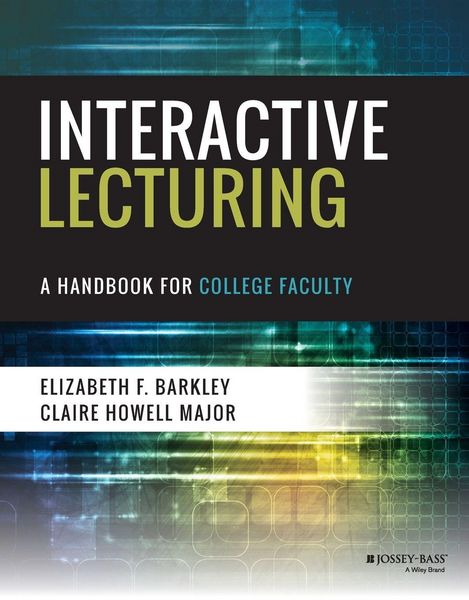
Produktbild: Interactive Lecturing

Interactive Lecturing A Handbook for College Faculty

49,99 €

inkl. gesetzl. MwSt., Versandkostenfrei


Beschreibung

Tips and techniques to build interactive learning into lecture classes

Have you ever looked out across your students only to find them staring at their computers or smartphones rather than listening attentively to you? Have you ever wondered what you could do to encourage students to resist distractions...

Beschreibung

Tips and techniques to build interactive learning into lecture classes

Have you ever looked out across your students only to find them staring at their computers or smartphones rather than listening attentively to you? Have you ever wondered what you could do to encourage students to resist distractions and focus on the information you are presenting? Have you ever wished you could help students become active learners as they listen to you lecture?

Interactive Lecturing is designed to help faculty members more effectively lecture. This practical resource addresses such pertinent questions as, "How can lecture presentations be more engaging?" "How can we help students learn actively during lecture instead of just sitting and passively listening the entire time?" Renowned authors Elizabeth F. Barkley and Claire H. Major provide practical tips on creating and delivering engaging lectures as well as concrete techniques to help teachers ensure students are active and fully engaged participants in the learning process before, during, and after lecture presentations.

Research shows that most college faculty still rely predominantly on traditional lectures as their preferred teaching technique. However, research also underscores the fact that more students fail lecture-based courses than classes with active learning components. Interactive Lecturing combines engaging presentation tips with active learning techniques specifically chosen to help students learn as they listen to a lecture. It is a proven teaching and learning strategy that can be readily incorporated into every teacher's methods.

In addition to providing a synthesis of relevant, contemporary research and theory on lecturing as it relates to teaching and learning, this book features 53 tips on how to deliver engaging presentations and 32 techniques you can assign students to do to support their learning during your lecture. The tips and techniques can be used across instructional methods and academic disciplines both onsite (including small lectures and large lecture halls) as well as in online courses.

This book is a focused, up-to-date resource that draws on collective wisdom from scholarship and practice. It will become a well-used and welcome addition for everyone dedicated to effective teaching in higher education.

Produktdetails

Einband

Taschenbuch

Erscheinungsdatum

28.02.2018

Verlag John Wiley & Sons Inc
Seitenzahl

416

Produktdetails

Einband

Taschenbuch

Erscheinungsdatum

28.02.2018

Verlag John Wiley & Sons Inc
Seitenzahl

416

Maße (L/B/H)

27,7/21,8/2,5 cm

Gewicht

920 g

Auflage

1. Auflage

Sprache

Englisch

ISBN

978-1-119-27730-9

Herstelleradresse

Libri GmbH
Europaallee 1
36244 Bad Hersfeld
DE

Email: gpsr@libri.de

Noch keine Bewertungen vorhanden

Verfassen Sie die erste Bewertung zu diesem Artikel

Helfen Sie anderen Kundinnen und Kunden durch Ihre Meinung.

Kundinnen und Kunden meinen

Bewertungen (0)

Die Leseprobe wird geladen.
  • Produktbild: Interactive Lecturing
  • Acknowledgments xi

    About the Authors xiii

    Part One: A Conceptual Framework for Interactive Lecturing

    1 Lecture versus Active Learning: Reframing the Debate 3

    The Lecture 4

    Active Learning 5

    The Debate: Lecture versus Active Learning 7

    Reconsidering the Debate: How We Frame It Matters 12

    Conclusion 13

    Notes 14

    2 Integrating Lectures and Active Learning 15

    The Interactive Lecturing Model 16

    Engaging Presentations 17

    Active Learning 21

    Conclusion 28

    Part Two: Engaging Presentation Tips

    3 Setting Goals 33

    References 34

    TIP 1 Big Why, Little Why 35

    TIP 2 SMART Lecture-Learning Goals 38

    TIP 3 Student Characteristics Analysis 42

    TIP 4 Presentation Persona 48

    4 Creating Content 51

    TIP 5 Sticky Note Diagrams 52

    TIP 6 Brainstorming 55

    TIP 7 Logical Patterns 58

    TIP 8 Rule of Three 62

    5 Structuring the Session 65

    TIP 9 Linked Lecturettes 66

    TIP 10 Select-a-Structure 68

    TIP 11 Bookends, Interleaves, and Overlays 71

    TIP 12 Lecture Plan 73

    TIP 13 Double Planning 76

    6 Leveraging the Language 79

    TIP 14 Aristotelian Triptych 80

    TIP 15 Signposts 82

    TIP 16 Internal Previews and Summaries 87

    TIP 17 High-Impact Language 89

    7 Designing Effective Audiovisuals 92

    TIP 18 Template Temperance 94

    TIP 19 Less Is More 97

    TIP 20 Context Keeper 101

    TIP 21 Invisible Slide 103

    TIP 22 Slide Replacements 106

    8 Crafting Handouts and Supplements 108

    TIP 23 Lecture Map 109

    TIP 24 Content-Rich Handout 114

    TIP 25 Infodeck 118

    TIP 26 Annotated Reference Page 121

    9 Demonstrating Readiness 124

    TIP 27 Out Loud 125

    TIP 28 Lecture Supply Kit 127

    TIP 29 Dress for Success 129

    TIP 30 Book and Check 131

    10 Generating Enthusiasm and Interest 133

    TIP 31 Lecture Preview 135

    TIP 32 Meet and Greet 138

    TIP 33 Icebreakers 140

    TIP 34 Keep the Lights On 142

    TIP 35 The Hook 144

    TIP 36 Value Display 147

    11 Managing the Session 149

    TIP 37 Terms of Engagement 150

    TIP 38 Classroom Technology Policy 153

    TIP 39 Silent Signals 156

    TIP 40 Every Minute Matters 158

    TIP 41 Extensions 160

    12 Presenting Like a Professional 163

    TIP 42 To Script, or Not to Script? 164

    TIP 43 Weatherperson 167

    TIP 44 Pedagogical Moves 169

    TIP 45 Voice Modulation 172

    13 Asking and Answering Questions 174

    TIP 46 Write a Question 176

    TIP 47 Echo Chamber 178

    TIP 48 Wait Time 180

    TIP 49 Right Means Right 182

    14 Signaling the Takeaways 184

    TIP 50 The Synthesis 185

    TIP 51 The Connector 187

    TIP 52 The Power Close 189

    TIP 53 The Graceful Goodbye 191

    Part Three: Active Learning Techniques

    15 Actively Preparing 198

    ALT 1 Active Reading Documents 200

    ALT 2 Know-Wonder-Learned 204

    ALT 3 Two-Minute Question-Development Talks 209

    ALT 4 Individual Readiness Assurance Tests 212

    16 Anticipating and Predicting New Information 216

    ALT 5 Update Your Classmate 217

    ALT 6 Sentence Stem Predictions 221

    ALT 7 Guess and Confirm 227

    ALT 8 Preview Guide 232

    17 Listening for Information 237

    ALT 9 Advance Organizers 238

    ALT 10 Lecture Bingo 245

    ALT 11 Listening Teams 249

    ALT 12 Live-Tweet Lecture 253

    18 Taking Notes 258

    ALT 13 Guided Notes 260

    ALT 14 Cued Notes 264

    ALT 15 Coded Notes 269

    ALT 16 Note-Taking Pairs 274

    ALT 17 Sketch Notes 278

    19 Rehearsing Information 288

    ALT 1