KI-Beratung Beta

  • Produktbild: The Diatoms
  • Produktbild: The Diatoms

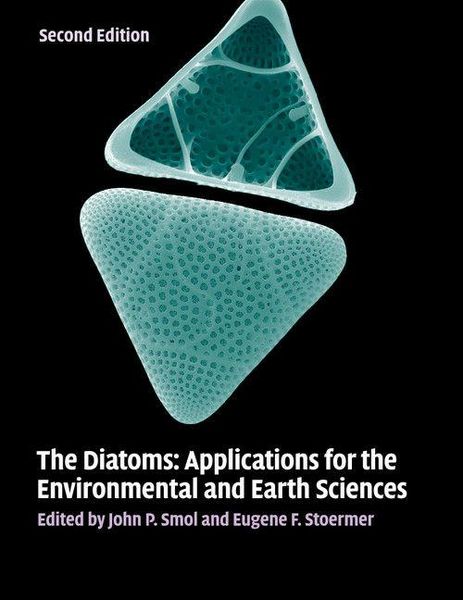
The Diatoms Applications for the Environmental and Earth Sciences

91,99 €

inkl. gesetzl. MwSt., Versandkostenfrei


Beschreibung

Produktdetails

Einband

Taschenbuch

Erscheinungsdatum

01.06.2015

Herausgeber

Smol John P. + weitere

Verlag

Cambridge Academic

Seitenzahl

686

Maße (L/B/H)

28/21,6/3,7 cm

Gewicht

1730 g

Sprache

Englisch

ISBN

978-1-107-56496-1

Beschreibung

Portrait

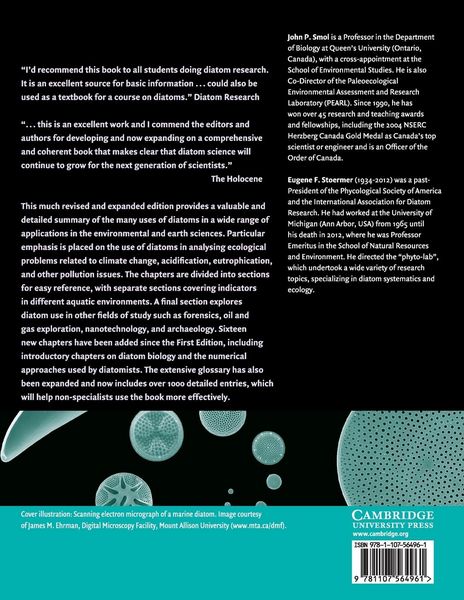
John P. Smol is a Professor in the Department of Biology at Queen's University, Ontario with a cross-appointment at the School of Environmental Studies. He is also co-director of the Paleoecological Environmental Assessment and Research Lab (PEARL). Since 1990, he has won over 25 research awards and fellowships, including the 2004 NSERC Herzberg Canada Gold Medal as Canada's top scientist or engineer.

Eugene F. Stoermer is a past-President of the Phycological Society of America and the International Association for Diatom Research. He worked at the University of Michigan, Ann Arbor since 1965, where he is currently Professor Emeritus in the School of Natural Resources and Environment. He directed the 'phyto-lab', which undertook a wide variety of research topics, specialising in diatom systematics and ecology.

Produktdetails

Einband

Taschenbuch

Erscheinungsdatum

01.06.2015

Herausgeber

Verlag

Cambridge Academic

Seitenzahl

686

Maße (L/B/H)

28/21,6/3,7 cm

Gewicht

1730 g

Sprache

Englisch

ISBN

978-1-107-56496-1

Herstelleradresse

Libri GmbH
Europaallee 1
36244 Bad Hersfeld
DE

Email: gpsr@libri.de

Noch keine Bewertungen vorhanden

Verfassen Sie die erste Bewertung zu diesem Artikel

Helfen Sie anderen Kundinnen und Kunden durch Ihre Meinung.

Kundinnen und Kunden meinen

Bewertungen (0)

Die Leseprobe wird geladen.
  • Produktbild: The Diatoms
  • Produktbild: The Diatoms
  • Preface; Part I. Introduction: 1. Applications and uses of diatoms: prologue; 2. The diatoms: a primer; 3. Numerical methods for the analysis of diatom assemblage data; Part II. Diatoms as Indicators of Environmental Change in Flowing Waters and Lakes: 4. Assessing environmental conditions in rivers and streams with diatoms; 5. Diatoms as indicators of long-term environmental change in rivers, fluvial lakes and impoundments; 6. Diatoms as indicators of surface-water acidity; 7. Diatoms as indicators of lake eutrophication; 8. Diatoms as indicators of environmental change in shallow lakes; 9. Diatoms as indicators of water-level change in freshwater lakes; 10. Diatoms as indicators of hydrologic and climatic change in saline lakes; 11. Diatoms in ancient lakes; Part III. Diatoms as Indicators in Arctic, Antarctic and Alpine Lacustrine Environments: 12. Diatoms as indicators of environmental change in subarctic and alpine regions; 13. Freshwater diatoms as indicators of environmental change in the High Arctic; 14. Diatoms as indicators of environmental change in Antarctic and subantarctic freshwaters; Part IV. Diatoms as Indicators in Marine and Estuarine Environments: 15. Diatoms and environmental change in large brackish-water ecosystems; 16. Applied diatom studies in estuaries and shallow coastal environments; 17. Estuarine paleoenvironmental reconstructions using diatoms; 18. Diatoms on coral reefs and in tropical marine lakes; 19. Diatoms as indicators of former sea levels, earthquakes, tsunamis and hurricanes; 20. Marine diatoms as indicators of modern changes in oceanographic conditions; 21. Holocene marine diatom records of environmental change; 22. Diatoms as indicators of paleoceanographic events; 23. Reconsidering the meaning of biogenic silica accumulation rates in the glacial Southern Ocean; Part V. Other Applications: 24. Diatoms of aerial habitats; 25. Diatoms as indicators of environmental change in wetlands and peatlands; 26. Tracking fish, seabirds, and wildlife population dynamics with diatoms and other limnological indicators; 27. Diatoms and archaeology; 28. Diatoms in oil and gas exploration; 29. Forensic science and diatoms; 30. Toxic marine diatoms; 31. Diatoms as markers of atmospheric transport; 32. Diatoms as nonnative species; 33. Diatomite; 34. Stable isotopes from diatom silica; 35. Diatoms and nanotechnology: early history and imagined future as seen through patents; Part VI. Conclusions: 36. Epilogue: a view to the future; Glossary, acronyms, and abbreviations; Index.