KI-Beratung Beta

Gutscheinbedingungen

**Gültig bis 30.11.2026 auf Spielzeug, Schreibwaren, Filme, Geschenke & Trends, Musik, tolino eReader & Zubehör, Hörbücher und Hörbuch-Downloads, nicht preisgebundene Bücher und Kalender online auf thalia.at und in der Thalia App. Einzelne Artikel können ausgeschlossen sein. Aufgrund der Buchpreisbindung sind deutschsprachige Bücher und eBooks ausgenommen. Zusätzlich ausgenommen sind Abos & Flatrates, Games, Geschenkkarten/-boxen, Shelfies, Software, Zeitschriften sowie einzelne Artikel von tonies®. Pro Einkauf einmal einlösbar. Nur gültig mit im Onlineshop hinterlegter Bonuscard. Click & Collect nur bei Onlinevorabzahlung möglich. Keine Barauszahlung. Nicht kombinierbar mit anderen Aktionen und Gutscheinen. Gutschein wird auf max. 500€ Bestellwert angerechnet. Nicht gültig für Versandkosten und Services.

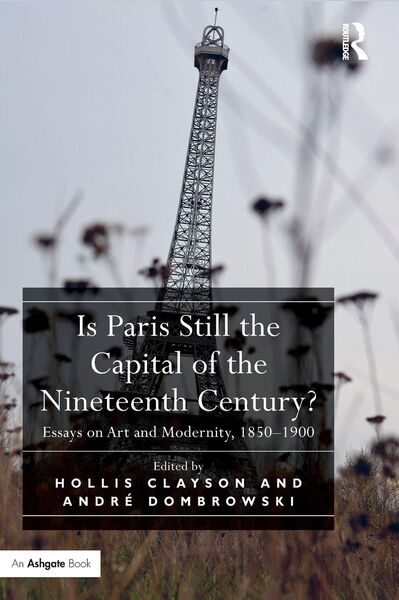
  • Produktbild: Is Paris Still the Capital of the Nineteenth Century?
  • Produktbild: Is Paris Still the Capital of the Nineteenth Century?

Is Paris Still the Capital of the Nineteenth Century? Essays on Art and Modernity, 1850-1900

252,99 €

inkl. gesetzl. MwSt., Versandkostenfrei


Beschreibung

"Is Paris Still the Capital of the Nineteenth Century?" The question that guides this volume stems from Walter Benjamin's studies of nineteenth-century Parisian culture as the apex of capitalist aesthetics. Thirteen scholars test Benjamin's ideas about the centrality of Paris, formulated in the 1930s,...

Beschreibung

"Is Paris Still the Capital of the Nineteenth Century?" The question that guides this volume stems from Walter Benjamin's studies of nineteenth-century Parisian culture as the apex of capitalist aesthetics. Thirteen scholars test Benjamin's ideas about the centrality of Paris, formulated in the 1930s, from a variety of methodological perspectives. Many investigate the underpinnings of the French capital's reputation and mythic force, which was based largely upon the city's capacity to put itself on display. Some of the authors reassess the famed centrality of Paris from the vantage point of our globalized twenty-first century by acknowledging its entanglements with South Africa, Turkey, Japan, and the United States. The volume equally studies a broader range of media than Benjamin did himself: from modernist painting and printmaking, photography, and illustration to urban planning. The essays conclude that Paris did in many ways function as the epicenter of modernity's international reach, especially in the years from 1850 to 1900, but did so only as a consequence of the idiosyncratic force of its mythic image. Above all, the essays affirm that the study of late nineteenth-century Paris still requires nimble and innovative approaches commensurate with its legend and global aura.

Rezension

'There are times when divergent academic and ideological interests come together unexpectedly; these events can yield new scholarly insights even as they lay bare disciplinary antagonisms. A 2009 symposium at the Clark Art Institute was just such an occasion. Its interrogatory title Is Paris Still the Capital of the 19th Century? signaled the conveners' interest in the legacies of Charles Baudelaire, Walter Benjamin, and T. J. Clark for the writing of nineteenth-century art history. Less clear was whether the title was meant ironically or in earnest. Were the conveners purposely begging the question? The publication of a related collection of essays now provides some answers. Edited by Hollis Clayson and André Dombrowski, who jointly organized the symposium, the volume includes essays by eight of the original speakers, augmented by contributions by five additional scholars.'

--CAA Reviews

'The essays in this volume draw us to a terrain we love and think we know, but by asking, "Is Paris still capital of the nineteenth century", the authors work to destabilize our knowledge of the capital of modernism and modernity. They accomplish this by probing the familiar to uncover new depths (Manet, Benjamin, Haussmannization); by juxtaposing painting with printmaking, photography, electric lighting; and by seeing Paris anew in a global context. Highly recommended.'

--Nancy Locke, The Pennsylvania State University, USA and author of Manet and the Family Romance

Produktdetails

Einband

Gebundene Ausgabe

Erscheinungsdatum

16.06.2016

Abbildungen

67 SW-Abb.

Herausgeber Hollis Clayson + weitere

Produktdetails

Einband

Gebundene Ausgabe

Erscheinungsdatum

16.06.2016

Abbildungen

67 SW-Abb.

Herausgeber
Verlag Taylor & Francis
Seitenzahl

326

Maße (L/B/H)

26/18,3/2,2 cm

Gewicht

748 g

Sprache

Englisch

ISBN

978-1-4724-6014-1

Herstelleradresse

Libri GmbH
Europaallee 1
36244 Bad Hersfeld
DE

Email: gpsr@libri.de

Noch keine Bewertungen vorhanden

Verfassen Sie die erste Bewertung zu diesem Artikel

Helfen Sie anderen Kundinnen und Kunden durch Ihre Meinung.

Kundinnen und Kunden meinen

Bewertungen (0)

Weitere Artikel finden Sie in

  • Produktbild: Is Paris Still the Capital of the Nineteenth Century?
  • Produktbild: Is Paris Still the Capital of the Nineteenth Century?
  • Contents

    List of Figures

    Notes on Contributors

    Acknowledgements

    Introduction

    Hollis Clayson and André Dombrowski

    SECTION I: MODERNITY

    Introduction by André Dombrowski

    1 Architecture's Capital? Revisiting Benjamin's Paris

    Charles Rice

    2 How Haussmann's Hegemony Haunted the Early Third Republic

    Peter Soppelsa

    3 The Guillotine Sublime

    Marc Gotlieb

    4 Victorine's Secret: Baudelaire and the Ambiguity of Commodities

    Paul Smith

    5 A Laughter of the Look: Manet, Mallarmé, Polichinelle, and the Salon Jury in 1874

    Margaret Werth

    SECTION II: GEOGRAPHY

    Introduction by Hollis Clayson

    6 Revisiting the 1860s: Race and Place in Cape Town and Paris

    Tamar Garb

    7 Osman Hamdi Bey and Ottoman Aestheticism

    Mary Roberts

    8 Paris, Japan, and Modernity: A Vexed Ratio

    Ting Chang

    9 White City vs. La Ville lumière: Electrical Displays at the World's Columbian Exposition, Chicago (1893)

    Hélène Valance

    SECTION III: CIRCULATION

    Introduction by Hollis Clayson

    10 Manet and the Multiple

    Anne Higonnet

    11 Gesture, Pose, Practice: Charles Nègre and the Image of Instantaneity

    Jacob W. Lewis

    12 Living on Manet's Balcony, or the Right to Privacy

    André Dombrowski

    13 Mary Cassatt's Lamp

    Hollis Clayson

    Afterword

    Hollis Clayson and André Dombrowski

    Further Reading

    Index