Gutscheinbedingungen

**Gültig bis 24.09.2026 ab einem Mindestbestellwert von 30€ auf Spielzeug, Schreibwaren, Filme, Geschenke & Trends, Musik, tolino eReader & Zubehör, Hörbücher und Hörbuch-Downloads, nicht preisgebundene Bücher und Kalender online auf thalia.at und in der Thalia App. Einzelne Artikel können ausgeschlossen sein. Aufgrund der Buchpreisbindung sind deutschsprachige Bücher und eBooks ausgenommen. Zusätzlich ausgenommen sind Abos & Flatrates, Games, Geschenkkarten/-boxen, Shelfies, Software, Zeitschriften sowie einzelne Artikel von tonies®. Pro Einkauf einmal einlösbar. Click & Collect nur bei Onlinevorabzahlung möglich. Keine Barauszahlung. Nicht kombinierbar mit anderen Aktionen und Gutscheinen. Gutschein wird auf max. 500€ Bestellwert angerechnet. Nicht gültig für Versandkosten und Services. Preisgebundene Artikel sind vom Mindestbestellwert ausgeschlossen.

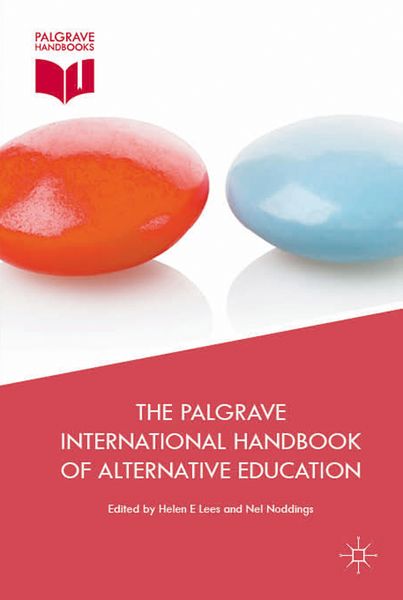
Produktbild: The Palgrave International Handbook of Alternative Education
- 11%

The Palgrave International Handbook of Alternative Education

11% sparen

175,99 € UVP 197,99 €

inkl. gesetzl. MwSt., Versandkostenfrei


Beschreibung

Produktdetails

Einband

Gebundene Ausgabe

Erscheinungsdatum

07.09.2016

Abbildungen

XIX, 505 p. 19 illus., 6 illus. in color.

Herausgeber

Helen E. Lees + weitere

Verlag

Palgrave Macmillan UK

Seitenzahl

505

Maße (L/B/H)

24,1/16/3,4 cm

Gewicht

951 g

Auflage

1st edition 2016

Sprache

Englisch

ISBN

978-1-137-41290-4

Beschreibung

Rezension

“An ‘International Handbook of Alternative Education’ is indeed timely, given the intensifying critiques of global education systems. ... for a broader range of professionals and adults concerned with the mental, physical, moral and spiritual welfare of young people.” (David Leat, Other Education - The Journal of Educational Alternatives Volume, Vol. 7 (1), 2018)


“The Palgrave International Handbook of Alternative Education is a much friendlier and accessible text … . I think the real strength of this book is its diversity of research, writing styles and countries covered … . I think this book fills a much needed gap in the market of diverse and rigorous academic and practitioner research into alternative education and I would recommend it to students, academics and parents interested in learning more about educating differently.” (Alys Mendus, Journal of Unschooling and Alternative Learning, Vol. 10 (21), 2017)


“The Handbook convinces that the value of alternative education lies not just in the benefits it may provide to particular groups of learners who are engaging with it at any point in time. Rather, its ultimate value is in the challenge it can provide, to disrupt existing ways of thinking, doing and acting. For this reason, it is an essential read for all educators.” (Nicola Kemp, British Journal of Educational Studies, September, 2017)


Produktdetails

Einband

Gebundene Ausgabe

Erscheinungsdatum

07.09.2016

Abbildungen

XIX, 505 p. 19 illus., 6 illus. in color.

Herausgeber

Verlag

Palgrave Macmillan UK

Seitenzahl

505

Maße (L/B/H)

24,1/16/3,4 cm

Gewicht

951 g

Auflage

1st edition 2016

Sprache

Englisch

ISBN

978-1-137-41290-4

Herstelleradresse

Springer-Verlag GmbH
Tiergartenstr. 17
69121 Heidelberg
DE

Email: ProductSafety@springernature.com

Noch keine Bewertungen vorhanden

Verfassen Sie die erste Bewertung zu diesem Artikel

Helfen Sie anderen Kundinnen und Kunden durch Ihre Meinung.

Kundinnen und Kunden meinen

Bewertungen (0)

  • Produktbild: The Palgrave International Handbook of Alternative Education

  • Introduction; Nel Noddings.- This 
    Handbook;
     Helen E Lees.- 
    Section 1: Thinking Differently.- 
    Chapter 1: The Mind of the Educator; Kris De Meyer; Chapter 2: an ordinary day; Philipp Klaus.- Chapter 3: Mother Nature’s Pedagogy: How Children Educate Themselves; Peter Gray.- Chapter 4: Using the Future in Education: Creating Space for Openness, Hope and Novelty; Keri Facer.- Chapter 5: Promise and Peril of Neuroscience for Alternative Education; Clarence W. Joldersma.- Chapter 6: What Might Have Been: Women’s Traditional Interests; Nel Noddings.- Chapter 7: Psychoanalysis and the challenge of educational fantasies; Roger Willoughby and Hivren Demir Atay; Chapter 8: Great Expectations: Agenda and Authority in Technological, Hidden and Cultural Curriculums; Harriet Pattison & Alan Thomas.- Chapter 9: Alternatives to Education? Impotentiality and the Accident: New Bearings in the Ontology of the Present; Nick Peim.- Chapter 10: Educational Mutuality; Helen E Lees.- 
    Section 2:  Doing Differently.- 
    Chapter 11: Home Education: Practices, Purposes, and Possibilities; Rob Kunzman.- Chapter 12: School Ethics with Student Teachers in South Africa: An Innovative Educational Intervention; Karin Murris.- Chapter 13: Innovative Experiences in Holistic Education Inspiring a New Movement in Brazil; Helena Singer.- Chapter 14: Learning at the Edge of Chaos—Self-Organising Systems in Education; Sugata Mitra, Suneeta Kulkarni & James Stanfield.- Chapter 15: Fostering Alternative Education in Society—A Caring Community of the “Children’s Dream Park” and “Free Space En” in Japan; Yoshiyuki Nagata.- Chapter 16: Teacher Education—Generator of Change or a Mechanism for Educational Conformity?; Ian Menter.- Chapter 17: Philosophy with Children: An Imaginative Democratic Practice; Joanna Haynes.- Chapter 18: Forest School: A Model for Learning Holistically and Outdoors; Sara Knight.- Chapter 19: Creating Spaces for Autonomy: The Architecture of Learning and Thinking in Danish Schools and Universities; Max A. Hope & Catherine Montgomery.- 
    Section 3: Acting Differently.- 
    Chapter 20: Exploration and Rethinking: Student-Voice Studies in China; Wei Kan.- Chapter 21: Islamic Education as Asymmetrical Democratic Interaction; Khosrow Bagheri Noaparast.- Chapter 22: Is Low Fee Private Schooling in Developing Countries Really An “Alternative”?; Clive Harber.- Chapter 23: Humanist Schools in the Face of Conflicting Narratives and Social Upheaval – The Case of Israel; Nimrod Aloni.- Chapter 24: Geographies of Trust: A Politics of Resistance for an Alternative Education; John Smyth.- Chapter 25: Alternatives to School Sex Education; Michael J. Reiss.- Chapter 26: Critical Animal Pedagogies: Re-learning our Relations with Animal Others; Karin Gunnarsson Dinker & Helena Pedersen.- Chapter 27: Solitude and Spirituality in Schooling: The Alternative at the Heart of the School; Julian Stern.- Chapter 28: German Kinderlaeden: From Alternative Projects to Professional Pedagogy; Robert Hamm.- Chapter 29: Attachment Aware Schools: An Alternative to Behaviourism in Supporting Children’s Behaviour?; Richard Parker, Janet Rose & Louise Gilbert.