Gutscheinbedingungen

**Gültig bis 06.07.2026 auf fremdsprachige Bücher online auf thalia.at, in der Thalia App ab einem Mindestbestellwert von 30€ und in allen Thalia Buchhandlungen in Österreich. In den Buchhandlungen nur gültig auf lagernde Ware. Einzelne Artikel können ausgeschlossen sein. Ausgenommen sind preisgebundene Artikel & eBooks. Pro Einkauf einmal einlösbar. Nur gültig gegen Vorlage oder im Onlineshop hinterlegter Bonuscard. Infos zur Einlösung in der Buchhandlung sind auf der Bonuscard-Vorteilspreisseite zu finden. Click & Collect nur bei Onlinevorabzahlung möglich. Keine Einlösung bei Scan & Go-Bezahlung. Keine Barauszahlung. Nicht kombinierbar mit anderen Aktionen und Gutscheinen. Gutschein wird auf max. 500€ Bestellwert angerechnet. Nicht gültig für Versandkosten und Services.

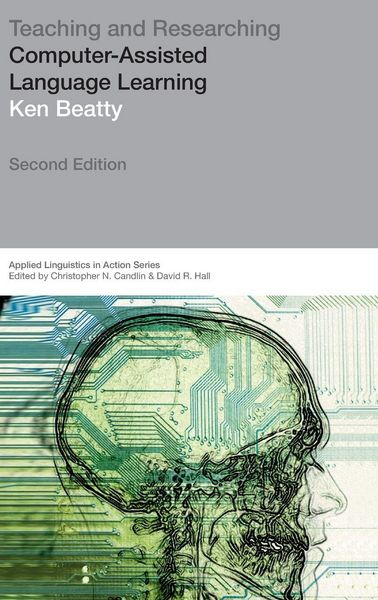
Produktbild: Teaching & Researching

Teaching & Researching Computer-Assisted Language Learning

236,99 €

inkl. gesetzl. MwSt., Versandkostenfrei


Beschreibung

Produktdetails

Einband

Gebundene Ausgabe

Erscheinungsdatum

26.11.2015

Verlag

Taylor and Francis

Seitenzahl

304

Maße (L/B/H)

24/16,1/2,1 cm

Gewicht

453 g

Auflage

2. Auflage

Sprache

Englisch

ISBN

978-1-138-13184-2

Beschreibung

Produktdetails

Einband

Gebundene Ausgabe

Erscheinungsdatum

26.11.2015

Verlag

Taylor and Francis

Seitenzahl

304

Maße (L/B/H)

24/16,1/2,1 cm

Gewicht

453 g

Auflage

2. Auflage

Sprache

Englisch

ISBN

978-1-138-13184-2

Herstelleradresse

Libri GmbH
Europaallee 1
36244 Bad Hersfeld
DE

Email: gpsr@libri.de

Noch keine Bewertungen vorhanden

Verfassen Sie die erste Bewertung zu diesem Artikel

Helfen Sie anderen Kundinnen und Kunden durch Ihre Meinung.

Kundinnen und Kunden meinen

Bewertungen (0)

Die Leseprobe wird geladen.
  • Produktbild: Teaching & Researching
  • Contents

    General Editors' Preface

    Acknowledgements

    Introduction

    Section I Key concepts

    1 The emergence of CALL

    1.1 A broad discipline

    1.2 Technology driving CALL

    1.3 The changing focus of research in CALL

    Summary

    2 A brief history of CALL

    2.1 CALL in the 1950s and 1960s

    2.2 Simulations

    2.3 CALL in the 1970s and 1980s

    2.4 CALL in the 1990s

    2.5 CALL in the 21st Century

    Summary

    3 Hypertext, hypermedia and multimedia

    3.1 Hypertext

    3.2 Hypermedia

    3.3 Multimedia

    3.4 Antecedents of multimedia

    3.5 Science fiction and CALL

    3.6 The printed book and CALL

    3.7 Applications to general learning

    3.8 Applications of multimedia to language learning

    Summary

    4 Eight CALL applications

    4.1 Word processing

    4.2 Games

    4.3 Literature

    4.4 Corpus linguistics

    4.5 Computer-mediated communication

    4.6 WWW resources

    4.7 Adapting other materials for CALL

    4.8 Personal Digital Assistants (PDAs) and Mobile Telephones

    Summary

    Section II The place of CALL in research and teaching

    5 Second-language Acquisition and models of instruction

    5.1 Concepts in SLA, behaviourism and constructivism

    5.2 Comprehensible input and output

    5.3 Behaviourist models of instruction

    5.4 Constructivism

    Summary

    6 Collaboration and negotiation of meaning

    6.1 The place of collaboration in CALL

    6.2 Structuring collaboration

    6.3 Differences between collaboration and other terms

    6.4 The range of collaboration and CALL

    6.5 Collaboration at the computer

    6.6 Benefits of collaborative learning at the computer

    6.7 Collaboration, CALL and SLA

    6.8 Collaboration at the computer as evidenced by discourse

    6.9 Challenges to collaboration

    6.10 Challenges to collaboration in a CALL context

    6.11 Discourse that evidences challenges to collaboration

    Summary

    7 Defining a model of CALL

    7.1 Defining a model

    7.2 The need for a CALL model

    7.3 A model of current non-CALL language learning

    7.4 Dunkin and Biddle's model in a CALL context

    7.5 Various views of CALL

    7.6 Teacher and pupil classroom behavior: activities used in CALL

    7.7 A virtual classroom

    7.8 Aspects of a CALL model

    Summary

    8 Theoretical and pedagogical concerns

    8.1 Concerns for software development

    8.2 Pedagogical concerns for classroom practice

    8.3 &uating software

    8.4 Learning and working styles

    8.5 Evolving technology

    8.6 Commercial software

    8.7 Making better use of existing materials

    8.8 Copyright and plagiarism

    8.9 Viruses

    8.10 Safety online

    8.11 Technological have-nots

    Summary

    Section III Researching CALL

    9 Current research interests

    9.1 A new field: reporting CALL research

    9.2 Approaches to research in CALL

    9.3 The computer as a tool of research

    9.4 The role of commercial publishers

    9.5 Reviewing current studies: a survey

    9.6 Conducting research

    9.7 Action research

    Summary

    10 Research

    10.1 Research context 1: The literature review

    10.2 Research context 2: A pilot study

    10.3 Research context 3: Corpus linguistics

    10.4 Research context 4: Error analysis

    10.5 Research context 5: The experiment

    10.6 Research context 6: A case study

    10.7 Research context 7: The survey

    10.8 Research context 8: The ethnographic approach

    Conclusion

    Section IV Resources

    Glossary of key terms

    References

    Index