KI-Beratung Beta

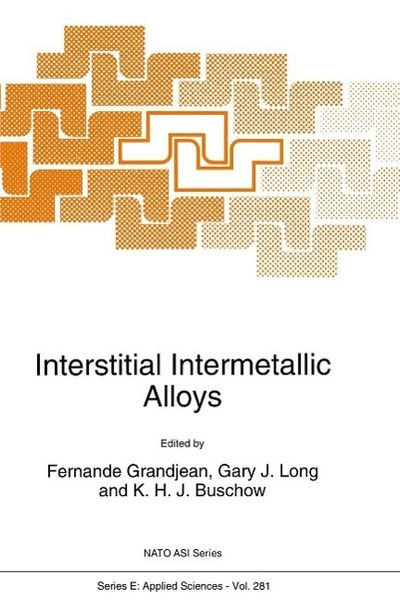
Produktbild: Interstitial Intermetallic Alloys
Band 281

Interstitial Intermetallic Alloys

Aus der Reihe NATO Science Series E:

54,99 €

inkl. gesetzl. MwSt.

Beschreibung

It is well known that the density of molecular hydrogen can be increased by compression and/or cooling, the ultimate limit in density being that of liquid hydrogen. It is less well known that hydrogen densities of twice that of liquid hydrogen can be obtained by intercalating hydrogen gas into metals....

Beschreibung

It is well known that the density of molecular hydrogen can be increased by compression and/or cooling, the ultimate limit in density being that of liquid hydrogen. It is less well known that hydrogen densities of twice that of liquid hydrogen can be obtained by intercalating hydrogen gas into metals. The explanation of this unusual paradox is that the absorption of molecular hydrogen, which in TiFe and LaNis is reversible and occurs at ambient temperature and pressure, involves the formation of hydrogen atoms at the surface of a metal. The adsorbed hydrogen atom then donates its electron to the metal conduction band and migrates into the metal as the much smaller proton. These protons are easily accomodated in interstitial sites in the metal lattice, and the resulting metal hydrides can be thought of as compounds formed by the reaction of hydrogen with metals, alloys, and intermetallic compounds. The practical applications of metal hydrides span a wide range of technologies, a range which may be subdivided on the basis of the hydride property on which the application is based. The capacity of the metal hydrides for hydrogen absorption is the basis for batteries as well as for hydrogen storage, gettering, and purification. The temperature-pressure characteristics of metal hydrides are the basis for hydrogen compressors, sensors, and actuators. The latent heat of the hydride formation is the basis for heat storage, heat pumps, and refrigerators.

Produktdetails

Format

PDF

Kopierschutz

Nein

Family Sharing

Nein

Text-to-Speech

Nein

Produktdetails

Format

PDF

Format

eBooks im PDF-Format haben eine festgelegte Seitengröße und eignen sich daher nur bedingt zum Lesen auf einem tolino eReader oder Smartphone. Für den vollen Lesegenuss empfehlen wir Ihnen bei PDF-eBooks die Verwendung eines Tablets oder Computers.

Kopierschutz

Nein

Kopierschutz

Dieses eBook können Sie uneingeschränkt auf allen Geräten der tolino Familie, allen sonstigen eReadern und am PC lesen. Das eBook ist nicht kopiergeschützt und kann ein personalisiertes Wasserzeichen enthalten. Weitere Hinweise zum Lesen von eBooks mit einem personalisierten Wasserzeichen finden Sie unter Hilfe/Downloads.

Family Sharing

Nein

Family Sharing

Mit Family Sharing können Sie eBooks innerhalb Ihrer Familie (max. sechs Mitglieder im gleichen Haushalt) teilen. Sie entscheiden selbst, welches Buch Sie mit welchem Familienmitglied teilen möchten. Auch das parallele Lesen durch verschiedene Familienmitglieder ist durch Family Sharing möglich. Um eBooks zu teilen oder geteilt zu bekommen, muss jedes Familienmitglied ein Konto bei Thalia oder einem anderen tolino-Buchhändler haben. Weitere Informationen finden Sie unter Hilfe/Family-Sharing.

Text-to-Speech

Nein

Text-to-Speech

Bedeutet Ihnen Stimme mehr als Text? Mit der Funktion Text-to-Speech können Sie sich im tolino webReader und in der aktuellen Thalia – Lesen & Hören App das eBook vorlesen lassen. Weitere Informationen finden Sie unter Hilfe/Text-to-Speech.

Erscheinungsdatum

06.12.2012

Herausgeber
Verlag Springer Netherlands
Seitenzahl

728 (Printausgabe)

Dateigröße

70253 KB

Sprache

Englisch

EAN

9789401102957

Barrierefreiheit
  • nicht oder eingeschränkt barrierefrei
  • keine Vorlesefunktionen des Lesesystems deaktiviert

Noch keine Bewertungen vorhanden

Verfassen Sie die erste Bewertung zu diesem Artikel

Helfen Sie anderen Kundinnen und Kunden durch Ihre Meinung.

Kundinnen und Kunden meinen

Bewertungen (0)

Weitere Artikel finden Sie in

  • Produktbild: Interstitial Intermetallic Alloys