KI-Beratung Beta

Produktbild: Transformation of Human Rights Fact-Finding

Transformation of Human Rights Fact-Finding

139,99 €

inkl. gesetzl. MwSt., Versandkostenfrei


Beschreibung

Fact-finding is at the heart of human rights advocacy, and is often at the center of international controversies about alleged government abuses. In recent years, human rights fact-finding has greatly proliferated and become more sophisticated and complex, while also being subjected to stronger scrutiny...

Beschreibung

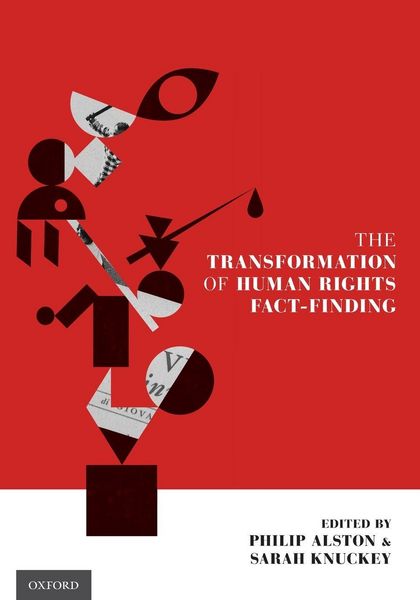
Fact-finding is at the heart of human rights advocacy, and is often at the center of international controversies about alleged government abuses. In recent years, human rights fact-finding has greatly proliferated and become more sophisticated and complex, while also being subjected to stronger scrutiny from governments. Nevertheless, despite the prominence of fact-finding, it remains strikingly under-studied and under-theorized. Too little has been done to bring forth the assumptions, methodologies, and techniques of this rapidly developing field, or to open human rights fact-finding to critical and constructive scrutiny. The Transformation of Human Rights Fact-Finding offers a multidisciplinary approach to the study of fact-finding with rigorous and critical analysis of the field of practice, while providing a range of accounts of what actually happens. It deepens the study and practice of human rights investigations, and fosters fact-finding as a discretely studied topic, while mapping crucial transformations in the field. The contributions to this book are the result of a major international conference organized by New York University Law School's Center for Human Rights and Global Justice. Engaging the expertise and experience of the editors and contributing authors, it offers a broad approach encompassing contemporary issues and analysis across the human rights spectrum in law, international relations, and critical theory. This book addresses the major areas of human rights fact-finding such as victim and witness issues; fact-finding for advocacy, enforcement, and litigation; the role of interdisciplinary expertise and methodologies; crowd sourcing, social media, and big data; and international guidelines for fact-finding.

Produktdetails

Einband

Taschenbuch

Erscheinungsdatum

21.12.2015

Herausgeber Alston Philip + weitere
Verlag Oxford Academic

Produktdetails

Einband

Taschenbuch

Erscheinungsdatum

21.12.2015

Herausgeber
Verlag Oxford Academic
Seitenzahl

562

Maße (L/B/H)

25,4/17,8/3 cm

Gewicht

1043 g

Sprache

Englisch

ISBN

978-0-19-023949-7

Noch keine Bewertungen vorhanden

Verfassen Sie die erste Bewertung zu diesem Artikel

Helfen Sie anderen Kundinnen und Kunden durch Ihre Meinung.

Kundinnen und Kunden meinen

Bewertungen (0)

Die Leseprobe wird geladen.
  • Produktbild: Transformation of Human Rights Fact-Finding

    • I. Introduction


    • 1. Philip Alston and Sarah Knuckey, The Transformation of Human Rights Fact-Finding: Challenges and Opportunities


    • II. Critical Perspectives on Human Rights Fact-Finding


    • 2. Frédéric Mégret, Do Facts Exist, Can they Be 'Found', and Does it Matter?


    • 3. Obiora Okafor, International Human Rights Fact-Finding Praxis: A TWAIL Perspective


    • 4. Dustin N. Sharp, Human Rights Fact-Finding and the Reproduction of Hierarchies


    • 5. Fionnuala Ní Aoláin,The Gender Politics of Fact-Finding in the Context of the Women, Peace and Security Agenda


    • 6. Daniel Bonilla, Legal Clinics in the Global North and South: Between Equality and Subordination


    • III. Victims and Witnesses: Empowerment or Extraction?


    • 7. Théo Boutruche, The Relationship between Fact-Finders and Witnesses in Human Rights Fact-Finding: What Place for the Victims?


    • 8. Shreya Atrey, The Danger of a Single Story: Introducing Intersectionality in Fact-Finding


    • 9. Rosette Muzigo-Morrison, Victims and Witnesses in Fact-Finding Commissions: Pawns or Principal Pieces?


    • 10. Daniel Rothenberg, The Complex Truth of Testimony: A Case Study of Human Rights Fact-Finding in Iraq


    • 11. Laura Marschner, Implications of Trauma on Testimonial Evidence in International Criminal Trials


    • IV. Fact-Finding for Advocacy, Enforcement, and Litigation: Purposes and Cross Purposes


    • 12. Larissa van den Herik and Catherine Harwood, Commissions of Inquiry and the Charm of International Criminal Law: Between Transactional and Authoritative Approaches


    • 13. Carsten Stahn and Dov Jacobs, The Interaction between Human Rights Fact-Finding and International Criminal Proceedings: Towards a (New) Typology


    • 14. Pablo de Greiff, Truth without Facts: On the Erosion of the Fact-Finding Function of Truth Commissions


    • 15. Taylor Pendergrass, Human Rights Fact-Finding in the Shadows of America's Solitary Confinement Prisons


    • V. The Role of Interdisciplinary Expertise and Methodologies


    • 16. Margaret L. Satterthwaite and Justin C. Simeone, A Conceptual Roadmap for Social Science Methods in Human Rights Fact-Finding


    • 17. Brian Root, Numbers are Only Human: Lessons for Human Rights Practitioners from the Quantitative Literacy Movement


    • 18. Allison Corkery, Investigating Economic, Social, and Cultural Rights Violations


    • VI. New Technologies: Crowdsourcing, Social Media, and Big Data


    • 19. Molly K. Land, Democratizing Human Rights Fact-Finding


    • 20. Patrick Ball, The Bigness of Big Data: Samples, Models, and the Facts We Might Find When Looking at Data


    • 21. Jay D. Aronson, Mobile Phones, Social Media, and Big Data in Human Rights Fact-Finding: Possibilities, Challenges, and Limitations


    • 22. Susan R. Wolfinbarger, Remote sensing as a Tool for Human Rights Fact-Finding


    • 23. Patrick Meier, Big (Crisis) Data: Humanitarian Fact-Finding with Advanced Computing


    • VII. Does Human Rights Fact-Finding Need International Guidelines?


    • 24. Diane Orentlicher, International Norms in Human Rights Fact-Finding


    • 25. Rob Grace and Claude Bruderlein, Developing Norms of Professional Practice in the Domain of Monitoring, Reporting, and Fact-Finding


    • Index