The Oxford Handbook of Criminological Theory
-
- Taschenbuch ausgewählt
- eBook
-
Sprache:Englisch
95,99 €
inkl. gesetzl. MwSt.,
Beschreibung
Produktdetails
Einband
Taschenbuch
Erscheinungsdatum
01.12.2015
Abbildungen
11 b/w line
Herausgeber
Cullen Francis T. + weitereVerlag
Oxford University PressSeitenzahl
756
Maße (L/B/H)
24,4/17/4 cm
Gewicht
1280 g
Sprache
Englisch
ISBN
978-0-19-045707-5
Criminological theory texts typically follow a conventional format. Diverse writings are neatly packaged into schools of thought, which are given clear labels and conveyed a chapter at a time, with topics like control theory in one chapter and strain theory in another.
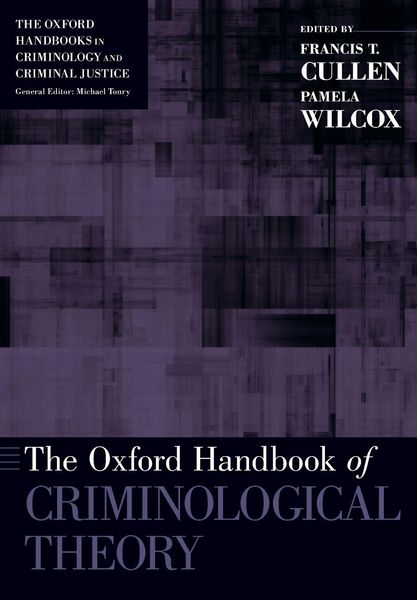
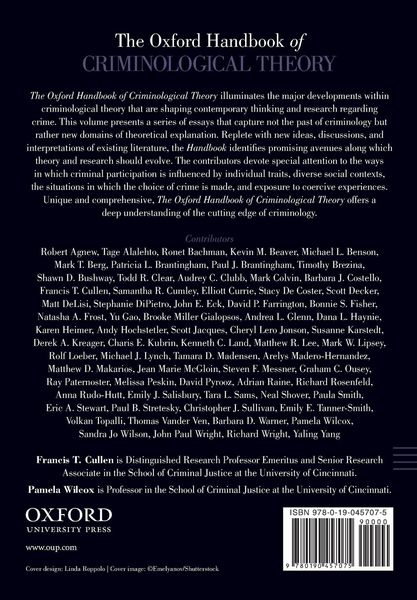
The Oxford Handbook of Criminological Theory takes a different approach across the criminological landscape. The volume is organized not around schools of thought but around themes that shape much thinking about and research on crime. This more unconventional approach seeks to show that criminological theory is not static but dynamic. In fact, most prominent scholars do not spend their time commenting upon and retesting theoretical propositions that have existed for many years. Rather, they move into more novel areas--areas often located in the interstitial junctures between more traditional theories. This Oxford Handbook presents a series of essays that captures not the past of criminology, but where theoretical explanation is headed. As a result, the volume is replete with new ideas, discussions of substantive topics with salient theoretical implications, and reviews and interpretations of literatures that illuminate promising avenues along which theory and research should evolve. Special attention is paid to how criminal participation is shaped intimately by individual traits, diverse social contexts, the situations in which the choice of crime is made, and exposure to coercive experiences. Each chapter can be read on its own--as furnishing an important analysis of a given theoretical issue--yet read as a whole, The Oxford Handbook of Criminological Theory offers a unique and deep understanding of criminology at its cutting edge.
Noch keine Bewertungen vorhanden
Verfassen Sie die erste Bewertung zu diesem Artikel
Helfen Sie anderen Kundinnen und Kunden durch Ihre Meinung.
Kurze Frage zu unserer Seite
Vielen Dank für Ihr Feedback
Wir nutzen Ihr Feedback, um unsere Produktseiten zu verbessern. Bitte haben Sie Verständnis, dass wir Ihnen keine Rückmeldung geben können. Falls Sie Kontakt mit uns aufnehmen möchten, können Sie sich aber gerne an unseren Kund*innenservice wenden.
zum Kundenservice