KI-Beratung Beta

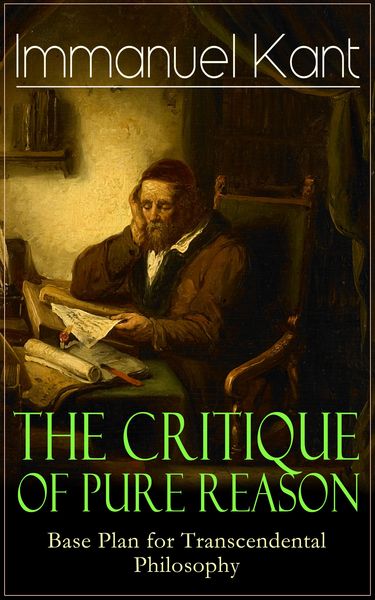
Produktbild: The Critique of Pure Reason: Base Plan for Transcendental Philosophy

The Critique of Pure Reason: Base Plan for Transcendental Philosophy Transcendental philosophy, space and time, and the limits of human understanding

0,99 €

inkl. gesetzl. MwSt.

Nein, App installieren Ja, App öffnen

Beschreibung

This carefully crafted ebook: "The Critique of Pure Reason: Base Plan for Transcendental Philosophy" is formatted for your eReader with a functional and detailed table of contents.The Critique of Pure Reason is one of the most influential works in the history of philosophy and marks a turning point and...

Beschreibung

This carefully crafted ebook: "The Critique of Pure Reason: Base Plan for Transcendental Philosophy" is formatted for your eReader with a functional and detailed table of contents.The Critique of Pure Reason is one of the most influential works in the history of philosophy and marks a turning point and the beginning of modern philosophy. Also referred to as Kant's "first critique," it was followed by the Critique of Practical Reason and by the Critique of Judgment. In the preface to the first edition, Kant explains what he means by a critique of pure reason: "I do not mean by this a critique of books and systems, but of the faculty of reason in general, in respect of all knowledge after which it may strive independently of all experience."Immanuel Kant (1724-1804) was a German philosopher, who, according to the Stanford Encyclopedia of Philosophy is "the central figure of modern philosophy." Kant argued that fundamental concepts of the human mind structure human experience, that reason is the source of morality, that aesthetics arises from a faculty of disinterested judgment, that space and time are forms of our understanding, and that the world as it is "in-itself" is unknowable. Kant took himself to have effected a Copernican revolution in philosophy, akin to Copernicus' reversal of the age-old belief that the sun revolved around the earth.

Produktdetails

Format

ePUB

Kopierschutz

Nein

Family Sharing

Ja

Text-to-Speech

Ja

Produktdetails

Format

ePUB

Format

eBooks im ePUB-Format erlauben eine dynamische Anpassung des Inhalts an die jeweilige Display-Größe des Lesegeräts. Das Format eignet sich daher besonders für das Lesen auf mobilen Geräten, wie z.B. Ihrem tolino, Tablets oder Smartphones.

Kopierschutz

Nein

Kopierschutz

Dieses eBook können Sie uneingeschränkt auf allen Geräten der tolino Familie, allen sonstigen eReadern und am PC lesen. Das eBook ist nicht kopiergeschützt und kann ein personalisiertes Wasserzeichen enthalten. Weitere Hinweise zum Lesen von eBooks mit einem personalisierten Wasserzeichen finden Sie unter Hilfe/Downloads.

Family Sharing

Ja

Family Sharing

Mit Family Sharing können Sie eBooks innerhalb Ihrer Familie (max. sechs Mitglieder im gleichen Haushalt) teilen. Sie entscheiden selbst, welches Buch Sie mit welchem Familienmitglied teilen möchten. Auch das parallele Lesen durch verschiedene Familienmitglieder ist durch Family Sharing möglich. Um eBooks zu teilen oder geteilt zu bekommen, muss jedes Familienmitglied ein Konto bei Thalia oder einem anderen tolino-Buchhändler haben. Weitere Informationen finden Sie unter Hilfe/Family-Sharing.

Text-to-Speech

Ja

Text-to-Speech

Bedeutet Ihnen Stimme mehr als Text? Mit der Funktion Text-to-Speech können Sie sich im tolino webReader und in der aktuellen Thalia – Lesen & Hören App das eBook vorlesen lassen. Weitere Informationen finden Sie unter Hilfe/Text-to-Speech.

Erscheinungsdatum

01.10.2015

Verlag E-artnow
Seitenzahl

395 (Printausgabe)

Dateigröße

983 KB

Übersetzt von

J. M. D. Meiklejohn

Sprache

Englisch

EAN

9788026845232

Barrierefreiheit
  • keine Information zur Barrierefreiheit bekannt

Noch keine Bewertungen vorhanden

Verfassen Sie die erste Bewertung zu diesem Artikel

Helfen Sie anderen Kundinnen und Kunden durch Ihre Meinung.

Kundinnen und Kunden meinen

Bewertungen (0)

Weitere Artikel finden Sie in

Die Leseprobe wird geladen.
  • Produktbild: The Critique of Pure Reason: Base Plan for Transcendental Philosophy