KI-Beratung Beta

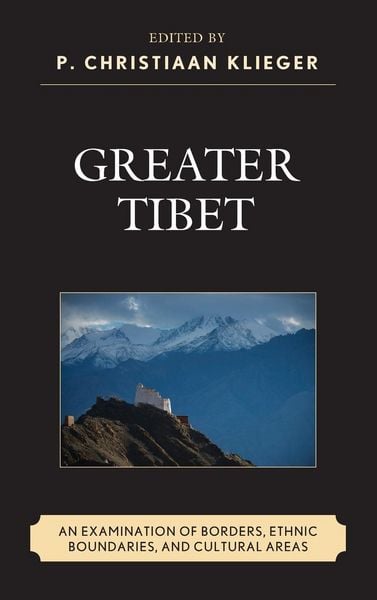
Produktbild: Greater Tibet

Greater Tibet An Examination of Borders, Ethnic Boundaries, and Cultural Areas

Aus der Reihe Lexington Books

139,99 €

inkl. gesetzl. MwSt., Versandkostenfrei


Beschreibung

The concept of Greater Tibet has surfaced in the political and academic worlds in recent years. It is based in the inadequacies of other definitions of what constitutes the historical and modern worlds in which Tibetan people, ideas, and culture occupy. This collection of papers is inspired by a panel...

Beschreibung

The concept of Greater Tibet has surfaced in the political and academic worlds in recent years. It is based in the inadequacies of other definitions of what constitutes the historical and modern worlds in which Tibetan people, ideas, and culture occupy. This collection of papers is inspired by a panel on Greater Tibet held at the XIIIth meeting of the International Association of Tibet Studies in Ulaan Baatar in 2013. Participants included leading Tibet scholars, experts in international law, and Tibetan officials. Greater Tibet is inclusive of all peoples who generally speak languages from the Tibetan branch of the Tibeto-Burman family, have a concept of mutual origination, and share some common historical narratives. It includes a wide area, including peoples from the Central Asian Republics, Pakistan, India, Nepal Bhutan, Bangladesh, Myanmar, People s Republic of China, Mongolia, Russia, and Tibetan people in diaspora abroad. It may even include practitioners of Tibetan Buddhism who are not of Tibetan origin, and Tibetan peoples who do not practice Buddhism. Most of this area corresponds to the broad expansion of Tibetan culture and political control in the 7th 9th centuries AD, and is thus many times larger than the current Tibet Autonomous Region in China the Tibetan culture area. As a conceptual framework, Greater Tibet stands in contrast to Scott s concept of Zomia for roughly the same region, a term which defines an area of highland Asia and Southeast Asia characterized by disdain for rule from distant centers, failed state formation, anarchist, and libertarian individual proclivities."

Produktdetails

Einband

Gebundene Ausgabe

Erscheinungsdatum

24.12.2015

Abbildungen

1 BW Illustration, 1 Graphs

Herausgeber P. Christiaan Klieger

Produktdetails

Einband

Gebundene Ausgabe

Erscheinungsdatum

24.12.2015

Abbildungen

1 BW Illustration, 1 Graphs

Herausgeber P. Christiaan Klieger
Verlag Ingram Publishers Services
Seitenzahl

178

Maße (L/B/H)

23,1/15,5/1,5 cm

Gewicht

567 g

Sprache

Englisch

ISBN

978-1-4985-0644-1

Herstelleradresse

Libri GmbH
Europaallee 1
36244 Bad Hersfeld
DE

Email: gpsr@libri.de

Noch keine Bewertungen vorhanden

Verfassen Sie die erste Bewertung zu diesem Artikel

Helfen Sie anderen Kundinnen und Kunden durch Ihre Meinung.

Kundinnen und Kunden meinen

Bewertungen (0)

Die Leseprobe wird geladen.
  • Produktbild: Greater Tibet
  • Introduction: Greater Tibet, P. Christiaan Klieger
    Chapter 1: Tibetan Exile or Diaspora: India as a "Second Homeland," Namgyal Choedup
    Chapter 2: Another Tibet at the Heart of Qing China: Location of Tibetan Buddhism in the Mentality of the Qing Chinese Mind at Jehol, Hanung Kim
    Chapter 3: The Rawang Tribes of Highland Southeast Asia: Survival and the Process of Marginalization, P. Christiaan Klieger
    Chapter 4: Tibet as a State: International Law and Historical Facts, Sergius L. Kuzmin
    Chapter 5: The Role of India's National Interests vis-à-vis Tibet: Tibetan Nationalism and Tibetan Activism, Seokbae Lee
    Chapter 6: The Baltistan Movement on Facebook: Supersize effects and small-scale acts in the Western Himalayas, Jan Magnusson
    Chapter 7: A Case for Gelukpa Governance: The Historians of Labrang, Amdo, and the Manchu Rulers of China, Max Oidtmann
    Chapter 8: Essay: Buddhism post-Soviet Union: Buddhism in the Russian Federation, 1991 to the Present, Telo Tulku Rinpoche
    Chapter 9: Essay: A Greater Tibet and the Irony of Liberation, Tenzin N. Tethong