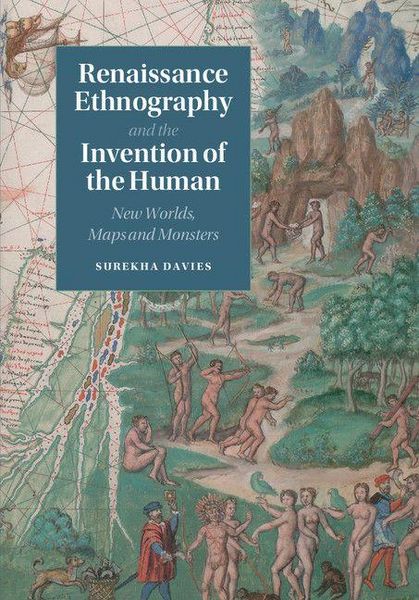
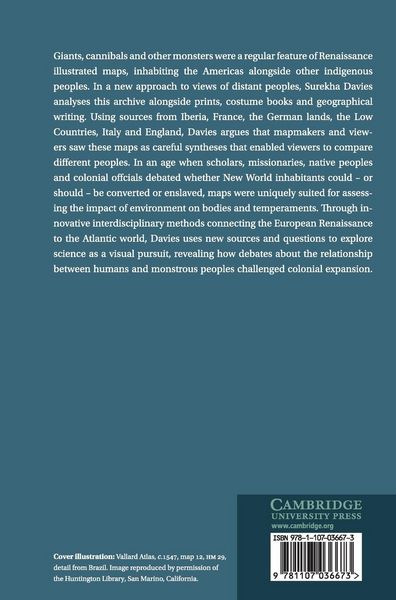
• Produktbild: Renaissance Ethnography and the Invention of the Human
  • Produktbild: Renaissance Ethnography and the Invention of the Human

Renaissance Ethnography and the Invention of the Human

Aus der Reihe Print on demand

239,99 €

inkl. gesetzl. MwSt., Versandkostenfrei


Rezension

'Surekha Davies brings an astounding arsenal of historiographic tools to her interpretation of the ethnographic images on maps and draws on a vast visual and textual archive to provide a compelling account of their evolution, meaning and spread. It is hard to imagine that anyone else would be better placed to interpret this material.' Rebecca Earle, University of Warwick

Produktdetails

Einband

Gebundene Ausgabe

Erscheinungsdatum

03.01.2017

Abbildungen

60 b/w illus., Raster,schwarz-weiss, Raster, nicht spezifiziert

Verlag

KNV Besorgung

Seitenzahl

380

Maße (L/B/H)

25/17,5/2,5 cm

Gewicht

834 g

Sprache

Englisch

ISBN

978-1-107-03667-3

Rezension

Produktdetails

Einband

Gebundene Ausgabe

Erscheinungsdatum

03.01.2017

Abbildungen

60 b/w illus., Raster,schwarz-weiss, Raster, nicht spezifiziert

Verlag

KNV Besorgung

Seitenzahl

380

Maße (L/B/H)

25/17,5/2,5 cm

Gewicht

834 g

Sprache

Englisch

ISBN

978-1-107-03667-3

Herstelleradresse

Libri GmbH
Europaallee 1
36244 Bad Hersfeld
DE

Email: Libri GmbH

Noch keine Bewertungen vorhanden

Verfassen Sie die erste Bewertung zu diesem Artikel

Helfen Sie anderen Kundinnen und Kunden durch Ihre Meinung.

Kundinnen und Kunden meinen

Bewertungen (0)

  • Produktbild: Renaissance Ethnography and the Invention of the Human
  • Produktbild: Renaissance Ethnography and the Invention of the Human
  • Introduction: Renaissance maps and the concept of the human; 1. Climate, culture or kinship? Explaining human diversity c.1500; 2. Atlantic empires, map workshops and Renaissance geographical culture; 3. Spit-roasts, barbecues and the invention of the Brazilian cannibal; 4. Trade, empires and propaganda: Brazilians on French maps in the age of François I and Henri II; 5. Monstrous ontology and environmental thinking: Patagonia's giants; 6. The epistemology of wonder: Amazons, headless men and mapping Guiana; 7. Civility, idolatry and cities in Mexico and Peru; 8. New sources, new genres and America's place in the world, 1590-1645; Epilogue; Bibliography; Index.