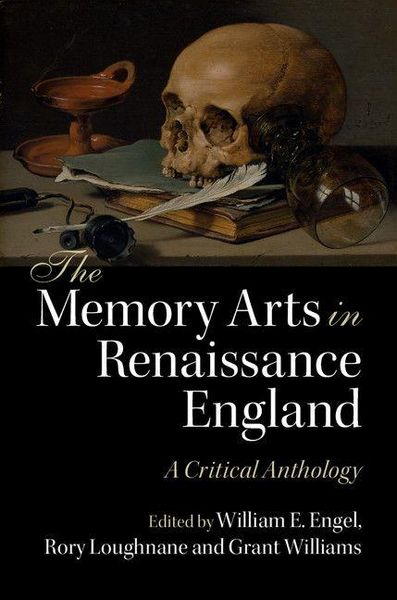
• Produktbild: The Memory Arts in Renaissance England
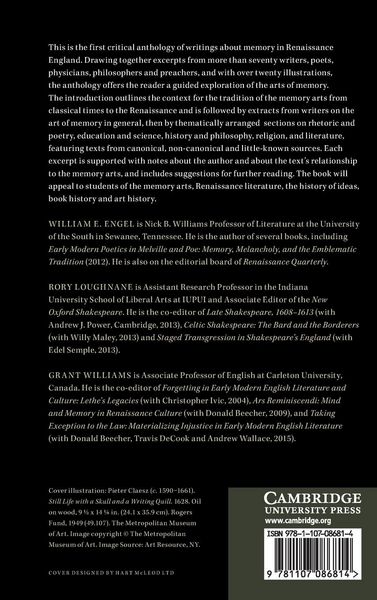
  • Produktbild: The Memory Arts in Renaissance England

The Memory Arts in Renaissance England A Critical Anthology

138,99 €

inkl. gesetzl. MwSt., Versandkostenfrei


Beschreibung

Produktdetails

Einband

Gebundene Ausgabe

Erscheinungsdatum

18.08.2016

Herausgeber

Engel William E. + weitere

Verlag

Cambridge Academic

Seitenzahl

396

Maße (L/B/H)

23,5/15,7/2,6 cm

Gewicht

740 g

Sprache

Englisch

ISBN

978-1-107-08681-4

Beschreibung

Produktdetails

Einband

Gebundene Ausgabe

Erscheinungsdatum

18.08.2016

Herausgeber

Verlag

Cambridge Academic

Seitenzahl

396

Maße (L/B/H)

23,5/15,7/2,6 cm

Gewicht

740 g

Sprache

Englisch

ISBN

978-1-107-08681-4

Herstelleradresse

Libri GmbH
Europaallee 1
36244 Bad Hersfeld
DE

Email: Libri GmbH

Kundinnen und Kunden meinen

0 Bewertungen

Informationen zu Bewertungen

Zur Abgabe einer Bewertung ist eine Anmeldung im Konto notwendig. Die Authentizität der Bewertungen wird von uns nicht überprüft. Wir behalten uns vor, Bewertungstexte, die unseren Richtlinien widersprechen, entsprechend zu kürzen oder zu löschen.

Die Bewertungen sind nach Format, Anzahl Sterne und Datum sortiert.

Verfassen Sie die erste Bewertung zu diesem Artikel

Helfen Sie anderen Kund*innen durch Ihre Meinung

Kundinnen und Kunden meinen

0 Bewertungen filtern

Die Leseprobe wird geladen.
  • Produktbild: The Memory Arts in Renaissance England
  • Produktbild: The Memory Arts in Renaissance England
  • List of figures; List of tables; Acknowledgements; A note on abbreviations; Introduction; Part I. The Art of Memory: Introduction to Part I; 1.1 Stephen Hawes, The Pastime of Pleasure (1509); 1.2 [Laurence Andrewe], The Mirror of the World (1527); 1.3 Peter of Ravenna, The Phoenix (1548); 1.4 Guglielmo Gratarolo, The Castle of Memory (1562); 1.5 Hugh Plat, Jewel House of Art and Nature (1594); 1.6 William Basse, A Help to Memory and Discourse (1620); 1.7 John Willis, The Art of Memory (1621, 1661); 1.8 Henry Herdson, Ars Memoriae; the Art of Memory Made Plain (1651); 1.9 Richard Saunders, Art of Memory (1671); 1.10 Marius D'Assigny, The Art of Memory (1697); Part II. Rhetoric and Poetics: Introduction to Part II; 2.1 Anon., Table of Cebes (1531); 2.2 Thomas Wilson, The Art of Rhetoric (1553); 2.3 George Puttenham, The Art of English Poesy (1589); 2.4 Henry Peacham, The Garden of Eloquence (1593); 2.5 Philip Sidney, The Defence of Poesy (1595); 2.6 Francis Meres, Palladis Tamia (1598); 2.7 Samuel Daniel, Musophilus (1599); 2.8 Miles Sandys, Prudence (1634); 2.9 Ben Jonson, Timber, or, Discoveries (1641); 2.10 Alexander Ross, Mystagogus Poeticus (1648); Part III. Education and Science: Introduction to Part III; 3.1 Thomas Elyot, The Governor (1531); 3.2 Roger Ascham, The Schoolmaster (1570); 3.3 Levinus Lemnius, The Touchstone of Complexions (1576); 3.4 William Kempe, The Education of Children (1588); 3.5 John Brinsley, Ludus Literarius (1612); 3.6 Robert Burton, The Anatomy of Melancholy (1621); 3.7 Thomas Sprat, The History of the Royal Society (1667); 3.8 John Wilkins, An Essay Towards a Real Character (1668); 3.9 Obadiah Walker, Of Education (1673); 3.10 Robert Hooke, 'An Hypothetical Explication of Memory' (1682); Part IV. History and Philosophy: Introduction to Part IV; 4.1 Lodowick Lloyd, The Pilgrimage of Princes (1573); 4.2 William Camden, Remains Concerning Britain (1605); 4.3 Francis Bacon, The Advancement of Learning (1605); 4.4 Pierre Charron, Of Wisdom (1608); 4.5 John Weever, Ancient Funeral Monuments (1631); 4.6 Edward Reynolds, A Treatise of the Passions and Faculties (1640); 4.7 Thomas Fuller, Selected Works; 4.8 Kenelm Digby, Two Treatises (1644); 4.9 Thomas Hobbes, Leviathan (1651); 4.10 William Dugdale, Baronage of England (1675-76); Part V. Religion and Devotion: Introduction to Part V; 5.1 Thomas More, A Treatise (Unfinished) upon these Words of Holy Scripture (1522); 5.2 John Foxe, Acts and Monuments (1563); 5.3 Thomas Playfere, The Pathway to Perfection (1597); 5.4 Joseph Hall, Selected Works; 5.5 Richard Day, Book of Christian Prayers (1608); 5.6 Daniel Featley, 'Four Rows of Precious Stones' (1610); 5.7 Lewis Bayly, The Practice of Piety (1613); 5.8 John Donne, 'Sermon, preached at Lincoln's Inn' (1649); 5.9 Stephen Jerome, A Ministers Mite (1650); 5.10 E. M., Ashrae (1665); Part VI. Literature: Introduction to Part VI; Poetry; 6.1 John Skelton, 'Upon a Dead Man's Head' (1527); 6.2 Edmund Spenser, The Faerie Queen (1590); 6.3 Anthony Sherley, Wit's New Dial (1604); 6.4 Richard Niccols, Mirror for Magistrates (1610); 6.5 Abraham Holland, 'A Funeral Elegy' (1626); 6.6 George Herbert, The Temple (1633); 6.7 Francis Quarles, Emblems (1635); 6.8 Mary Fage, Fame's Rule (1637); 6.9 Margaret Cavendish, Selected Works; 6.10 John Milton, Paradise Lost (1674); Plays and prose; 6.11 Thomas Nashe, The Unfortunate Traveller (1594); 6.12 William Shakespeare, Selected Works; 6.13 John Webster, Selected Works; 6.14 Thomas Tomkis, Lingua: or the Combat of the Tongue (1607); 6.15 Mary Wroth, Urania (1621); 6.16 John Earle, Microcosmography (1628); 6.17 John Jones, Adrasta (1635); 6.18 Thomas Browne, Hydriotaphia, Urn-Burial (1658); 6.19 Anon., Crackfart and Tony; or, Knave and Fool (1680); 6.20 John Bunyan, The Pilgrim's Progress (1681); Index.