KI-Beratung Beta

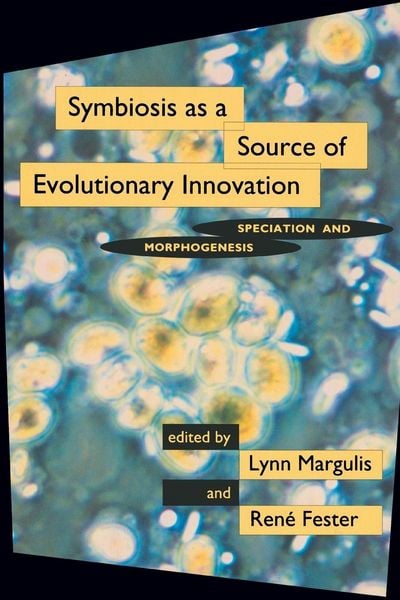
  • Produktbild: Symbiosis as a Source of Evolutionary Innovation
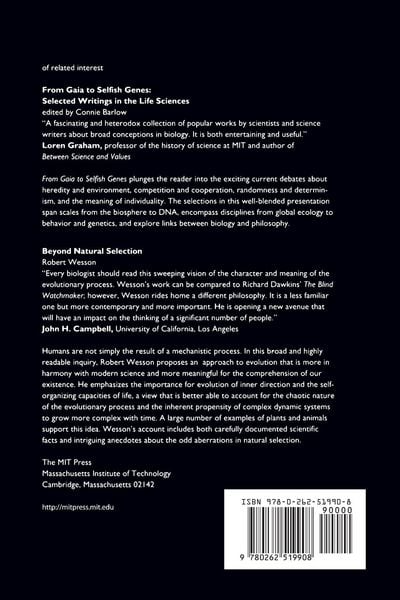
  • Produktbild: Symbiosis as a Source of Evolutionary Innovation

Symbiosis as a Source of Evolutionary Innovation Speciation and Morphogenesis

54,99 €

inkl. gesetzl. MwSt., Versandkostenfrei


Beschreibung

These original contributions by symbiosis biologists and evolutionary theorists address the adequacy of the prevailing neo-Darwinian concept of evolution in the light of growing evidence that hereditary symbiosis, supplemented by the gradual accumulation of heritable mutation, results in the origin...

Beschreibung

These original contributions by symbiosis biologists and evolutionary theorists address the adequacy of the prevailing neo-Darwinian concept of evolution in the light of growing evidence that hereditary symbiosis, supplemented by the gradual accumulation of heritable mutation, results in the origin of new species and morphological novelty.

A departure from mainstream biology, the idea of symbiosis—as in the genetic and metabolic interactions of the bacterial communities that became the earliest eukaryotes and eventually evolved into plants and animals—has attracted the attention of a growing number of scientists.

These original contributions by symbiosis biologists and evolutionary theorists address the adequacy of the prevailing neo-Darwinian concept of evolution in the light of growing evidence that hereditary symbiosis, supplemented by the gradual accumulation of heritable mutation, results in the origin of new species and morphological novelty. They include reports of current research on the evolutionary consequences of symbiosis, the protracted physical association between organisms of different species. Among the issues considered are individuality and evolution, microbial symbioses, animal­bacterial symbioses, and the importance of symbiosis in cell evolution, ecology, and morphogenesis. Lynn Margulis, Distinguished Professor of Botany at the University of Massachusetts at Amherst, is the modern originator of the symbiotic theory of cell evolution. Once considered heresy, her ideas are now part of the microbiological revolution.

Contributors
Peter Atsatt, Richard C. Back, David Bermudes, Paola Bonfante-Fasolo, René Fester, Lynda J. Goff, Anne-Marie Grenier, Ricardo Guerrero, Robert H. Haynes, Rosmarie Honegger, Gregory Hinkle, Kwang W. Jeon, Bryce Kendrick, Richard Law, David Lewis, Lynn Margulis, John Maynard Smith, Margaret J. McFall-Ngai, Paul Nardon, Kenneth H. Nealson, Kris Pirozynski, Peter W. Price, Mary Beth Saffo, Jan Sapp, Silvano Scannerini, Werner Schwemmler, Sorin Sonea, Toomas H. Tiivel, Robert K. Trench, Russell Vetter

Produktdetails

Einband

Taschenbuch

Erscheinungsdatum

17.06.1991

Herausgeber Lynn Margulis + weitere
Verlag MIT Press

Produktdetails

Einband

Taschenbuch

Erscheinungsdatum

17.06.1991

Herausgeber
Verlag MIT Press
Seitenzahl

472

Maße (L/B/H)

22,9/15,2/2,8 cm

Gewicht

760 g

Sprache

Englisch

ISBN

978-0-262-51990-8

Herstelleradresse

Libri GmbH
Europaallee 1
36244 Bad Hersfeld
DE

Email: gpsr@libri.de

Noch keine Bewertungen vorhanden

Verfassen Sie die erste Bewertung zu diesem Artikel

Helfen Sie anderen Kundinnen und Kunden durch Ihre Meinung.

Kundinnen und Kunden meinen

Bewertungen (0)

  • Produktbild: Symbiosis as a Source of Evolutionary Innovation
  • Produktbild: Symbiosis as a Source of Evolutionary Innovation